Payment Safety in Private Car Sales: Deposits, Bank Drafts, and Escrow Warning Signs
Payment is one of the riskiest parts of a private car sale in Canada. A buyer can lose money by sending a deposit for a vehicle that does not exist. A seller can lose the vehicle by accepting a fake payment, fraudulent bank draft, reversed transfer, or overpayment scam. Both sides can be pressured into moving too quickly because the car seems like a good deal or the other person sounds trustworthy.
The safest private car sale is one where the vehicle, seller, buyer, payment, and paperwork are verified before anything changes hands. That means no rushed deposits, no incomplete bill of sale, no keys released before confirmed payment, and no ownership transfer until the payment method is understood.
Before paying or accepting money, follow a structured car buyer checklist, write the payment terms clearly, and use a proper bill of sale template so both sides know what was agreed.
Why payment safety matters in private car sales
Private car sales often involve large amounts of money and less formal protection than dealer transactions. The buyer and seller may be strangers who met through a marketplace listing, social media group, classified ad, or referral. That makes trust important — but trust should be supported by verification.
Payment risk usually appears in three moments:
- Before the meeting, when someone asks for a deposit to “hold” the car.
- During the transaction, when payment is exchanged for keys and documents.
- After the sale, when a payment fails, a cheque is dishonoured, or one party claims the terms were different.
A clean transaction should answer these questions before payment:
- Who owns the vehicle?
- Who is paying?
- How much is being paid?
- Is there a deposit?
- Is the deposit refundable?
- What payment method will be used?
- When will keys be released?
- When will ownership documents be signed?
- What happens if payment fails?
- What proof of payment will be kept?
If the answer to any of these is unclear, pause the transaction.
Deposits: when they make sense and when they are risky
A deposit can be reasonable in some private sales, especially when a buyer has already inspected the vehicle, verified the VIN, reviewed the paperwork, and needs a short time to arrange insurance, financing, or inspection. But deposits are also a common pressure point in scams.
A seller may ask for a deposit because “many people are interested.” A fake seller may ask for a deposit before allowing an inspection. A fake buyer may send a deposit, then later claim they overpaid or need money returned through another method.
A safe deposit should be small, documented, and tied to clear terms.
Before sending or accepting a deposit, confirm:
- The buyer and seller’s full names
- Vehicle year, make, model, and VIN
- Deposit amount
- Whether the deposit is refundable
- Deadline to complete the sale
- Conditions for refund
- Total purchase price
- Payment method for the balance
- What happens if the vehicle fails inspection
- What happens if financing or insurance falls through
Never send a deposit for a vehicle you have not verified. Never accept a deposit that comes with unusual instructions, overpayment, or a request to send money back.
Common deposit red flags
Be careful if the other person says:
- “Send a deposit now or I’ll sell it to someone else.”
- “I’m out of town, but the vehicle can be shipped.”
- “The car is in storage and needs a deposit before viewing.”
- “Use this escrow link.”
- “Pay by gift card, crypto, wire transfer, or prepaid card.”
- “I accidentally sent too much; please refund the difference.”
- “I need your banking details to send the money.”
- “The deposit is refundable, but I do not want to write anything down.”
The Government of Canada warns that urgent payment demands, suspicious links, and requests for unusual payment methods can signal scams. In a private car sale, pressure is a reason to slow down, not speed up.
Bank drafts and certified cheques: safer, but not risk-free
Bank drafts and certified cheques are often used for private car sales because they feel more secure than personal cheques and safer than carrying large amounts of cash. They can be useful, but they are not magic.
A realistic-looking draft can still be fraudulent. A seller may see a document that appears official and release the car before the bank has confirmed it. If the payment later fails, the seller may be left without the car and without the money.
The Financial Consumer Agency of Canada explains that a dishonoured cheque is one that does not go through because the financial institution refuses payment. Reasons can include non-sufficient funds, signature issues, or inconsistencies between written and numerical amounts. While a bank draft is different from a personal cheque, the practical lesson for sellers is the same: do not rely only on the appearance of the paper.
For higher-value transactions, complete the exchange at the buyer’s bank or the seller’s bank. Have the bank verify or issue the draft while both parties are present.
Safer ways to use a bank draft
If using a bank draft:
- Meet at the issuing bank if possible.
- Confirm the draft directly with the bank.
- Do not rely only on a phone number printed on the draft.
- Verify the buyer’s identity.
- Make sure the name and amount are correct.
- Do not release keys or signed ownership documents until payment is confirmed.
- Keep a copy or receipt showing the draft details.
- Record the payment method in the bill of sale.
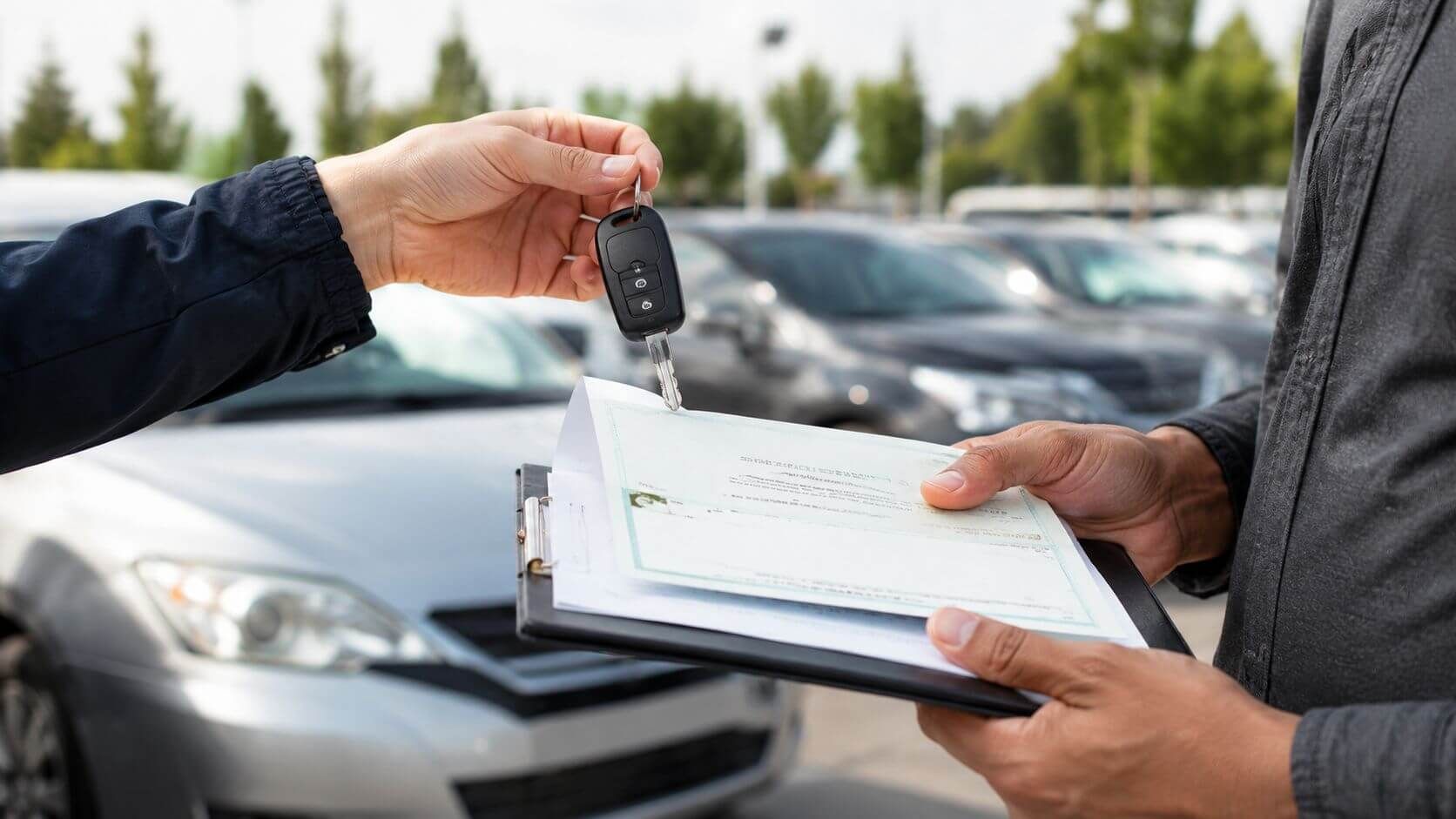
For sellers, the safest moment to hand over keys is after the bank confirms the funds or the draft is issued in front of you. For buyers, the safest moment to hand over payment is after the VIN, ownership, lien status, and bill of sale are verified.
E-transfer safety in private car sales
E-transfer can be convenient, especially for deposits or smaller payments. But for full vehicle purchases, buyers and sellers should understand limits, delays, fraud risks, and account-security issues.
For buyers, the risk is sending money before the car, documents, and seller identity are verified. For sellers, the risk is relying on a screenshot, fake confirmation email, or transfer from a compromised account.
If using e-transfer:
- Do not rely on screenshots.
- Confirm the money is actually in your account.
- Use auto-deposit where appropriate.
- Check your bank directly, not through an email link.
- Be aware of transfer limits.
- Do not release the car based on “pending” payment.
- Avoid sending money to a name that does not match the seller.
- Document the transfer in the bill of sale.
A real payment should be confirmed through your banking app or bank, not through an email the other person forwards to you.
Cash payments: simple but risky
Cash is immediate, but it creates other problems. Large cash transactions can raise safety concerns, counterfeit risk, counting disputes, and lack of traceable payment proof.
If cash is used:
- Meet in a safe location.
- Consider meeting at a bank.
- Count the money in front of both parties.
- Ask the bank to verify the bills.
- Record the cash payment in the bill of sale.
- Provide a receipt.
- Do not meet alone in an isolated location.
- Do not carry large cash to a meeting before verifying the vehicle.
Cash may work for lower-value transactions, but for expensive vehicles, a verified bank draft or bank-assisted transfer is usually cleaner.
Wire transfers and direct deposits
Wire transfers and direct deposits may be appropriate in some higher-value transactions, but they require planning. The buyer may not want to send money before receiving the car, and the seller should not release the car before funds are confirmed.
If using a wire transfer:
- Confirm recipient details carefully.
- Beware of email address changes or payment instruction changes.
- Verify account details by phone using a trusted number.
- Keep proof of transfer.
- Wait for confirmed funds before releasing the vehicle.
- Record the transfer method in the bill of sale.
Payment redirection fraud can happen when scammers alter payment instructions. If a seller suddenly changes the bank account, email address, or recipient name, verify directly before sending anything.
Escrow warning signs
Escrow can be legitimate when it is a real, neutral, verifiable service. But fake escrow is common in online vehicle scams. A scammer may send a link to a professional-looking website that claims to hold payment until the vehicle is delivered. The site may look official, but it may exist only to steal the buyer’s money or personal information.
Be careful if:
- The seller insists on one specific escrow service.
- The escrow site was sent by the seller.
- The website is new, poorly written, or hard to verify.
- Payment is requested by wire, crypto, gift cards, or unusual methods.
- The seller says the car will be shipped after escrow payment.
- The vehicle is priced far below market.
- You cannot inspect the car in person.
- The escrow company has no verified business presence.
- Customer service only communicates through chat or email.
- The site uses pressure language or urgent deadlines.
A real escrow arrangement should be independently verified. Do not click a seller-provided link and assume it is legitimate.
Shipping and remote-sale scams
Private vehicle sale scams often involve distance. The seller may claim to be in another province, on military deployment, recently relocated, handling the sale after a divorce, or selling a vehicle for a deceased relative. The story may sound emotional and believable.
The scam usually works like this:
- The vehicle is listed at an attractive price.
- The seller says they cannot meet in person.
- The buyer is told the car can be shipped.
- Payment is requested through escrow, wire, or deposit.
- The vehicle never arrives.
Avoid paying for a vehicle you have not inspected unless you are using a fully verified, reputable process and understand the risk. If the deal depends on shipping, escrow, and urgency, be very careful.
Vehicle history report phishing scams
Payment safety is not only about the final purchase price. Sellers can also be targeted before the sale.
RCMP has warned about vehicle history report phishing scams where someone posing as a buyer asks the seller to purchase a report through a link to a fake website. The site may look legitimate, but it is designed to capture payment card or personal information.
If a buyer asks for a vehicle history report, use a service you choose yourself. Do not enter payment information into a report site selected by a stranger from a marketplace message.
Overpayment scams
Overpayment scams target sellers. The “buyer” sends a cheque, draft, e-transfer screenshot, or payment confirmation for more than the agreed price. Then they ask the seller to refund the difference, pay a transporter, or send money to a third party.
This is a major red flag. If someone overpays and asks for money back, stop the transaction.
Do not:
- Refund the difference.
- Pay the shipper.
- Send money to a third party.
- Release the vehicle.
- Trust a screenshot.
- Assume cleared-looking funds are final without bank confirmation.
A real buyer can correct the payment through their bank or issue a proper replacement payment.
Payment safety for buyers
If you are the buyer, your main risk is paying before the vehicle and seller are verified.
Before paying:
- Confirm the seller’s name matches the ownership documents.
- Check the VIN on the vehicle and documents.
- Confirm there are no unresolved lien concerns.
- Inspect and test drive the vehicle.
- Review service records and history.
- Confirm the bill of sale is complete.
- Confirm transfer requirements in your province.
- Avoid deposits before verification.
- Use a payment method with proof.
- Do not send money to a different person without a clear reason.
If the seller refuses basic verification, the payment risk is too high.
Payment safety for sellers
If you are the seller, your main risk is releasing the vehicle before payment is truly confirmed.
Before releasing the car:
- Confirm buyer identity.
- Confirm payment directly with your bank.
- Avoid overpayment refunds.
- Do not accept screenshots as proof.
- Do not click suspicious payment links.
- Do not sign ownership documents before payment terms are met.
- Keep copies of the bill of sale and payment receipt.
- Remove your plates where required.
- Cancel or update insurance after the sale.
- Report suspicious activity if needed.
A polite buyer should understand that a seller needs payment certainty before handing over keys and documents.
What to write in the bill of sale
Payment terms should be documented clearly. A strong bill of sale helps reduce disputes and creates a record of what happened.
Use a proper bill of sale template and include:
- Buyer’s full legal name
- Seller’s full legal name
- Vehicle year, make, model, trim, and VIN
- Odometer reading
- Sale price
- Deposit amount, if any
- Whether the deposit is refundable
- Payment method
- Balance due
- Date and time of payment
- Date and time of vehicle release
- Any conditions, such as inspection or financing
- Whether the vehicle is sold as-is, where applicable
- Signatures of buyer and seller
Do not leave payment terms vague. If a deposit is non-refundable, say so clearly. If payment must clear before keys are released, write that down.
Safe payment workflow for a private car sale
A safer workflow looks like this:
- Buyer asks for VIN and basic documents.
- Buyer verifies the vehicle and seller.
- Buyer inspects and test drives the car.
- Buyer and seller agree on price.
- Buyer and seller complete the bill of sale.
- Payment method is agreed in writing.
- Payment is made and confirmed.
- Ownership documents are signed.
- Keys are released.
- Both sides keep copies.
The order matters. Do not move ownership or keys ahead of confirmed payment. Do not move payment ahead of vehicle and seller verification.
Red flags that should stop the transaction
Pause or walk away if:
- The seller demands a deposit before showing the car.
- The buyer overpays and asks for a refund.
- Either party insists on gift cards, crypto, or unusual payment.
- The escrow service is chosen through a suspicious link.
- The payment recipient does not match the seller.
- The buyer or seller refuses to meet at a bank.
- A payment confirmation comes only by screenshot.
- The other person pressures you to act immediately.
- The vehicle is priced far below market.
- The seller refuses to provide the VIN.
- The buyer asks the seller to buy a report from a specific unknown website.
- The payment terms are not written down.
Pressure and confusion are warning signs. A legitimate private sale should be easy to document.
What to do if you suspect payment fraud
If you suspect fraud, stop communicating through suspicious links and preserve evidence.
Save:
- Listing screenshots
- Messages
- Phone numbers
- Email addresses
- Payment receipts
- Bank draft images
- Escrow links
- Vehicle details
- VIN
- Bill of sale drafts
- Names used by the other party
If money was sent, contact your bank or payment provider immediately. If personal or financial information was entered into a suspicious site, contact your financial institution and monitor accounts. Report fraud or attempted fraud through the Canadian Anti-Fraud Centre’s official report fraud process and contact local police where appropriate.
Private car sale payment safety checklist
Before payment:
- VIN is verified.
- Seller identity is confirmed.
- Ownership documents match the seller.
- Vehicle has been inspected.
- Price and payment method are agreed.
- Deposit terms are written down.
- Bill of sale is complete.
- Payment recipient matches the seller.
- Bank draft or cheque is verified with the bank.
- E-transfer is confirmed in the account, not by screenshot.
- Escrow service is independently verified.
- No overpayment refund is requested.
- Keys are released only after payment is confirmed.
- Both sides keep copies of documents.
If any step feels rushed, stop and verify.
Final thoughts
Private car sale payment safety in Canada comes down to patience, documentation, and verification. Buyers should not send money before confirming the vehicle, seller, VIN, and paperwork. Sellers should not release keys or ownership documents before payment is confirmed.
Deposits should be small and documented. Bank drafts should be verified. E-transfers should be confirmed through your bank. Escrow should never be trusted just because a stranger sent a link. Every payment term should appear in the bill of sale.
A safe deal is not only about getting paid or getting the car. It is about making sure the money, documents, keys, and ownership transfer all move in the right order.