Private Sale Used Car Checklist in Canada: What to Verify Before You Pay
Buying a used car from a private seller can be a smart way to find a better price, avoid dealer fees, or negotiate directly with the owner. But private sales also carry more responsibility for the buyer. Unlike buying from a registered dealer, you may have fewer built-in protections, less disclosure, and less practical recourse if something goes wrong after the sale.
That does not mean private sales are unsafe. Many private sellers are honest owners simply trying to sell their vehicle. The key is to slow down, verify the vehicle properly, and avoid paying until the car, the seller, and the paperwork all match.
This private sale used car checklist for Canada walks through what to confirm before you send a deposit, sign a bill of sale, or transfer ownership.
What should you verify before buying a used car privately in Canada?
Before paying for a used car in a private sale, verify the VIN, seller identity, ownership documents, lien status, vehicle history, odometer reading, accident history, registration requirements, inspection results, payment terms, and bill of sale.
At minimum, you should:
- Confirm the seller is the legal owner.
- Compare the VIN on the car, documents, and report.
- Run a vehicle history check.
- Check for liens or unpaid financing.
- Inspect the car in person.
- Have a mechanic perform a pre-purchase inspection.
- Confirm your province’s registration and transfer requirements.
- Complete a proper bill of sale.
- Use a safe payment method.
- Keep copies of every document.
A good starting point is VinAudit’s car buyer checklist, especially if you want a structured process to follow during the inspection and paperwork review.
1. Verify the seller before you inspect the vehicle
Before you spend time viewing the car, ask basic seller questions. You want to know who is selling the vehicle, why they are selling it, and whether their name matches the ownership records.
Ask the seller:
- Is the vehicle registered in your name?
- Do you have the current ownership or registration document?
- Are there any liens or loans on the vehicle?
- How long have you owned it?
- Why are you selling?
- Has it been in an accident?
- Has it ever been written off, rebuilt, or imported?
- Can I see the VIN before meeting?
- Can I arrange an independent inspection?
Be careful if the seller says they are selling for a friend, relative, roommate, employer, or someone who is “out of town.” That can be legitimate, but it adds risk. The person selling the vehicle should have clear authority to sell it.
2. Ask for the VIN early
The Vehicle Identification Number is one of the most important pieces of information in any used car transaction. Ask for the VIN before meeting the seller. A legitimate seller should be willing to provide it.
Use the VIN to check the vehicle’s basic identity and history. The VIN should match the year, make, model, trim, and body style shown in the listing. It should also match the ownership documents and the physical vehicle.
Before you visit the car, run a VIN check so you can review available history and compare the seller’s claims against the records.
If the seller refuses to provide the VIN, sends a blurry photo, covers part of the number, or says you can only see it after sending a deposit, treat that as a warning sign.
3. Compare the VIN in multiple places
When you inspect the car, do not rely on only one VIN location. Compare the VIN on the dashboard, driver-side door label, ownership or registration documents, insurance paperwork, service records, and bill of sale.
The VIN should be identical across all documents and vehicle labels.
Watch for:
- Scratched or damaged VIN plates
- Missing door labels
- Fresh paint around VIN areas
- Uneven rivets or signs of removal
- Documents with one digit different
- A VIN that decodes to a different vehicle
- Seller explanations that are vague or unsupported
A mismatch does not always prove fraud, but it should stop the transaction until it is properly explained.
4. Check the vehicle history
A private seller may tell you the car is clean, accident-free, and well maintained. That may be true, but you should still verify it.
A vehicle history check can help reveal important information tied to the VIN, such as registration history, vehicle branding or status, odometer readings, theft indicators, salvage-related records, and other available data.
Review the report for:
- Salvage, rebuilt, or other vehicle-status records
- Salvage-auction or other available damage-related history
- Odometer inconsistencies
- Theft or recovery records
- Registration history
- Lien or title concerns
- Vehicle specifications
- Recall information
Do not look only for one “clean” label. Read the sections carefully and compare the report with the seller’s story.
5. Check for liens or unpaid financing
A lien means a lender or creditor may have a financial interest in the vehicle. If you buy a vehicle with an unpaid lien, you may face serious problems after the sale. In some cases, the lender may still have rights connected to the vehicle even though you already paid the seller.
Ask the seller directly whether there is money owing on the car. Then verify independently. A verbal promise is not enough.
Be extra careful if:
- The seller says the loan will be paid after you pay them.
- The seller cannot provide a lien release.
- The vehicle is priced unusually low.
- The ownership document shows a lender or financing company.
- The seller wants payment sent to a different person.
If there is a loan, handle the payoff carefully and get written proof that the lien has been discharged before completing the purchase.
6. Review your province’s transfer requirements
Vehicle transfer rules vary by province and territory, so confirm the process where the vehicle will be registered.
In Ontario, for example, the seller is legally required to provide a Used Vehicle Information Package when selling a pre-owned vehicle privately. Ontario explains that the package includes vehicle details, Ontario registration history, odometer information, and lien information. Buyers can also purchase a UVIP before the sale or when registering the transfer.
In British Columbia, ICBC says buyers and sellers must complete and sign the Transfer/Tax Form and take the completed form plus the seller’s signed vehicle registration to an Autoplan broker to complete the transfer.
In Alberta, the province advises private-sale buyers to confirm seller ID and proof of ownership, obtain a lien search based on the VIN, get a safety inspection, and complete a standard bill of sale. Alberta also states that a standard bill of sale is used in a private sale to transfer vehicle ownership and must include buyer, seller, and vehicle information.
In Québec, SAAQ allows some transfers between individuals through SAAQclic when eligibility conditions are met, such as the vehicle being a passenger vehicle, less than 25 years old, and registered in Québec under one name.
Because these rules change by location, always check your provincial registration authority before paying.
7. Inspect the vehicle in person
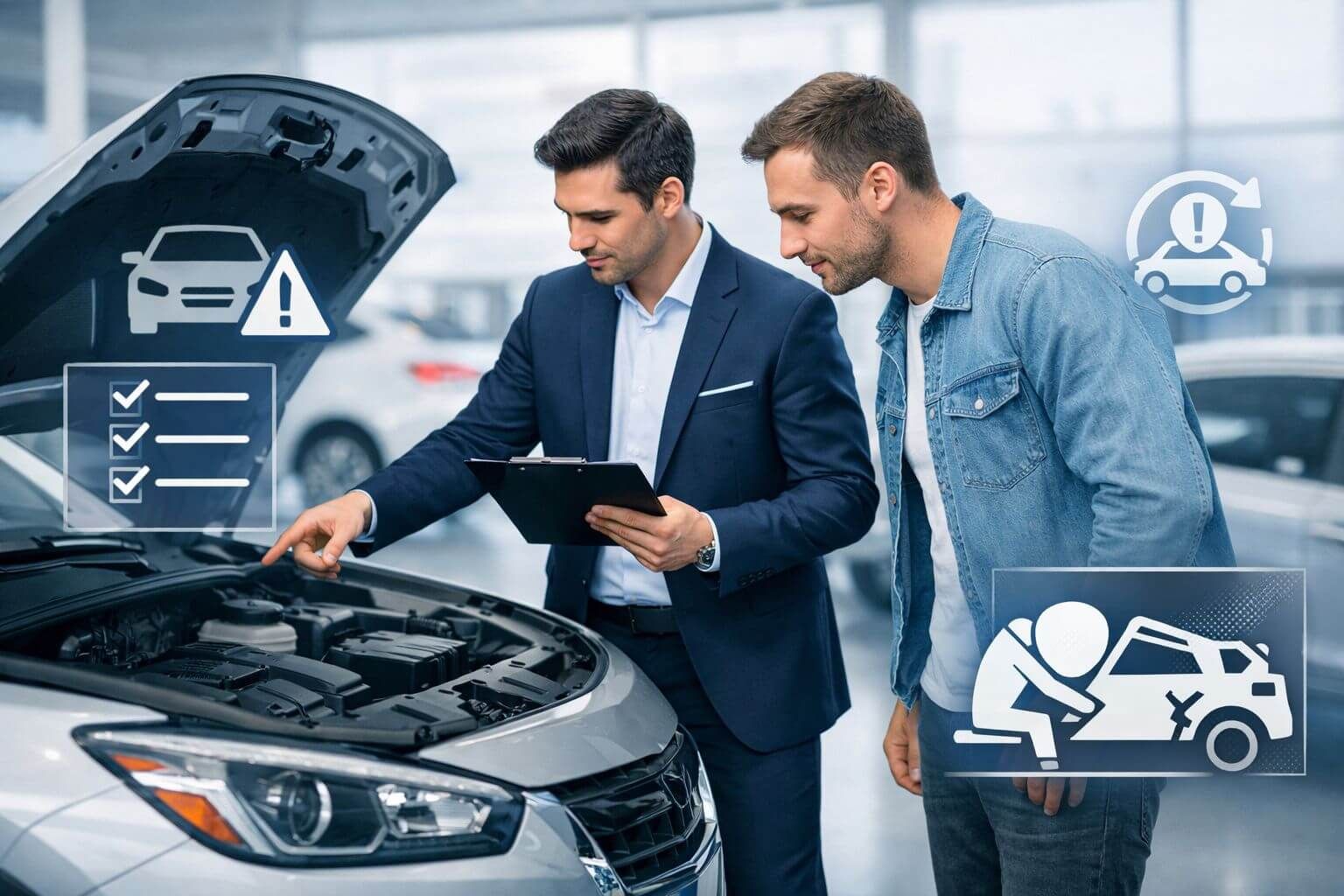
Photos can hide problems. Always inspect the vehicle in daylight, preferably in a safe public location or at a mechanic’s shop. Avoid inspecting a car at night, in bad weather, or in a location where you feel rushed.
Check the exterior for:
- Uneven panel gaps
- Paint mismatch
- Rust
- Cracked lights
- Windshield damage
- Tire wear
- Signs of previous collision repair
Check the interior for:
- Seat and pedal wear
- Warning lights
- Odometer reading
- Air conditioning and heating
- Power windows and locks
- Infotainment and dashboard controls
- Water damage or musty smell
Check under the hood for:
- Fluid leaks
- Corrosion
- Burnt smells
- Loose wiring
- Signs of poor repair
- Mismatched labels or missing stickers
The car does not need to be perfect, but its condition should match the price, mileage, age, and seller’s description.
8. Take a proper test drive
A test drive should be long enough to reveal how the vehicle behaves under normal conditions. Do not just drive around the block.
During the test drive, pay attention to:
- Cold start behaviour
- Engine noise
- Transmission shifting
- Braking feel
- Steering response
- Suspension noise
- Warning lights
- Vibration at speed
- Air conditioning and heat
- Parking brake
- Reverse gear
- Alignment or pulling
Do not let the seller distract you with conversation during the drive. Focus on how the car feels.
9. Get a pre-purchase inspection
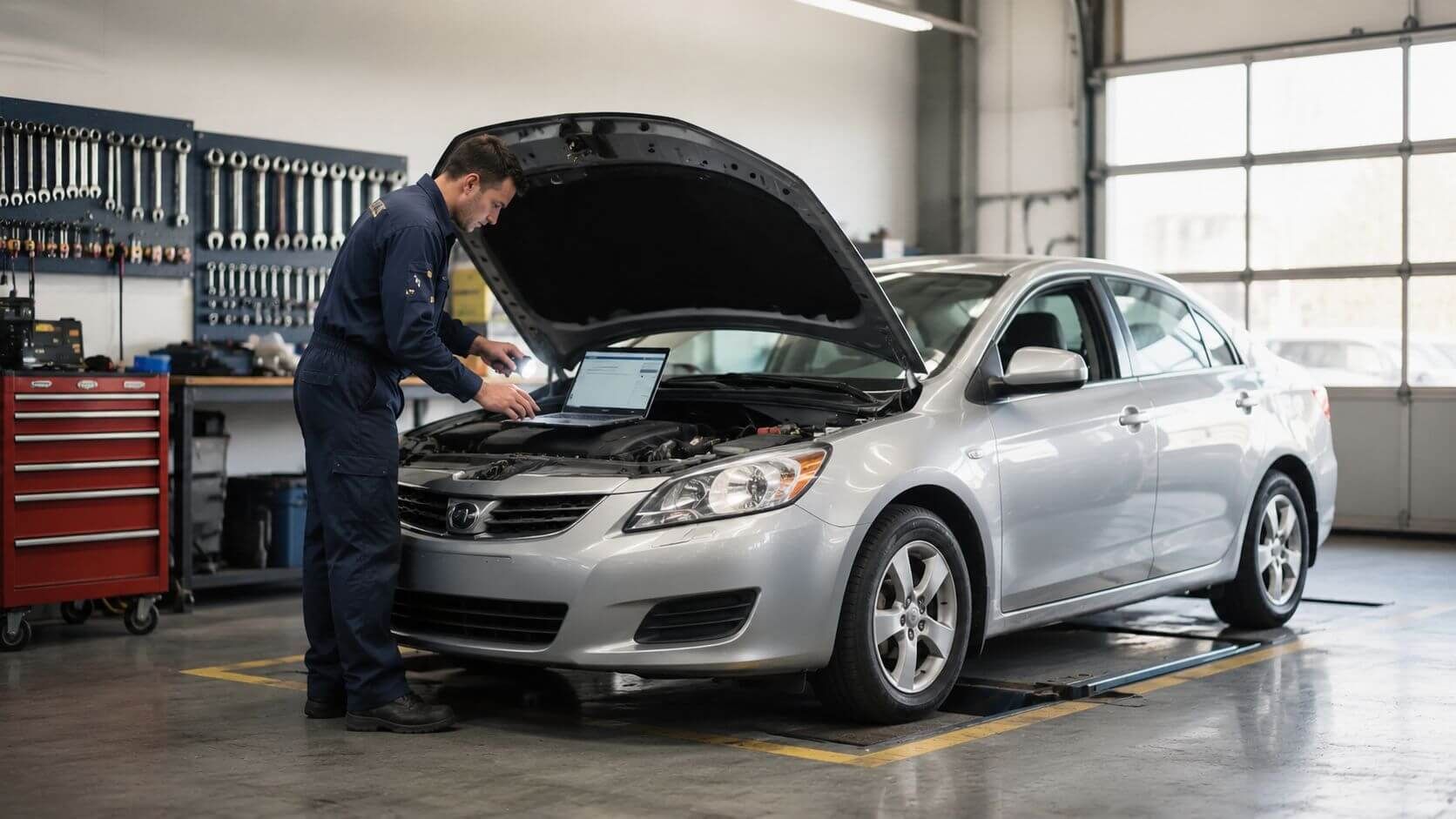
A pre-purchase inspection is one of the best ways to reduce risk in a private sale. A mechanic can check for hidden damage, worn components, fluid leaks, safety concerns, poor repairs, and signs that the vehicle was not maintained properly.
A seller who refuses an independent inspection should have a strong explanation. If they pressure you to skip the inspection because “another buyer is waiting,” be careful.
The inspection may cost money, but it can save you from buying a vehicle with expensive problems.
10. Confirm the odometer reading
Mileage affects value, maintenance, and resale. Compare the odometer reading with the listing, service records, inspection documents, and vehicle history report.
Be cautious if:
- The mileage in the report goes backward.
- The car shows heavy wear despite low mileage.
- The seller has no service records.
- The dashboard display looks altered.
- The seller cannot explain mileage gaps.
- Recent records show a different reading.
A mileage inconsistency should be resolved before payment.
11. Confirm the bill of sale details
A bill of sale protects both buyer and seller by recording the transaction clearly. It should identify the vehicle, the parties, the price, and the terms of sale.
Use a proper bill of sale template and make sure it includes:
- Buyer’s full legal name and address
- Seller’s full legal name and address
- Vehicle year, make, model, and trim
- VIN
- Odometer reading
- Sale price
- Payment method
- Sale date
- Any included accessories or spare keys
- Any known defects or disclosures
- Whether the vehicle is sold “as is,” where applicable
- Signatures of buyer and seller
Do not sign a blank or incomplete bill of sale. Do not agree to a false lower sale price to reduce tax. That can create legal and registration problems.
12. Use a safe payment method
Payment is one of the riskiest parts of a private sale. Avoid sending money before you have verified the vehicle and documents.
Safer practices include:
- Meet at a bank if paying by bank draft.
- Confirm the draft or certified cheque with the issuing bank.
- Avoid large cash payments in unsafe locations.
- Do not send wire transfers to unknown parties.
- Do not pay a deposit before seeing the vehicle unless you are comfortable losing it.
- Get a receipt for any deposit or payment.
- Make sure the seller’s name matches the payment recipient.
Be cautious if the seller asks for unusual payment arrangements, cryptocurrency, gift cards, third-party escrow links, shipping payments, or a deposit before you can inspect the car.
13. Complete the transfer properly
Do not assume the car is legally yours just because you paid for it and received the keys. You still need to complete the transfer and registration process required in your province.
Before driving away, confirm:
- The seller signed the required transfer documents.
- You have proof of insurance if required.
- The bill of sale is complete.
- The VIN matches the registration documents.
- You have all keys, manuals, and accessories included in the sale.
- You know whether plates stay with the seller or transfer with the vehicle.
- You understand tax, registration, and inspection requirements.
Private sale rules are local. Always follow the process required by your provincial vehicle registration authority.
Private sale checklist before you pay
Use this final checklist before handing over money:
- Seller’s name matches the ownership documents.
- VIN matches the vehicle, documents, and report.
- Vehicle history has been reviewed.
- Lien status has been checked.
- Odometer reading makes sense.
- Service records have been reviewed.
- Vehicle was inspected in person.
- Test drive was completed.
- Pre-purchase inspection was done or knowingly declined.
- Provincial transfer requirements are understood.
- Bill of sale is complete.
- Payment method is safe and documented.
- Copies of all documents are saved.
If any item is missing or unclear, pause the transaction.
Red flags that should make you walk away
Some issues are too risky to ignore. Walk away or get professional help if:
- The seller refuses to show ID.
- The seller’s name does not match ownership documents.
- The VIN does not match.
- The vehicle has an unexplained lien.
- The seller refuses an inspection.
- The seller pressures you to pay immediately.
- The price is far below market with no clear reason.
- The car has missing or suspicious paperwork.
- The seller wants payment sent to someone else.
- The ownership transfer process cannot be completed properly.
A good deal is not a good deal if you cannot legally and safely register the vehicle.
Final thoughts
A private sale can be a good way to buy a used car in Canada, but it requires careful verification. The buyer must confirm the vehicle, seller, paperwork, history, lien status, inspection results, and transfer requirements before paying.
Take your time. Ask direct questions. Run a VIN check. Review the documents. Use a proper bill of sale. Follow your province’s registration process. If something does not feel right, walk away.
The safest private sale is one where the vehicle, seller, records, and paperwork all tell the same story.