Used Car Warranty Transfer in Canada: Factory, Extended, and Third-Party Coverage

A used car with remaining warranty coverage can be a safer purchase, but only if the coverage is real, transferable, and still active. Buyers often hear phrases like “still under warranty,” “extended warranty included,” or “covered by the dealer,” then assume future repairs will be paid for. That assumption can be expensive.
In Canada, used car warranty transfer depends on the type of warranty, the manufacturer, the vehicle’s age and mileage, the province, the seller, and the contract terms. Some factory warranties follow the vehicle automatically. Some extended warranties require a transfer application and fee. Some third-party plans have exclusions that make coverage narrower than buyers expect. Some warranties may be voided or limited by salvage branding, improper repairs, modifications, commercial use, missed maintenance, or cross-border import history.
Before paying for a used vehicle, confirm the warranty by VIN, read the terms, ask who provides the coverage, and make sure the seller’s promise is written into the purchase documents.
Why warranty transfer matters when buying used
Warranty coverage affects the real cost of owning a used car. A vehicle priced slightly higher may be worth it if it still has meaningful factory powertrain, hybrid battery, EV battery, corrosion, emissions, or certified pre-owned coverage. On the other hand, a cheaper car with no coverage may become expensive if a major repair appears shortly after purchase.
A warranty can influence:
- Repair risk
- Resale value
- Financing confidence
- Buyer negotiation
- Inspection decisions
- Ownership cost
- Whether the vehicle is worth travelling for
- Whether a private sale is too risky
The key is verification. A seller’s statement is not enough. Start with a warranty check, then confirm coverage directly with the manufacturer, dealer, or warranty provider using the VIN.
Factory warranty vs. extended warranty vs. third-party warranty
Not all warranties are the same. Before you evaluate transferability, identify what kind of coverage the seller is talking about.
Factory warranty
A factory warranty is provided by the vehicle manufacturer. It usually begins on the original in-service date, not the date you buy the used car. The in-service date is commonly when the vehicle was first sold, leased, registered, or placed into use.
Factory warranty may include:
- Basic limited warranty
- Powertrain warranty
- Corrosion or perforation warranty
- Emissions warranty
- Hybrid battery warranty
- EV battery warranty
- Roadside assistance
- Specific parts or systems coverage
Factory warranties often follow the vehicle, but details vary by manufacturer. Buyers should confirm the remaining term, kilometre limit, transfer rules, and exclusions.
Extended warranty or service contract
An extended warranty, often called an extended service plan or vehicle service contract, may be sold by the manufacturer, dealer, lender, or another provider. It may begin after the factory warranty expires, overlap with factory coverage, or cover only selected components.
Extended coverage may or may not transfer to the next owner. Some plans require a transfer form, deadline, inspection, fee, or provider approval. Some plans cannot be transferred at all.
Third-party warranty
A third-party warranty or service contract is provided by a company other than the vehicle manufacturer. These plans can vary widely. Some are useful, while others have strict exclusions, claim limits, deductibles, repair-shop restrictions, maintenance requirements, or cancellation rules.
Do not judge a third-party plan by the brochure alone. Read the contract.
Does a used car warranty transfer automatically?
Sometimes, but not always.
Many factory warranties are tied to the vehicle and may continue for later owners until the time or kilometre limit expires. However, buyers should never assume automatic transfer without checking the manufacturer’s policy.
Extended warranties and third-party plans are more complicated. Some transfer only once. Some transfer only in private sales. Some do not transfer if the vehicle is sold through a dealer. Some require notice within a certain number of days. Some require the original owner to submit the transfer request before the sale is completed.
Before buying, ask:
- What type of warranty is it?
- Who provides it?
- What is the contract number?
- Is it transferable?
- Is there a transfer fee?
- Who must request the transfer?
- Is there a deadline?
- Does the transfer require inspection?
- Are there claim limits or deductibles?
- What systems are excluded?
- What documents are needed?
A warranty that cannot transfer should not be treated as part of the vehicle’s value.
Verify warranty coverage by VIN
The VIN is the safest starting point because warranty coverage is normally tied to the vehicle’s identity, in-service date, mileage, and service history.
Use VinAudit’s guide on how to check car warranty by VIN to understand the basic process, then confirm with the manufacturer or dealer.
When checking by VIN, verify:
- Original in-service date
- Current odometer reading
- Basic warranty expiration
- Powertrain warranty expiration
- Battery warranty, if hybrid or EV
- Corrosion warranty
- Emissions-related coverage
- Certified pre-owned coverage
- Open recalls or service campaigns
- Warranty repair history
- Whether title branding affects coverage
- Whether the vehicle was imported or previously registered outside Canada
Do this before signing. Once the sale is complete, the seller’s promise may be harder to enforce.
In-service date matters more than model year
A common buyer mistake is assuming warranty coverage starts with the model year. It usually does not.
For example, a 2021 vehicle may have entered service in 2020, 2021, or even later if it sat unsold. The warranty clock usually starts from the in-service date. That means two vehicles with the same model year can have different remaining warranty periods.
Ask the dealer or manufacturer to confirm:
- In-service date
- Warranty start date
- Warranty end date
- Kilometre limit
- Current odometer reading used for warranty purposes
If the seller says “it has a five-year warranty,” ask five years from when.
Mileage limits can end coverage early
Most vehicle warranties have both time and kilometre limits. Coverage usually expires when either limit is reached first.
For example, a warranty described as five years or 100,000 kilometres does not mean the buyer gets both five full years and 100,000 kilometres. If the vehicle already has 101,000 kilometres, that coverage may be finished even if the time period has not expired.
Before buying, compare the current odometer reading with each warranty limit. Also check whether mileage is recorded in kilometres or miles, especially for imported vehicles.
Certified pre-owned warranties
Certified pre-owned, or CPO, warranties can add value, but only when they come from a recognized manufacturer or legitimate dealer program. A seller may use the word “certified” casually, so buyers should ask exactly what certification means.
Confirm:
- Who certified the vehicle
- Whether the CPO warranty is manufacturer-backed
- What inspection was performed
- What components are covered
- When coverage begins and ends
- Whether there is a deductible
- Whether coverage transfers to the next owner
- Whether roadside assistance is included
- Whether the warranty is valid across Canada
- Whether exclusions apply for commercial use or modifications
A dealer inspection alone is not the same as a strong warranty.
Extended warranty transfer: what to check
If the seller says an extended warranty is included, ask for the contract before negotiating. Do not rely on a sales receipt or verbal statement.
Review:
- Provider name
- Contract number
- Covered vehicle VIN
- Coverage start and end dates
- Kilometre limits
- Covered components
- Excluded components
- Deductible amount
- Claim maximums
- Labour-rate limits
- Approved repair facilities
- Maintenance requirements
- Transfer rules
- Transfer deadline
- Transfer fee
- Cancellation or refund rights
- Whether coverage is insured, underwritten, dealer-backed, or administrator-backed
Ontario’s used-vehicle dealer rules require sales or purchase orders for optional extended warranties or service plans to show the warranty or plan price and coverage extent. If the dealer is liable under a warranty or plan that is not manufacturer-backed or underwritten by a licensed insurer, additional disclosure is required about purchaser rights and procedures if the dealer fails to honour the plan.
For buyers, the practical rule is simple: the contract must explain who stands behind the warranty.
Third-party warranty risks
Third-party warranty plans can be helpful, but they should be read carefully. Some buyers discover after purchase that the plan does not cover the repair they expected.
Common limitations include:
- Wear-and-tear exclusions
- Pre-existing condition exclusions
- Diagnostic fee limits
- Claim caps
- Total payout limits
- Required maintenance records
- Required prior authorization
- Only certain repair shops allowed
- Deductibles per repair visit
- Exclusions for seals, gaskets, fluids, electronics, or hybrid components
- No coverage for modified or commercial-use vehicles
- Cancellation if transfer steps were missed
If the warranty is a major reason you are buying the car, call the provider directly before purchase. Ask whether the specific vehicle and repair categories are covered after transfer.
Private sale warranty transfer
In a private sale, the buyer has more responsibility to verify warranty coverage. A private seller may not know the exact warranty terms. They may also confuse factory warranty, extended warranty, dealership warranty, and past repair coverage.
Before buying privately:
- Ask for the original purchase documents.
- Ask for warranty contracts.
- Confirm coverage by VIN.
- Contact the manufacturer or warranty provider.
- Confirm transfer rules in writing.
- Make sure the seller signs any required transfer form.
- Keep copies of every document.
- Do not pay extra for coverage that cannot be verified.
Ontario’s used-vehicle guidance advises buyers to check vehicle history, make sure the seller is the legally registered owner, confirm the VIN matches the permit, review lien information, inspect the vehicle, and test drive it before purchase. Those same verification habits should apply to warranty claims too.
Dealer sale warranty transfer
When buying from a dealer, warranty promises should appear clearly in the contract or bill of sale. Do not rely on a salesperson saying “you’re covered” unless the paperwork says the same thing.
Ask the dealer to identify:
- Manufacturer warranty remaining
- Dealer warranty, if any
- Extended warranty or service contract
- Coverage term and kilometre limit
- Deductible
- Transferability
- Repair process
- Exclusions
- Whether the warranty is included or optional
- Whether the warranty cost is itemized
Ontario warns buyers that there is generally no cooling-off period for motor vehicle contracts, so the contract is usually binding once signed. Read warranty language before signing, not after.
Warranty and recalls are not the same
A recall is different from a warranty. A warranty is a promise to repair certain covered defects or components within a defined time, kilometre, or contract limit. A recall is a safety or compliance issue identified by the manufacturer or regulator.
A vehicle can be out of warranty and still eligible for a recall repair. A vehicle can also be under warranty and still have open recalls that need attention.
Before buying, check both warranty status and recall status. Do not assume one replaces the other.
Used EV, hybrid, and battery warranty issues
Battery warranty is especially important for used EVs and hybrids. These warranties may have longer terms than basic coverage, but they can also have specific conditions.
Check:
- Battery warranty start date
- Battery warranty end date
- Kilometre limit
- Capacity-loss coverage
- Whether replacement is new, refurbished, or remanufactured
- Whether software updates are required
- Whether prior accident or flood damage affects coverage
- Whether import history affects coverage
- Whether commercial use changes the warranty
- Whether the warranty transfers to the next owner
A used EV or hybrid with remaining battery warranty may be more valuable than one outside coverage. But only if the warranty is valid and transferable.
What can void or limit warranty coverage?
Warranty coverage may be limited or denied if the vehicle has certain issues. Rules vary, but buyers should watch for:
- Salvage, rebuilt, or irreparable branding
- Flood damage
- Odometer rollback or mileage inconsistency
- Unauthorized modifications
- Improper repairs
- Missed maintenance
- Commercial, taxi, rideshare, or rental use
- Racing or misuse
- Non-approved parts
- Imported vehicle restrictions
- Accident damage affecting the failed part
- Lack of service records
Do not assume a warranty applies just because the vehicle is within time and kilometre limits. Warranty providers may still review history, maintenance, and cause of failure.
Imported vehicles and warranty transfer
Imported used cars need extra attention. A vehicle originally sold in the United States or another market may not have the same warranty coverage in Canada. Some manufacturers honour cross-border warranties. Others restrict coverage or require proof that the vehicle was properly imported and registered.
Before buying an imported vehicle, ask the Canadian dealer or manufacturer:
- Is the warranty valid in Canada?
- Did the warranty start in another country?
- Are there open recalls?
- Are recall repairs available in Canada?
- Does the warranty transfer to a Canadian owner?
- Are parts and service available locally?
- Does title branding affect coverage?
- Are there exclusions for grey-market or foreign-market vehicles?
A seller may honestly believe the car is still under warranty, but the manufacturer’s Canadian policy is what matters.
Documents to request before relying on warranty coverage
Ask for copies of:
- Original purchase agreement
- Warranty booklet
- Extended warranty contract
- Service contract
- Certified pre-owned documents
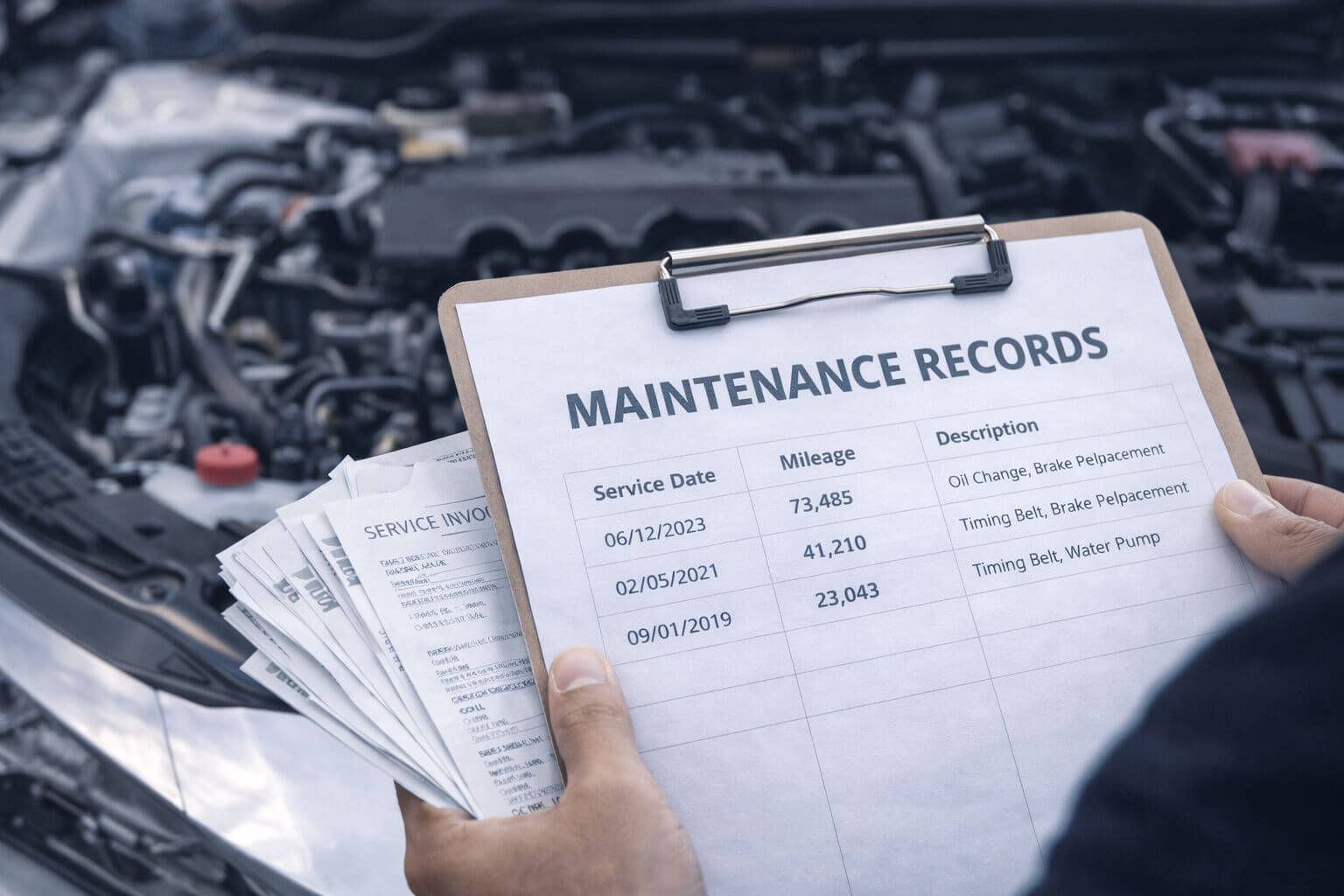
- Maintenance records
- Warranty repair history
- Recall completion records
- Transfer form
- Proof of transfer approval
- Current odometer reading
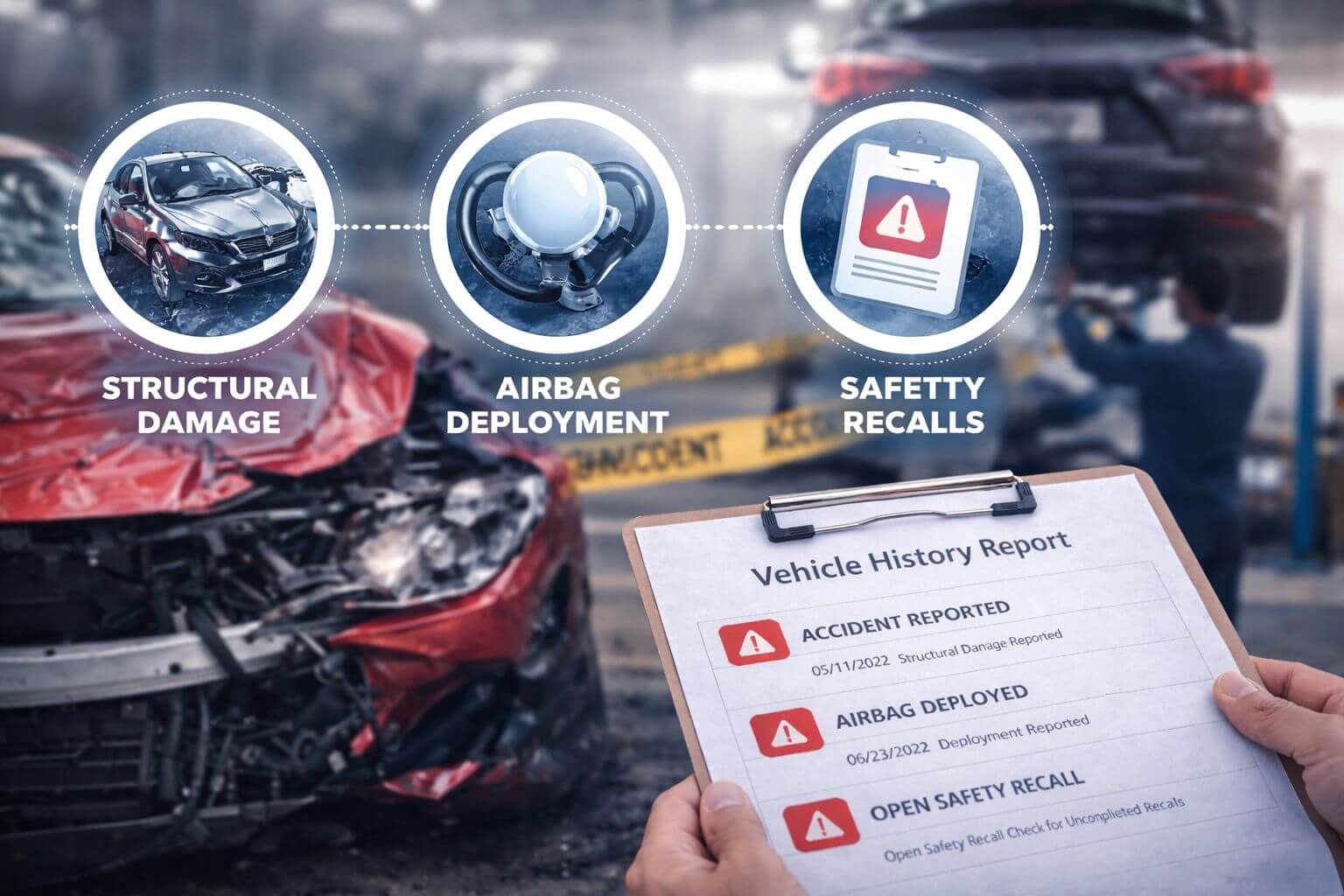
- Vehicle history report
- Import paperwork, if applicable
- Bill of sale showing warranty promises
If the warranty is part of the price, the paperwork should be part of the deal.
Questions to ask before signing
Ask these before you pay:
- What warranty is still active?
- Is it factory, dealer, extended, or third-party coverage?
- Who provides the warranty?
- Does it transfer to me?
- What is the transfer deadline?
- Is there a transfer fee?
- What components are covered?
- What components are excluded?
- Is there a deductible?
- Are repairs limited to certain shops?
- Does the warranty cover diagnostics?
- Are maintenance records required?
- Does prior accident, branding, or import history affect coverage?
- Can the provider confirm coverage by VIN in writing?
- Is the warranty promise written into the bill of sale?
A seller who cannot answer these questions may not understand the coverage they are advertising.
Red flags in used car warranty claims
Be careful if:
- The seller refuses to show the warranty contract.
- The warranty is described only verbally.
- The seller says “everything is covered.”
- The warranty provider cannot confirm coverage by VIN.
- Transfer rules are unclear.
- The transfer deadline has already passed.
- The warranty excludes major systems you care about.
- There are no maintenance records.
- The vehicle has title branding or flood history.
- The car was imported and Canadian coverage is uncertain.
- The seller wants you to pay extra for unverified coverage.
A warranty that cannot be verified should not increase the price you are willing to pay.
Used car warranty transfer checklist
Before buying, confirm:
- Warranty type is identified.
- Provider name is known.
- VIN-based coverage is confirmed.
- In-service date is verified.
- Time and kilometre limits are checked.
- Transferability is confirmed in writing.
- Transfer fee and deadline are known.
- Covered components are listed.
- Exclusions are reviewed.
- Deductible and claim limits are understood.
- Maintenance records are available.
- Recall status is checked separately.
- Title branding and accident history are reviewed.
- Import history is considered.
- Warranty promise is written into the sale documents.
- Copies of all warranty documents are saved.
If the warranty is unclear, treat the vehicle as if it has no warranty when deciding what to pay.
Final thoughts
A used car warranty can reduce ownership risk, but only when the coverage is valid, transferable, and clearly documented. Factory warranties, extended warranties, dealer warranties, certified pre-owned plans, and third-party contracts all work differently.
Do not rely on phrases like “still under warranty” or “extended coverage included.” Confirm the warranty by VIN, read the contract, check the in-service date, review kilometre limits, and contact the provider before signing.
A good warranty should be easy to explain and verify. If the seller cannot prove the coverage, it should not be part of the price.