How to Find Out if a Lien Is on a Vehicle (Canada Guide)
How to Find Out if a Lien Is on a Vehicle (Canada Guide)
If you’re buying a used car, one of the most important checks you can do is finding out whether a lien is on the vehicle. A lien means there is unpaid debt tied to the car—often from a loan or financing agreement—and in some cases, that debt can follow the vehicle, not the seller.
This guide explains how to find out if a lien is on a vehicle in Canada, what types of liens exist, how provincial rules affect buyers, and how to protect yourself before purchasing.
What Is a Vehicle Lien?
A vehicle lien is a legal claim placed on a car by a lender or creditor. It usually exists because the vehicle was financed and the loan has not been fully paid off.
If you buy a car with an active lien, you may:
- Be unable to register the vehicle properly
- Face collection claims from the lender
- Lose the vehicle if the debt is enforced
This is why a lien check is a critical part of getting a complete vehicle history report in Canada before committing to a purchase.
Common Types of Vehicle Liens in Canada
Understanding lien types helps you know what to look for:
- Auto loan liens – Most common, tied to dealership or bank financing
- Personal loan liens – Loans secured against the vehicle
- Business or fleet liens – Vehicles owned or used by companies
- Court-ordered liens – Resulting from judgments or legal disputes
A basic VIN check can surface early warning signs, but lien confirmation often requires deeper history data.
Step 1: Get the VIN and Confirm Vehicle Identity
Every lien search starts with the Vehicle Identification Number (VIN). Before checking for liens, confirm that the VIN on the vehicle matches the VIN on registration and insurance documents.
Running a VIN check in Canada helps confirm the vehicle’s identity, ownership details, and whether the VIN itself raises any red flags before you proceed further.
Step 2: Use a VIN-Based Lien Check
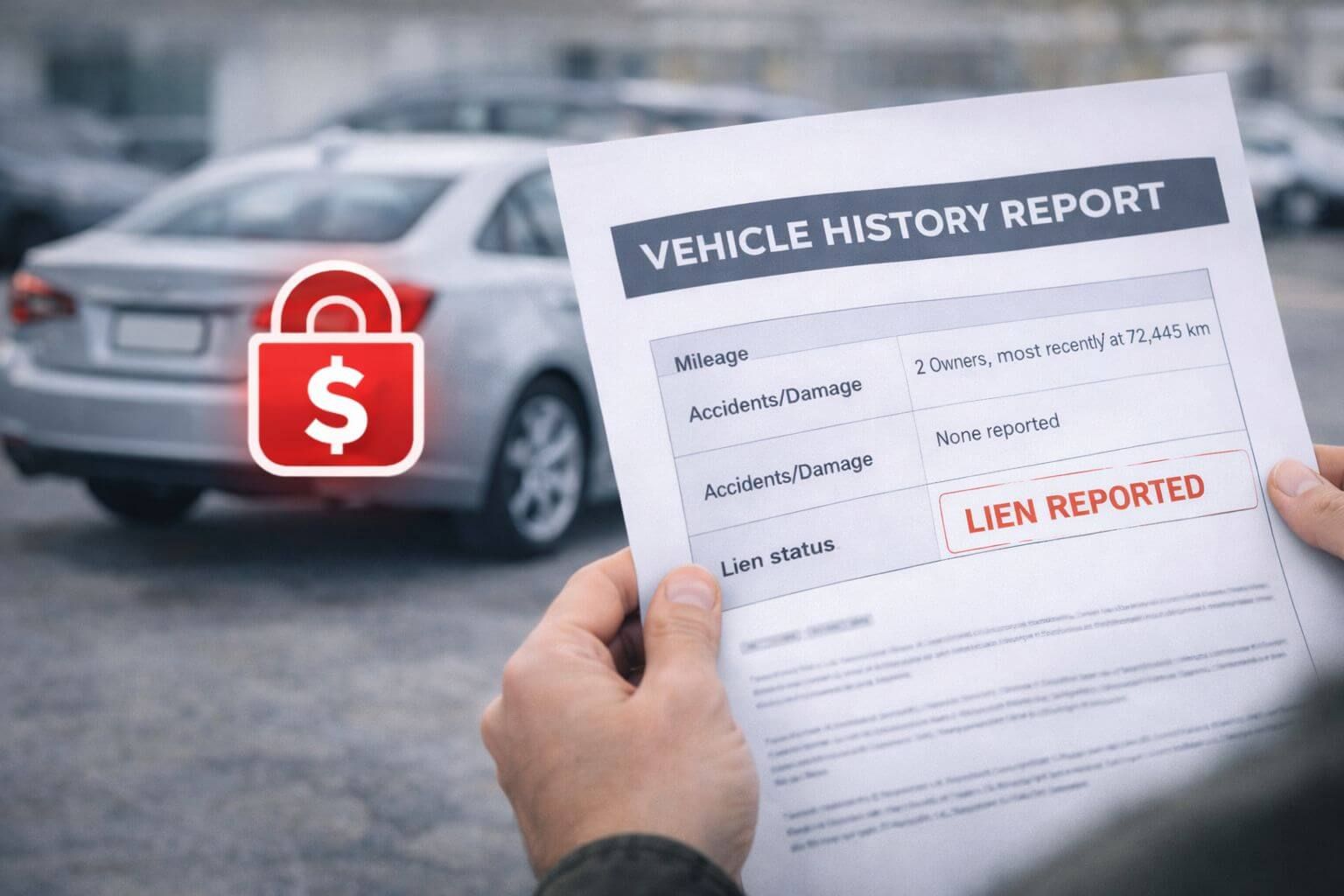
One of the most reliable ways to find out if a lien is on a vehicle is through a VIN-based search included in a vehicle history report.
A vehicle history report for Canada can surface lien records when they are reported through provincial registries, lenders, and insurance databases—especially important if the vehicle has moved between provinces.
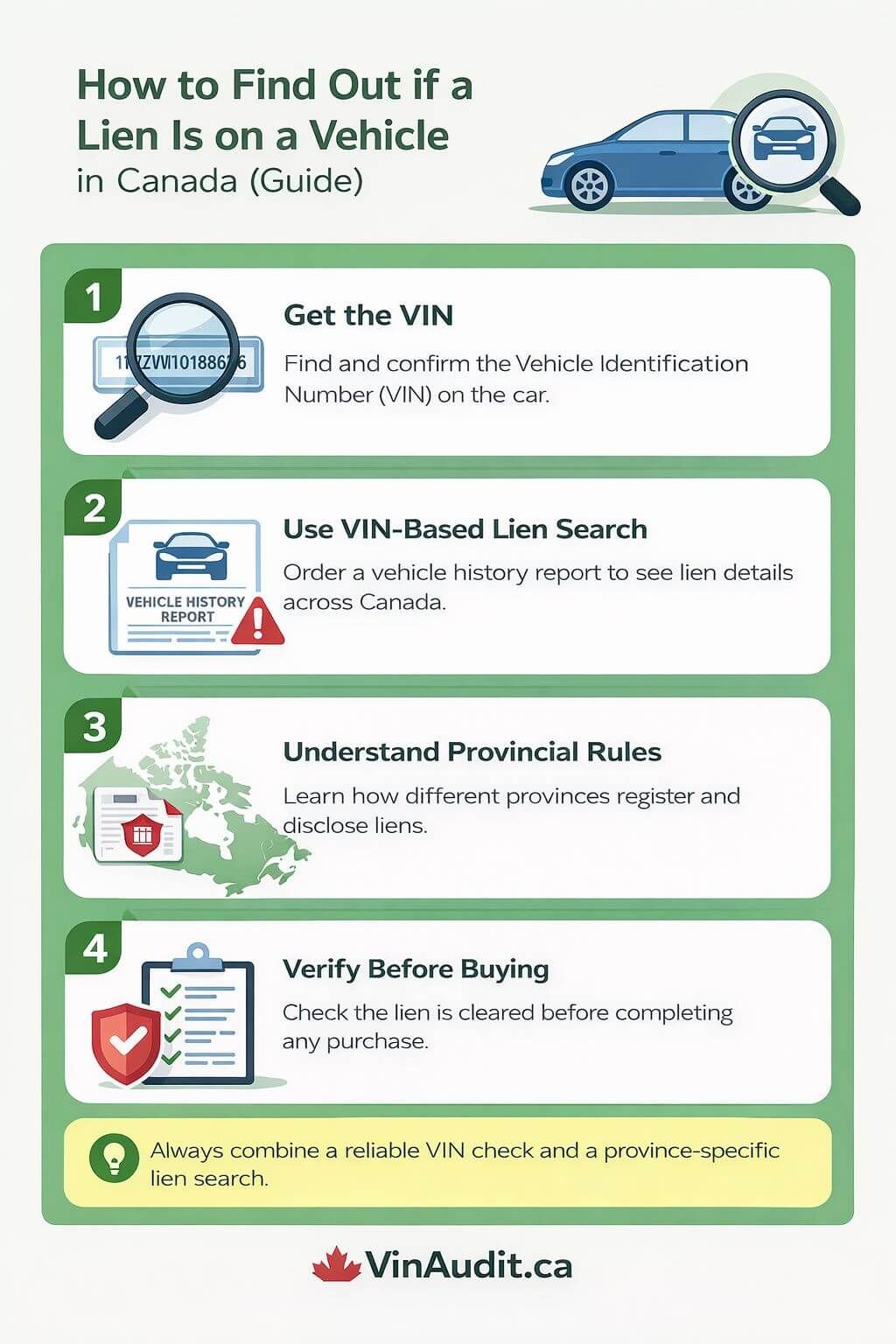
Step 3: Understand Provincial Lien Rules
Lien rules in Canada vary by province, which is why relying on a seller’s word alone is risky.
Ontario
In Ontario, unpaid liens can remain attached to a vehicle even after it’s sold. Buyers should review the Ontario lien check process to understand how liens are registered, disclosed, and cleared before transferring ownership.
Alberta and Other Provinces
Other provinces maintain separate registries and disclosure practices. Vehicles that move between provinces may carry liens that are not immediately visible without a consolidated VIN-based search.
For context on how records move across provinces, consult the Canadian vehicle registration system overview, which explains how ownership and lien data are created and transferred.
Step 4: Compare Lien-Checking Methods
| Method | What It Shows | Limitations |
|---|---|---|
| Seller statement | Verbal confirmation | Not legally reliable |
| Bill of sale disclosure | Seller declaration | Depends on honesty |
| Provincial registry search | Local lien records | May miss out-of-province liens |
| VIN-based vehicle history report | Consolidated lien indicators | Limited to reported data |
Using multiple methods together offers the strongest protection.
Why a Lien Check Is Not Optional
Skipping a lien check can lead to serious financial consequences. Even if the seller appears trustworthy, unpaid debt can surface months after the sale.
A proper lien check helps you:
- Avoid inheriting unpaid loans
- Register the vehicle without delays
- Protect resale value and financing eligibility
This risk is especially high in private sales, which is why buyers should follow province-specific lien guidance before completing a transaction.
Frequently Asked Questions (FAQ)
Can I buy a car in Canada if it has a lien?
Yes, but it’s risky. If the lien is not cleared before the sale, the lender may still have legal rights over the vehicle. Buyers should only proceed if the lien is formally discharged and documented.
Does a lien follow the car or the owner?
In most cases, a lien follows the vehicle, not the owner. That means a new buyer can inherit the debt if proper checks are not performed.
Are lien checks included in a VIN check?
A basic VIN check may flag lien indicators, but a full vehicle history report provides a clearer picture by aggregating data from multiple sources.
Do liens show up differently in Ontario and Alberta?
Yes. Each province maintains its own registration and lien systems. Vehicles that move between provinces can carry liens that are harder to detect without a nationwide VIN-based search.
Is a seller legally required to disclose a lien?
Disclosure rules vary by province, but seller disclosure alone is not enough. Buyers are responsible for verifying lien status independently.
Final Thoughts
Knowing how to find out if a lien is on a vehicle is essential when buying a used car in Canada. Liens are often invisible to buyers who rely solely on seller assurances or paperwork.
The safest approach is to combine a VIN check, a vehicle history report, and province-specific lien research before finalizing any purchase. Taking these steps upfront helps ensure the vehicle—and its debt—doesn’t become your problem later.
If you’re starting your research, begin with a VIN check on VinAudit Canada, then review lien and ownership details before committing to buy.