How to Check for a Lien on a Used Car in Every Canadian Province
How to Check for a Lien on a Used Car in Every Canadian Province
Buying a used car is exciting, but it comes with a risk that many shoppers overlook: liens. A lien is a lender’s legal claim against a vehicle for an unpaid debt. If you unknowingly buy a car with an active lien, the creditor can pursue the vehicle or demand payment—even from you as the new owner.
This guide explains buyer liability, a clear step-by-step lien search process, and where to check in every Canadian province. Follow these steps before you hand over a dollar.
Why Liens Matter and Your Liability
A lien attaches to the vehicle, not just the seller. That means:
- If the previous owner still owes money, the secured creditor may have rights to repossess the car or seek repayment.
- Private contracts like “as-is” or “no warranty” don’t remove a registered security interest.
- In most provinces and territories, liens are registered under personal property security laws (PPSA). In Quebec, they are registered as a movable hypothec under the Civil Code.
- Even honest sellers may not realize a lien hasn’t been discharged. Always verify independently.
Bottom line: A quick, proper search is essential to avoid costly surprises.
The Step-by-Step Lien Search Process
- Gather the VIN and seller details
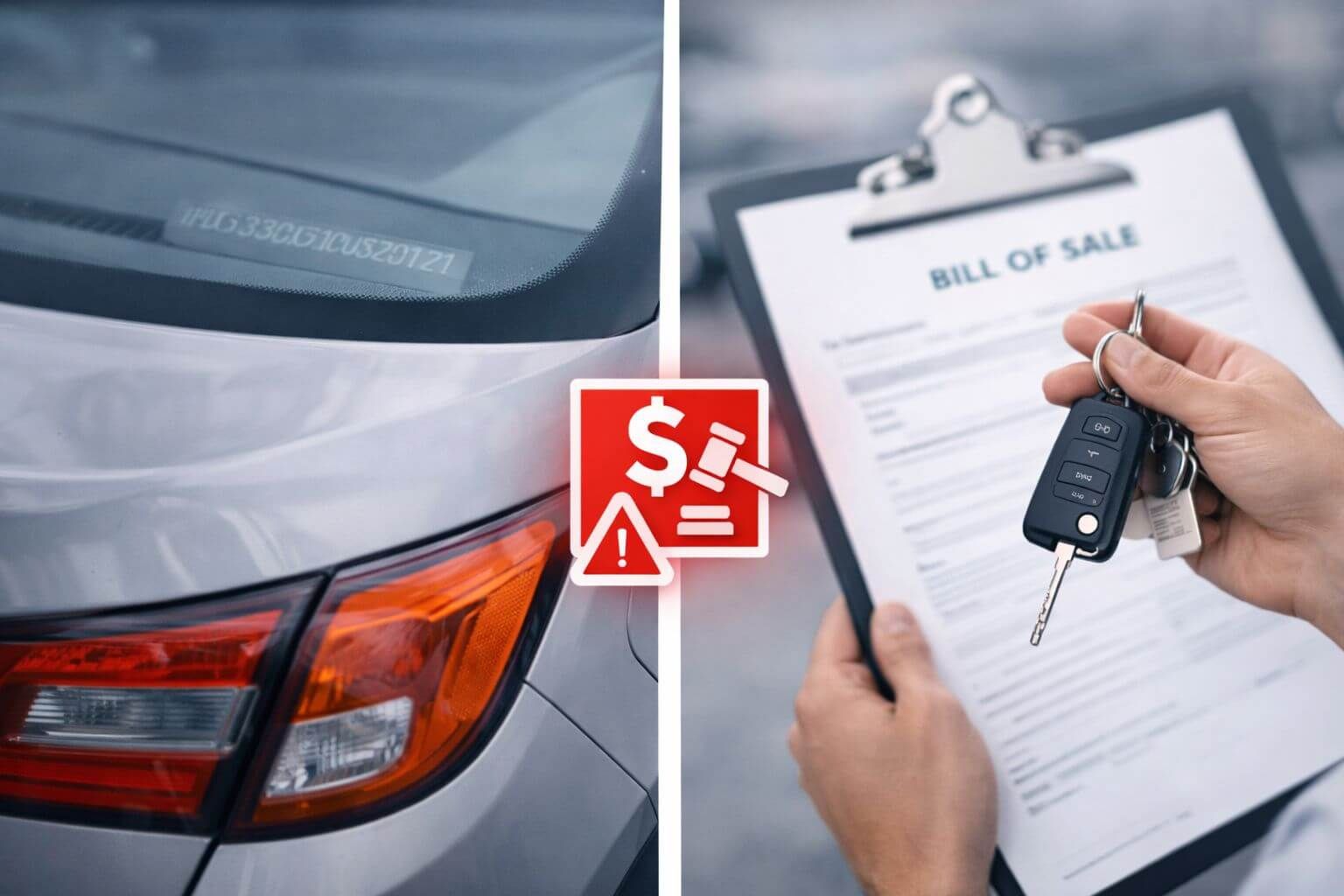
- Record the full 17-character VIN from the dash and door frame. Ask for the seller’s full name and address.
- Identify where to search
- Search in the province where the seller resides and where the vehicle is currently registered. If the car recently moved provinces, consider searching both.
- Run an official registry search by VIN
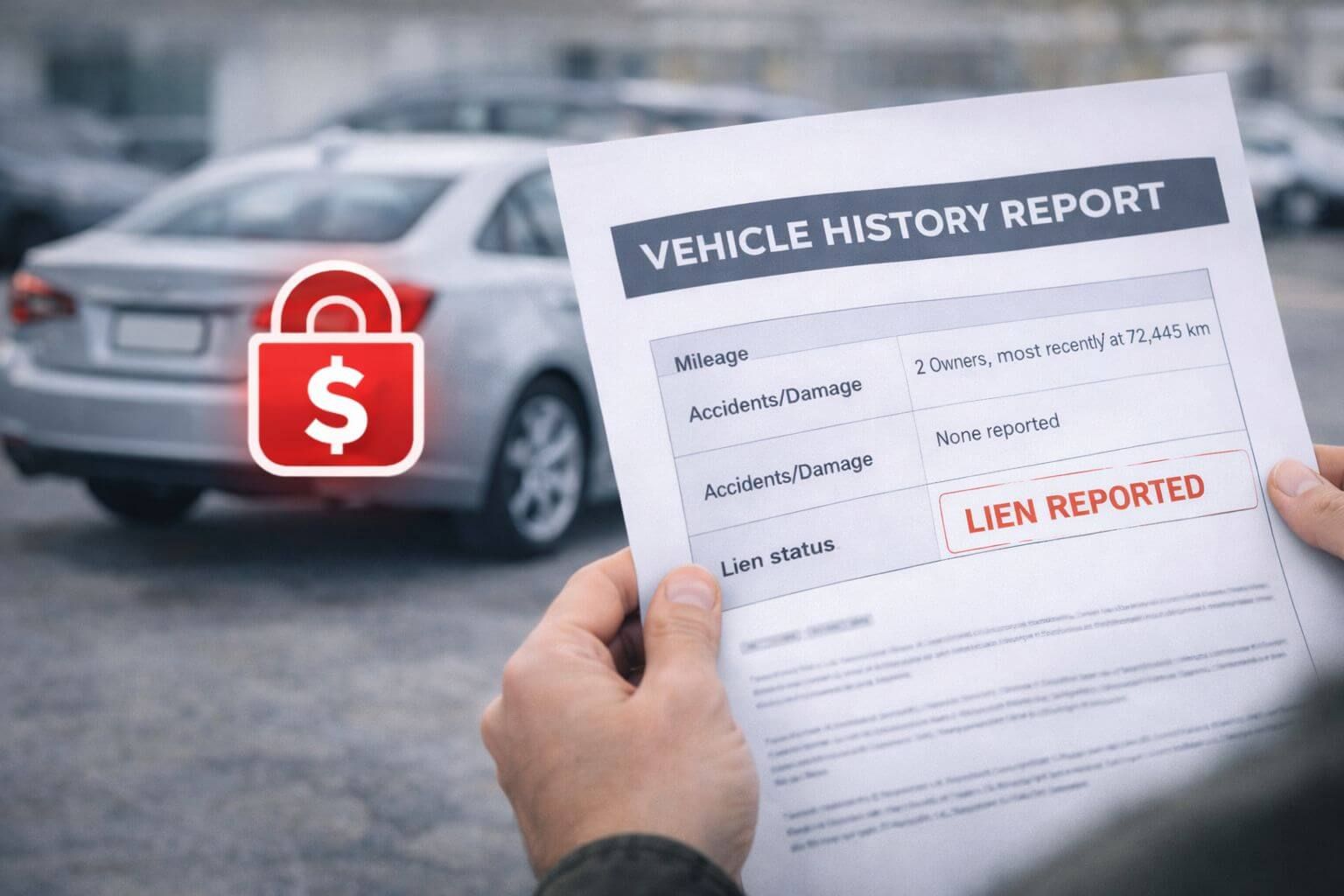
- Use the provincial Personal Property Registry (PPR) or Quebec’s RDPRM. Third-party vehicle history reports can be helpful, but they are not a substitute for the official registry.
- Review the results carefully
- Look for active registrations naming a secured party (usually a bank or finance company). Note file numbers and contact details.
- Resolve any lien before paying
- Ask the seller for a written payout statement from the lender and arrange to pay the lender directly at closing. Obtain a lien release letter or confirmation that a discharge will be filed.
- Paper the deal
- Include lien-clearance language in the bill of sale. Keep the registry search result, payoff proof, and release letter with your records.
Tip: If timing is tight, close the transaction at the seller’s bank or use an escrow process so funds are only released after the lien is cleared.
Where to Search by Province
Below are the official systems and practical tips for each province. Fees and access methods can change, so confirm details on the government website before you search.
British Columbia (BC)
- Registry: BC Personal Property Registry (PPR) via BC Registries and Online Services (BC OnLine) or Service BC.
- How to search: By VIN as a serial-numbered good.
- Notes: Many buyers use authorized search providers. Keep a copy of the search report and file number.
Alberta (AB)
- Registry: Alberta Personal Property Registry.
- How to search: By VIN through licensed Registry Agent offices or approved online service providers.
- Notes: Alberta searches are commonly done the same day at a registry agent. Confirm the debtor’s name matches the seller.
Saskatchewan (SK)
- Registry: Information Services Corporation (ISC) Personal Property Registry.
- How to search: By VIN as a serial-number search through ISC.
- Notes: If a lien appears, contact the secured party listed to confirm current status and payoff instructions.
Manitoba (MB)
- Registry: Manitoba Personal Property Registry.
- How to search: Online by VIN as a serial-numbered good.
- Notes: Consider searching both current and previous provinces if the vehicle has recently moved.
Ontario (ON)
- Registry: Ontario Personal Property Security Registration (PPSR) via ServiceOntario and authorized search providers.
- How to search: By VIN. For private sales, also review the Used Vehicle Information Package (UVIP) the seller must provide.
- Notes: UVIP is helpful but may not reflect very recent changes. Always run a fresh PPSR search before you pay.
Quebec (QC)
- Registry: RDPRM (Registre des droits personnels et réels mobiliers).
- How to search: By serial number (VIN) directly on the RDPRM site.
- Notes: Liens in Quebec are “hypothecs.” Ask the creditor for a quittance (release) or proof a discharge has been or will be filed. Keep copies.
New Brunswick (NB)
- Registry: Service New Brunswick (SNB) Personal Property Registry.
- How to search: By VIN via SNB online services or at SNB locations.
- Notes: Verify the seller’s legal name spelling; a mismatch can complicate follow-up.
Nova Scotia (NS)
- Registry: Nova Scotia Personal Property Registry (Service Nova Scotia).
- How to search: Online by VIN or at Access Nova Scotia centres.
- Notes: Print or save the certified search result for your records.
Prince Edward Island (PE)
- Registry: PEI Personal Property Registry (ePPR).
- How to search: Online by VIN through the provincial portal.
- Notes: If you see an active registration, contact the secured party before proceeding.
Newfoundland and Labrador (NL)
- Registry: Service NL Personal Property Registry.
- How to search: By VIN via Service NL online services or at designated offices.
- Notes: Ensure a discharge is filed or you have written release confirmation from the creditor before completing payment.
Dealer vs. Private Sale: What Changes?
Licensed dealers
- Most provinces require dealers to disclose and clear liens before sale. Oversight bodies include, for example, VSA (BC), AMVIC (AB), and OMVIC (ON).
- Even so, ask for written proof that any registered security interest has been discharged and run your own search for peace of mind.
Private sellers
- You bear the responsibility to check for liens. Request a recent payoff statement and a lien release letter.
- In Ontario, the seller must provide the UVIP; in Quebec, confirm on RDPRM and ask for a quittance if a lien existed.
In both cases, keep all documents. If something goes wrong, a clear paper trail helps resolve disputes faster.
Red Flags and How to Protect Yourself
- The seller refuses to share the VIN or ID.
- The asking price is well below market without a credible reason.
- The name on the vehicle registration doesn’t match the seller’s government ID.
- The seller pressures you to pay immediately or in cash only.
Protection checklist:
- Run an official registry search in the relevant province(s) the day you intend to buy.
- If a lien exists, close the deal at the lender’s branch or via a secure, documented payoff.
- Get a signed bill of sale stating the vehicle is free of all encumbrances upon payment.
- Keep the search result, payoff receipt, and release letter or discharge confirmation.
FAQ
Is a vehicle history report enough?
- No. Tools like CARFAX Canada are useful for accident and mileage history, but only an official provincial registry search confirms lien status.
What if the lien shows as paid but not discharged?
- Ask the creditor to file a discharge immediately and provide written confirmation. You can still proceed if funds are held in trust or released only once discharge is confirmed.
Do I have to search multiple provinces?
- Best practice is to search where the seller lives and where the vehicle is currently or was recently registered. When in doubt, run both.
Checking for liens takes minutes and can save thousands. Make the registry search part of every used-car purchase, resolve any lien before paying, and keep thorough documentation. That’s how you drive away with confidence.