Where to Find a VIN on Commercial Trucks, Vans, and Fleet Vehicles
Where to Find a VIN on Commercial Trucks, Vans, and Fleet Vehicles
Before verifying the history or specifications of a commercial vehicle, buyers must first locate the correct Vehicle Identification Number (VIN). While VIN placement is standardized for most road vehicles, commercial trucks, vans, and fleet units can include additional plates or labels that cause confusion.
This guide explains where to find a VIN on commercial trucks, vans, and fleet vehicles, how to confirm the correct VIN, and what to do if the VIN is missing or unclear.
Why VIN Location Matters for Commercial Vehicles
Commercial vehicles are often sold after years of fleet or work use. Locating the correct VIN allows buyers to:
- Verify vehicle classification and specifications
- Confirm registration and insurance eligibility
- Detect VIN mismatches or tampering
- Proceed with a commercial vehicle VIN check
Checking the wrong number—or missing the VIN entirely—can lead to incomplete or misleading verification.
Primary VIN Locations on Commercial Vehicles
Most commercial vehicles follow the same VIN placement standards as passenger vehicles, with a few additions.
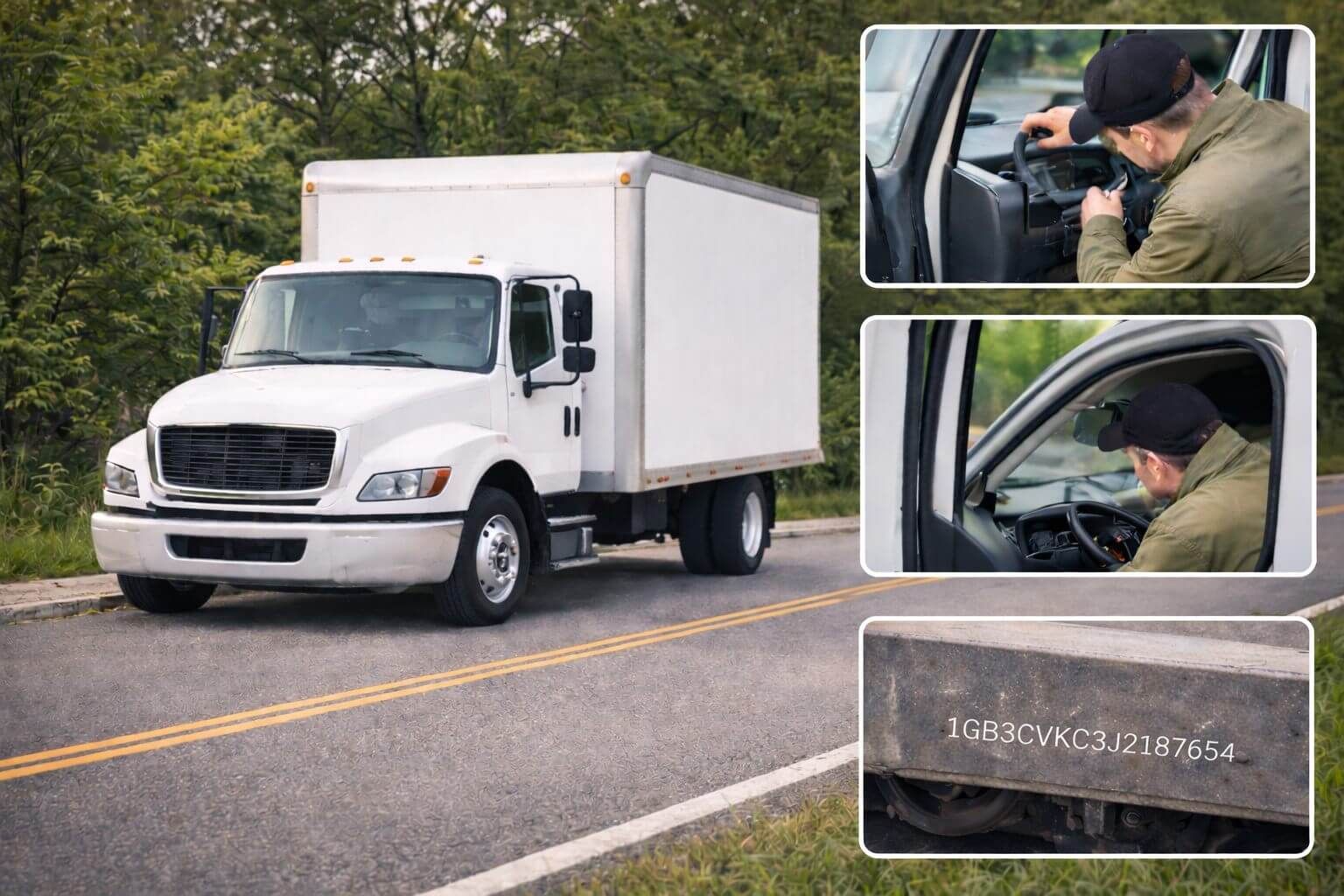
1. Dashboard Near the Windshield
The most common VIN location is:
- On the driver-side dashboard
- Visible through the windshield from outside
This VIN usually matches registration and insurance records.
2. Driver-Side Door Frame or Pillar
Commercial vans and trucks typically display the VIN:
- Inside the driver-side door frame
- On a manufacturer compliance label
This label may also include:
- Gross Vehicle Weight Rating (GVWR)
- Axle ratings
- Build date
3. Chassis or Frame Stamping
Some commercial trucks include a VIN:
- Stamped directly on the chassis or frame rail
- Located under the vehicle near the front axle
This stamping is especially common on heavier-duty trucks.
VIN Locations on Fleet Vehicles
Fleet vehicles—such as delivery vans or service trucks—may include additional identifiers:
- Fleet asset numbers
- Internal inventory tags
These are not VINs and should not be used for verification. Always locate the official 17-character VIN.
What a Legitimate Commercial VIN Should Look Like
A valid commercial vehicle VIN typically:
- Contains 17 characters
- Uses consistent font and spacing
- Matches all official documents
Be cautious if the VIN:
- Appears altered or re-stamped
- Does not match paperwork
- Is missing from expected locations
What to Do After You Find the VIN
Once located, verify the VIN before moving forward. Running a commercial vehicle VIN check helps confirm whether the VIN is valid and whether the vehicle aligns with the seller’s claims.
VIN verification should be completed before payment or ownership transfer.
When VIN Information Is Missing or Confusing
VIN confusion may arise from:
- Replaced doors or windshields
- Frame repairs or modifications
- Older commercial vehicles with worn plates
If the correct VIN cannot be confirmed, proceed with caution or consider walking away.
Final Thoughts
Knowing where to find a VIN on commercial trucks, vans, and fleet vehicles is an essential step before verification or purchase. Because fleet vehicles may display multiple identifiers, confirming the official VIN is critical.
After locating the VIN, verify it using a commercial vehicle VIN check and compare the results with documentation. Accurate VIN identification helps reduce risk and supports informed buying decisions.