
Accident History on a Used Car: When It’s a Deal-Breaker and When It’s Not
Accident History on a Used Car: When It’s a Deal-Breaker and When It’s Not
Buying used often means encountering a car with some past scrapes. The big question is whether that accident history should stop the deal or simply shape the price and your inspection plan. Not all collisions are equal. Understand the difference between minor and major damage, learn how to spot structural issues, and know what a prior crash means for resale so you can buy with confidence.
Why Accident History Matters
Accident history affects safety, longevity, cost of ownership, and future value. Even a well-repaired car may have lingering issues, from misaligned panels to advanced driver-assistance systems (ADAS) that were never calibrated after repair. Insurance costs and resale demand can also be influenced by the presence and severity of past damage.
Minor vs Major Damage: What’s the Difference?
The severity of a prior collision is the single most important factor.
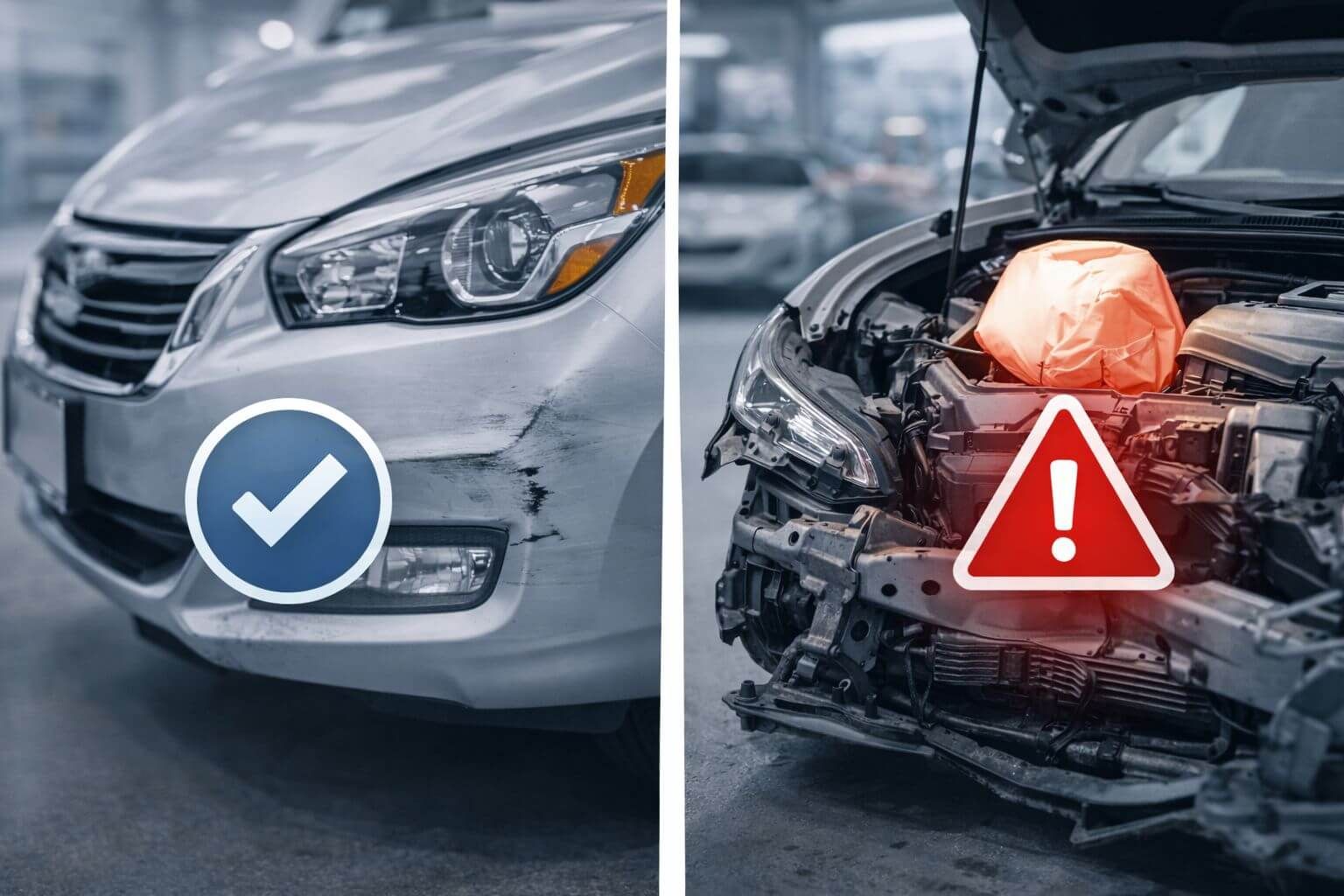
- Minor damage generally involves cosmetic or bolt-on parts and no structural intrusion. Think bumper covers, headlights, fenders, small dents, light paintwork, and windshield replacement. No airbag deployment, no intrusion into the engine bay or trunk structure, and no suspension or cooling system damage. When repaired properly using documented methods and quality parts, many minor incidents are non-issues.
- Major damage involves the structure of the vehicle, safety systems, or core mechanical components. Examples include damage to frame rails or unibody components, A/B/C pillars, rocker panels, floorpans, roof, quarter panels that require sectioning or welding, or core support replacement. Airbag deployment, bent or replaced suspension subframes, intrusion into the passenger compartment, and flood or fire history also fall into this category. Title brands such as salvage, rebuilt, or flood almost always indicate major damage.
When in doubt, assume that structural, airbag, flood, or fire events are serious and require expert scrutiny and significant price concessions. Many buyers with long-term ownership plans simply avoid these categories.
How to Read the Report (and Between the Lines)
Vehicle history services can be helpful but are not perfect. Not every incident is reported, and severity labels may be inconsistent. Use reports as a directional tool and verify with documentation and inspection.
- Look for number of accidents, dates, and locations. Clustered incidents or repeated repairs can signal chronic issues.
- Check for title brands, mileage gaps, and inconsistent ownership timelines.
- Review repair invoices and photos if available. Before and after photos, line-item parts lists, and alignment or calibration records are strong credibility signals.
- Watch for rental or fleet history. These vehicles are often maintained on schedule but may have higher driver turnover and minor incidents.
Inspecting for Structural Issues
A pre-purchase inspection by a qualified, independent shop is essential. Ask for a shop with frame and ADAS experience. During your own walkaround and test drive, look for:
- Panel gaps and alignment differences across doors, hood, trunk, and bumpers
- Paint color or texture mismatch, overspray on trim or rubber seals, or dust in clearcoat
- Irregular or non-factory welds, seam sealer that looks fresh or uneven, or removed underbody coatings
- Kinked metal in crumple zones, damaged radiator support, or ripples near strut towers
- Evidence of frame machine clamp marks or reshaping of rails
- Suspension clues: uneven ride height, abnormal tire wear, steering pull, or vibrations
- Water damage hints: musty smell, corrosion on seat rails or underdash, silt in crevices
- ADAS concerns: warning lights off during start-up, or unexplained errors. Ask for proof of radar, camera, and sensor calibrations after repair
If you find any of the above, pause and get a professional opinion. Structural corrections can be performed to a high standard, but only with the right equipment, parts, and documentation.
When It’s Not a Deal-Breaker
A past minor incident is often acceptable and can be a negotiating advantage when repair quality is proven. Consider moving forward if:
- The damage was cosmetic or limited to bolt-on panels with no structural intrusion
- No airbags deployed and there was no cooling system or suspension damage
- The seller provides detailed invoices, paint and parts documentation, and before or after photos
- OEM parts were used, or high-quality certified aftermarket parts where appropriate
- Alignment specs and ADAS calibration records are available and recent
- A thorough independent inspection confirms repair quality and normal chassis measurements
In such cases, a modest discount can reflect the stigma without compromising safety or ownership experience.
When You Should Walk Away
Even a great price can be wrong for the wrong car. Consider walking if:
- Structural damage is present and repair quality cannot be verified with measurements and documentation
- The title is salvage, rebuilt, or flood branded, unless you are highly experienced and comfortable with long-term risks
- Multiple airbags deployed, or safety system repairs are undocumented
- Evidence of frame rail sectioning, pillar repairs, or roof replacement without factory-level documentation
- Electrical gremlins, ADAS warning lights, or incomplete calibrations persist
- The seller resists a pre-purchase inspection or cannot produce records
There are plenty of used cars. Pass on questionable examples and keep your leverage.
Pricing and Resale Impact
Accident history changes the math. The market generally discounts vehicles based on perceived risk and buyer demand:
- Minor cosmetic incident, high-quality repair: 5 to 15 percent discount
- Panel replacement with original structure intact, or isolated airbag deployment with full documentation: 15 to 30 percent discount
- Structural damage, multiple airbags, or title brand: 30 to 50 percent or more
These are broad guidelines. Luxury, performance, and collector vehicles may see steeper penalties because their buyer pool is more condition sensitive, and aluminum or composite body repairs require specialized shops. On the flip side, mainstream models with strong demand may see smaller discounts if documentation is excellent.
Remember the second buyer. If you plan to resell within a few years, your future buyer will see the same reports and photos. Price your offer now with that exit in mind, and keep every receipt for repairs, alignments, and calibrations to defend value later.
Questions to Ask the Seller or Body Shop
- What was damaged, and which parts were replaced versus repaired?
- Were OEM or aftermarket parts used? Any recycled components?
- Was structural work performed, and are frame or unibody measurements available?
- Did any airbags deploy, and were modules and sensors replaced and coded?
- Were ADAS systems calibrated after repair? Can I see the reports?
- Was a four-wheel alignment performed after suspension or body work?
- Do you have before and after photos and paint thickness readings?
Smart Buying Checklist
- Pull a vehicle history report from multiple sources when possible
- Inspect in daylight, on a dry surface, with time for a proper test drive
- Get an independent pre-purchase inspection, including underbody and scan tool reports
- Verify ADAS calibrations and alignment documentation if any front or rear repair occurred
- Use paint meter readings and visual cues to confirm the scope of work
- Price the car with a realistic discount, and keep a folder of records for your own resale
Bottom Line
Accident history is not automatically a deal-breaker. Minor, well-documented repairs can offer good value, especially if you confirm quality with a thorough inspection and calibrations. But structural damage, airbag deployment without full documentation, title brands, and flood history are legitimate red flags that will impact safety, ownership experience, and resale. Know the difference, ask the right questions, and let the quality of the repair and the depth of documentation guide your decision rather than the word accident alone.
Note: This article provides general guidance and is not a substitute for a professional inspection or legal advice.