VIN Fraud in Canada: Cloned VINs, Re-vinning, and How Buyers Get Tricked
VIN fraud in Canada is one of the most serious risks in the used car market because it attacks the identity of the vehicle itself. A car can look clean, drive well, come with ownership papers, and still be hiding a stolen, rebuilt, or misrepresented past if the Vehicle Identification Number has been copied, altered, or fraudulently reassigned.
For buyers, the risk goes beyond paying too much. A fraudulent VIN can lead to registration problems, insurance issues, financing disputes, police seizure, and major financial loss. That is why the VIN should never be treated as just a number on the dashboard. It is the key identifier used to check a vehicle’s history, title status, theft records, odometer readings, liens, recalls, and specifications.
Before buying a used vehicle, start with a basic VIN check, confirm the vehicle details with a VIN decoder, and review the available vehicle report sections. These checks will not remove every possible risk, but they can help you spot inconsistencies before you hand over money.
What is VIN fraud?
VIN fraud happens when someone uses a Vehicle Identification Number dishonestly to hide a vehicle’s true identity or history. It may involve copying a legitimate VIN, replacing a VIN plate, altering stamped numbers, using false ownership documents, or selling a stolen vehicle under another vehicle’s identity.
In simple terms, VIN fraud is identity fraud for cars.
Fraudsters may use VIN fraud to disguise theft, salvage history, odometer rollback, accident damage, flood damage, title branding, or illegal resale. A buyer may think they are purchasing a clean used vehicle, only to later discover that the car is stolen, improperly registered, or legally tied to another vehicle.
Why the VIN matters when buying a used car
A Vehicle Identification Number is a unique code assigned to a vehicle. For most modern vehicles, the VIN is a 17-character identifier that can reveal the vehicle’s year, make, model, body style, engine, manufacturing details, and serial sequence.
The VIN is used by insurers, lenders, repair shops, registration authorities, law enforcement, auction companies, recall systems, and vehicle history providers. If the VIN is wrong, altered, cloned, or inconsistent, every record connected to the vehicle becomes questionable.
A good first step is to use a free VIN decoder to confirm whether the vehicle’s basic details match the seller’s listing. For example, if the seller advertises a 2019 SUV but the VIN decodes as a different body style or model year, you should stop and investigate before proceeding.
A VIN decoder tells you what the vehicle is supposed to be. A Canadian vehicle history report helps show what has happened to that vehicle over time.
VIN cloning: how it works
VIN cloning happens when a fraudster copies the VIN from a legitimate vehicle and uses it on another vehicle, often a stolen one. The cloned vehicle is usually similar to the legitimate vehicle, such as the same year, make, model, trim, and colour. This makes the scam harder to detect during a quick inspection.
For example, a thief may steal a black 2021 SUV, then find another black 2021 SUV of the same model that is legally registered in another province. The thief copies the legitimate VIN, creates fake paperwork, and attaches that VIN to the stolen vehicle. To an unsuspecting buyer, the vehicle may look normal. The VIN may appear to match the documents. The seller may even provide a believable reason for selling.
The problem is that the buyer is not actually getting the legal identity of the car. They are buying a vehicle with a borrowed or stolen identity.
VinAudit has a dedicated guide on VIN cloning that explains how this scheme works and why buyers should compare the VIN across multiple locations before completing a purchase.
What is re-vinning?
Re-vinning is closely related to VIN cloning, but it usually refers to physically altering, replacing, or reassigning a VIN to disguise a vehicle’s true identity. This may involve removing a factory VIN plate, installing a fake VIN tag, altering stamped numbers, replacing labels, or using documents from another vehicle.
Re-vinning is dangerous because it can hide more than theft. It may also conceal severe accident damage, salvage or rebuilt branding, odometer issues, import problems, or title defects.
A re-vinned car may pass a casual inspection if the buyer only checks the dashboard VIN. This is why buyers should compare the VIN on the dashboard, door label, registration documents, service records, insurance paperwork, and any other visible VIN locations.
Common warning signs of VIN fraud
VIN fraud is not always obvious. Many fraudulent vehicles look clean and well-maintained. The seller may appear calm, friendly, and prepared. Still, there are warning signs that buyers should take seriously.
1. The VIN does not match across the vehicle and documents
The dashboard VIN should match the driver-side door label, ownership documents, bill of sale, insurance records, service records, and any available title or registration information. If one number is different, missing, damaged, or suspicious, do not continue until the issue is explained and independently verified.
A seller may say the door was replaced or the label was damaged during repairs. That can happen, but it should be supported by records, not just a verbal explanation.
2. The VIN plate looks altered or replaced
Look closely at the VIN plate and surrounding area. Warning signs include scratches, unusual rivets, tool marks, fresh paint, damaged labels, uneven placement, glue residue, or a plate that looks newer than the rest of the vehicle.
If a VIN plate appears tampered with, walk away or have the vehicle inspected by a qualified professional before doing anything else.
3. The decoded VIN does not match the vehicle
Use a VIN decoder to compare the VIN against the vehicle being sold. The year, make, model, body style, and engine should line up with the listing and the actual vehicle.
If the VIN decodes differently from what the seller claims, that is a serious red flag. It may be a listing mistake, but it may also point to cloning, re-vinning, or misrepresentation.
4. The seller refuses to provide the VIN early
A legitimate seller should be willing to provide the VIN before a deposit, meeting, inspection, or payment. If the seller refuses, delays, sends a blurry photo, or says the VIN will only be shared after you commit, be careful.
You need the VIN to run basic checks. A seller who prevents verification is making the transaction riskier.
5. The price is lower than expected
A low price does not automatically mean fraud, but it should make you more careful. VIN fraud schemes often rely on urgency and bargain pricing. The seller may say they need to sell quickly because of relocation, financial stress, divorce, or a family emergency.
Before assuming it is a good deal, compare the asking price using a market value tool and check similar vehicles in your area.
6. The paperwork looks clean but incomplete
Some fraudulent sellers provide documents that look official but lack a normal ownership trail. Be cautious if there are no service records, no clear ownership history, no inspection documents, no lien release, or no explanation for gaps in registration.
A clean-looking document is not enough. The paperwork must match the vehicle, the seller, and the VIN.
7. The seller pressures you to move quickly
Pressure is one of the most common signs of used car fraud. The seller may say there are other buyers waiting, the deal is only available today, or a deposit is needed immediately.
A legitimate vehicle should withstand a VIN check, inspection, and paperwork review. If the seller does not allow reasonable due diligence, consider that a warning sign.
Where a vehicle history report can help
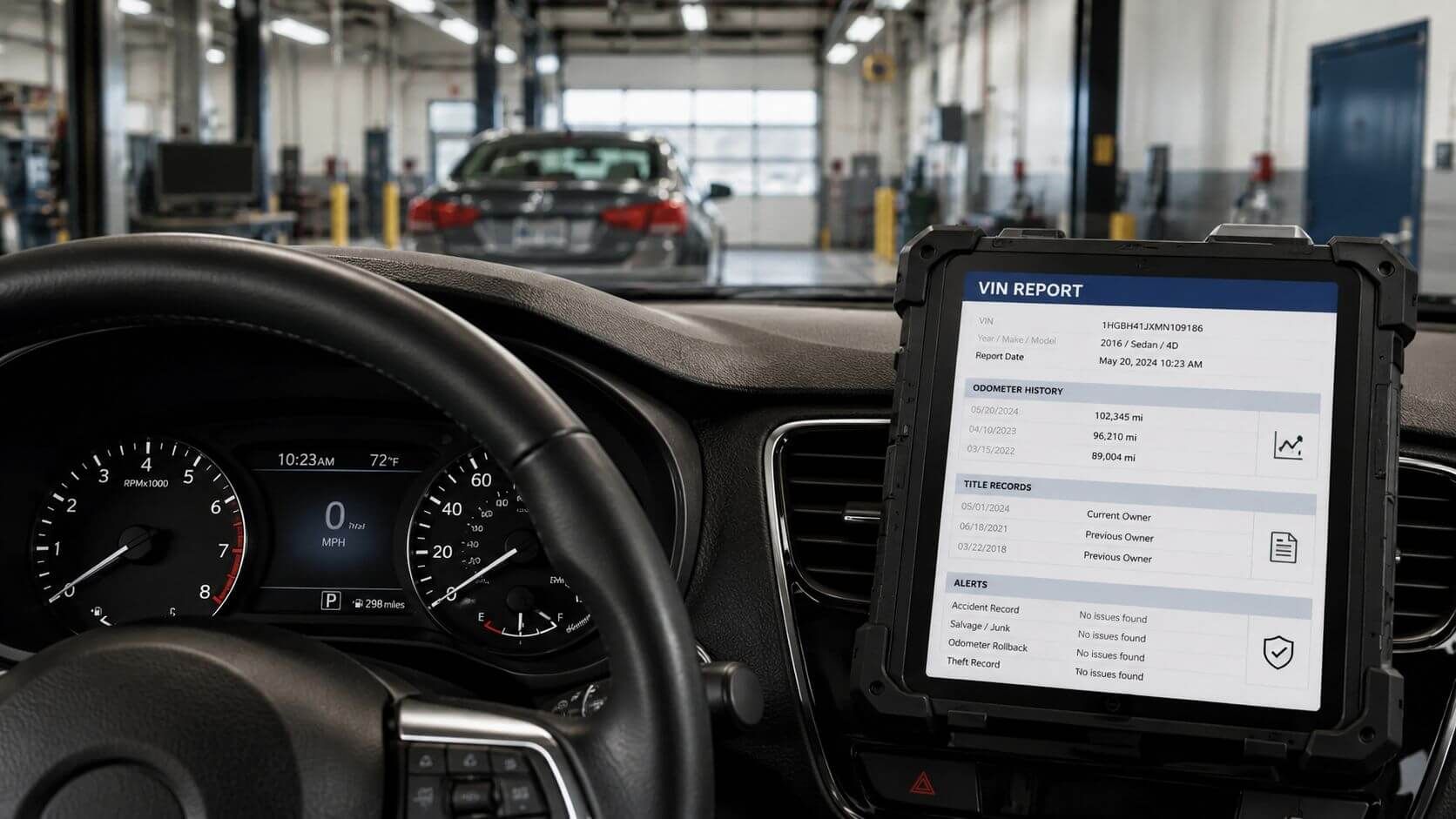
A vehicle history report helps buyers compare the seller’s claims against available records tied to the VIN. Depending on available data, a report may include accident indicators, title records, registration history, odometer readings, theft records, lien information, recall data, and other important details.
A report is especially useful in VIN fraud cases because it can reveal inconsistencies. For example:
- The vehicle is advertised as accident-free, but the report shows prior damage.
- The mileage on the odometer is lower than a previous recorded reading.
- The vehicle appears in a province or jurisdiction the seller never mentioned.
- The title or branding history conflicts with the seller’s claim.
- Theft-related information appears in the record.
- The decoded specifications do not match the physical vehicle.
If you are not familiar with report terminology, review the vehicle report sections so you know which parts to check first.
Where reports may not catch everything
A vehicle history report is important, but it cannot guarantee that every event has been recorded. Some accidents are repaired privately. Some theft or registration records may be delayed. Some cross-border or interprovincial issues may not be obvious right away. Some fraud is only discovered after a physical inspection, police review, insurer investigation, or registration attempt.
That is why buyers should use a layered process:
- Decode the VIN.
- Run a vehicle history report.
- Compare the VIN across the vehicle and documents.
- Check theft indicators.
- Review title, lien, and odometer records.
- Arrange an independent inspection.
- Verify the seller’s identity.
- Avoid payment until the vehicle, seller, and paperwork all check out.
A report is not a substitute for judgment. It is one of the strongest tools in a smart buyer’s process.
How stolen vehicles can be sold with fake VINs
Some VIN fraud schemes are designed to move stolen vehicles back into the market. A stolen car may be given a cloned VIN, paired with fake documents, cleaned up, and offered through a private listing or even through a seemingly normal sales channel.
This is why buyers should not rely only on the seller’s word or the vehicle’s appearance. If the vehicle has been stolen, the buyer may lose the car even after paying for it.
Before purchase, use a stolen vehicle VIN check and review VinAudit’s guide on how to check if a vehicle was stolen in Canada using a VIN. If theft risk appears, do not complete the transaction.
VIN fraud and liens: why ownership still matters
Even when the VIN appears valid, buyers should still check whether the vehicle has a lien. A lien means a lender or creditor may have a financial interest in the vehicle. If you buy a vehicle with an unpaid lien, you may face problems even if the seller hands you the keys and ownership documents.
VIN fraud and lien risk can overlap when sellers use confusing paperwork, false identities, or incomplete ownership records. A buyer should confirm both the vehicle identity and the financial status of the vehicle before paying.
For this step, use a lien check and review the relevant provincial lien information if you are buying in a specific province.
Buyer checklist: What to do before you pay
Use this checklist before sending a deposit, signing a bill of sale, or completing a used car purchase.
Step 1: Ask for the VIN in writing
Ask the seller for the VIN before the meeting. Request a clear photo of the dashboard VIN and the driver-side door label. Do not accept cropped, blurry, or partially covered photos.
Step 2: Decode the VIN
Use a free VIN decoder to confirm the vehicle’s basic identity. Make sure the decoded year, make, model, engine, and body style match the listing.
Step 3: Run a Canadian vehicle history report
Run a Canadian VIN report and review title, accident, odometer, theft, registration, and recall information carefully.
Step 4: Check for theft records
Use a stolen vehicle VIN check before payment, especially if the price is unusually low or the seller’s story feels rushed.
Step 5: Compare all VIN locations
At the inspection, compare the VIN on the dashboard, door label, registration, bill of sale, insurance documents, service records, and any other visible VIN locations.
Step 6: Look for tampering
Check for damaged labels, uneven rivets, scratches, fresh paint, glue marks, missing stickers, or altered numbers. If something looks wrong, do not ignore it.
Step 7: Verify ownership and liens
Confirm that the seller’s name matches the ownership documents. Then run a car title search or lien check when applicable.
Step 8: Use a buyer checklist
Before finalizing the transaction, follow a structured car buyer checklist so you do not miss key steps during the inspection and paperwork review.
Step 9: Do not rush payment
Avoid cash deposits, wire transfers, or payment pressure before verification. Complete the purchase only when the vehicle, VIN, documents, seller identity, and history all make sense.
Step 10: Walk away if the story does not line up
If the VIN, documents, seller identity, vehicle history, or price does not make sense, walking away is usually the safest decision.
What to do if you suspect VIN fraud
If you suspect VIN fraud before buying, stop the transaction immediately. Save the listing, seller messages, VIN photos, documents, and payment requests. Do not confront the seller aggressively or send money.
If the vehicle may be stolen, contact local police. If you already bought the vehicle, gather your bill of sale, ownership documents, payment proof, messages, inspection records, and history report. You may also need to contact your insurer, provincial registration authority, lender, and a legal professional.
If the problem involves online fraud, fake payment instructions, identity deception, or a fraudulent marketplace listing, report the incident through the appropriate fraud-reporting channels.
Final thoughts
VIN fraud in Canada is dangerous because it can make a stolen, rebuilt, or misrepresented vehicle look legitimate. The car may look clean. The seller may seem trustworthy. The paperwork may appear official. But if the VIN has been cloned, altered, or fraudulently reassigned, the buyer can be left with serious legal and financial problems.
The safest approach is simple: slow down and verify everything.
Get the VIN early. Decode it. Run a vehicle history report. Compare the VIN across the vehicle and documents. Check for theft, title, lien, and odometer issues. Use a buyer checklist. Be willing to walk away.
A legitimate seller should not object to reasonable checks. If the vehicle is clean and properly represented, the VIN, report, paperwork, and physical inspection should all tell the same story.