Compliance Checklist for Used Car Dealers in Canada
Compliance Checklist for Used Car Dealers in Canada
Staying compliant is not only a legal requirement for used car dealers in Canada, it is also a competitive advantage. Clear disclosures, airtight VIN verification, and thorough lien checks build trust, reduce risk, and protect your dealership from costly penalties or buybacks. This guide offers a practical checklist you can adapt to your province, with special focus on disclosure requirements, VIN verification, and lien checks.
Note: Dealer rules are provincial. Confirm specifics with your local regulator such as OMVIC in Ontario, AMVIC in Alberta, VSA in British Columbia, and similar bodies across Canada.
What Compliance Really Means in Used Vehicle Sales
Compliance touches the full sales lifecycle:
- Acquisition: verify VIN, title status, prior use, liens, and branded status.
- Advertising: follow pricing rules, avoid misleading claims, and include prescribed disclosures.
- Sales process: present required disclosures, provide accurate contracts, and verify identification.
- After-sale: retain records, handle payouts and discharges, and respond to complaints.
This article focuses on three pillars that drive most enforcement and customer disputes: disclosures, VIN verification, and lien checks.
Mandatory Disclosures: What Buyers Must Know
Canadian provinces require dealers to disclose all material facts that would influence a buyer’s decision. While wording can vary by province, dealers should be ready to disclose the following at minimum:
- Previous use: rental, taxi, police, emergency, ride-share, commercial, daily rental, or demonstration vehicle.
- Accident, collision, or damage history: including the nature of repairs and known costs where available.
- Title brand or status: salvage, rebuilt, non-repairable, irreparable, flood, fire, lemon or manufacturer buyback where applicable.
- Odometer: reading at sale and any known or suspected tampering, replacement, or non-functioning cluster.
- Out-of-province or out-of-country registration history.
- Structural repairs or frame damage, if known or reported.
- Prior insurance write-off or total loss.
- Existing liens or security interests on the vehicle.
- Material defects known to the dealer, including mechanical issues that affect safety or value.
- Open safety recalls where required, or best-practice disclosure if not legally mandated.
Practical Disclosure Checklist
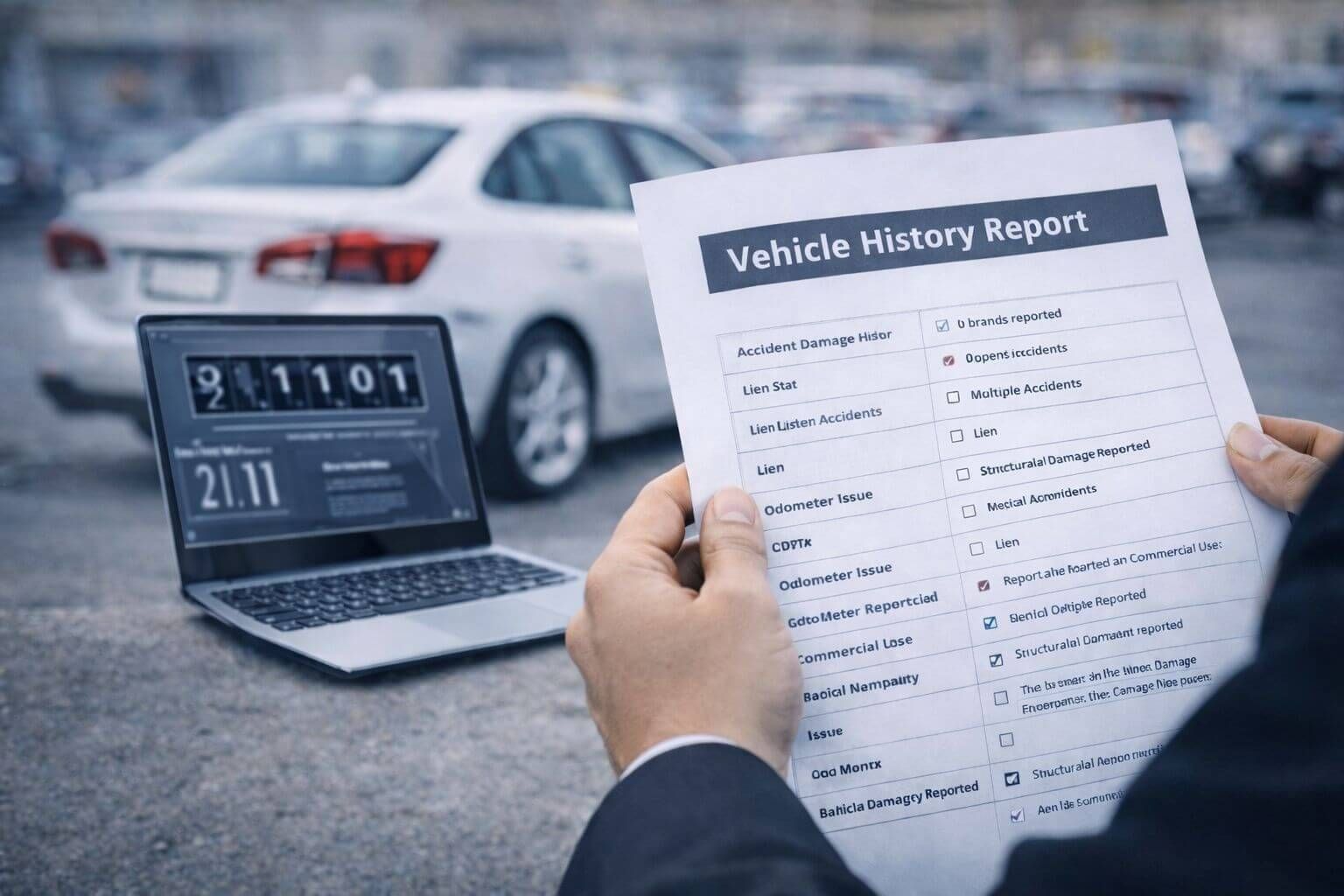
- Gather and review a current vehicle history report.
- Review repair invoices, auction condition reports, and inspection results.
- Capture prior use details from documents and history providers.
- Confirm any title brands and register status in the province of last registration.
- Note any open recalls and communicate them transparently.
- Document all disclosures in writing on a signed disclosure form.
- Ensure the Bill of Sale clearly reflects key disclosures.
- Provide copies to the buyer and store in the deal jacket.
Tip: Disclose in plain language. If you suspect an issue but lack documentation, disclose the concern and your basis for it.
VIN Verification: Get the Identifier Right
A correct VIN is the backbone of your deal. It ties together history, specifications, lien checks, and insurance.
Step-by-Step VIN Verification
- Locate VINs at multiple points:
- Dashboard plate at the base of the windshield.
- Driver-side door jamb certification label.
- Stamped locations on the frame or firewall where applicable.
- Engine block or other manufacturer-specific locations.
- Compare VIN across documents:
- Registration, title equivalent, previous province registration records.
- Vehicle history reports.
- Service or recall documents.
- Inspect for tampering:
- Mismatched rivets, uneven etching, damaged labels, inconsistent fonts.
- Signs of removal, repainting, or plate swapping.
- Decode the VIN:
- Verify year, make, model, body style, engine, assembly plant.
- Confirm it matches the vehicle and listed options.
- Run national and provincial checks:
- Check for stolen status via recognized services.
- Confirm last province of registration and any title brand.
- Record and retain:
- Keep clear photos of the VIN plate and door label.
- Store decoding and verification notes in the deal file.
If anything looks off, stop the process and escalate for further investigation. Selling a vehicle with a cloned or altered VIN exposes you to severe liability.
Lien Checks: PPSA and RDPRM Searches
A lien check confirms whether someone else has a legal interest in the vehicle, such as a lender or previous owner’s creditor. Selling a vehicle with an undisclosed lien can lead to repossession or buyer remedies against the dealership.
How Lien Searches Work in Canada
- Provinces and territories (outside Quebec) register security interests under PPSA systems.
- Quebec uses RDPRM for movable property security.
- Liens are generally searchable by VIN and sometimes by debtor name. Accuracy matters.
Lien Check Workflow
- Gather correct identifiers:
- Full and exact VIN.
- Legal name and address of the seller if required for a name-based search.
- Search all relevant jurisdictions:
- The province or territory of the seller’s residence.
- The province where the vehicle has been registered.
- Any other provinces where the vehicle may have been used or financed.
- Review results carefully:
- Confirm whether the VIN appears in any active registrations.
- Identify secured parties and obligation details.
- Resolve before selling:
- Obtain written payout statements from secured parties.
- Pay out liens from proceeds and obtain discharge or release confirmation.
- For consignment vehicles, obtain a lien status declaration and creditor consent where applicable.
- Document the file:
- Save search certificates, payout letters, and discharge confirmations.
- Note who performed the search, when, and in which registries.
Best practice is to run lien searches both at acquisition and again before delivery if there is a delay. Keep proof of searches and discharges in the deal jacket.
Advertising and Pricing Considerations
While disclosure is the highlight, your advertising often forms the first representation to the consumer. Ensure:
- Price claims are clear and not misleading.
- Fees are displayed as required in your province, and all-in pricing rules are followed where applicable.
- Any conditions or limitations are clearly stated.
- Vehicle attributes match the VIN and equipment on the lot.
Privacy and Identity Verification
Dealers handle sensitive personal information, including driver’s licenses, credit applications, and payout details. Follow privacy best practices:
- Collect only what you need and secure it appropriately.
- Obtain consent for credit checks and information sharing.
- Limit access to deal files to authorized staff.
- Follow PIPEDA and any applicable provincial privacy laws.
Record-Keeping: Your Best Defensive Tool
Comprehensive records protect your business. Maintain, at a minimum:
- Signed disclosure statements and Bill of Sale.
- Vehicle history reports, inspection results, reconditioning invoices.
- VIN photos and decoding notes.
- Lien search results, payout statements, and discharges.
- Copies of advertising used for the vehicle.
- Customer communications relevant to material facts.
Retention requirements vary by province and purpose. A 6 to 7 year retention policy typically aligns with tax and many regulatory expectations. Confirm with your regulator and accountant.
A Practical Three-Stage Compliance Workflow
Before acquisition:
- Verify VIN and run preliminary stolen and brand checks.
- Pull a vehicle history report.
- Run a lien search in the jurisdiction of the seller.
- Inspect for structural damage and odometer concerns.
Before advertising:
- Confirm required disclosures and pricing accuracy.
- Ensure photos and options match the actual VIN build.
- Prepare a written disclosure summary for staff reference.
Before delivery:
- Re-run lien check if time has passed or circumstances changed.
- Review and have the buyer sign disclosures.
- Provide copies of all documents to the customer.
- Confirm insurance and registration steps are complete.
Common Pitfalls and How to Avoid Them
- Relying on a single report: cross-check multiple sources and documents.
- Skipping a second lien check before delivery: liens can appear late.
- Vague disclosures: use plain, specific language buyers can understand.
- Poor documentation: if it is not in the file, it did not happen.
- Training gaps: schedule regular compliance refreshers for sales and F and I staff.
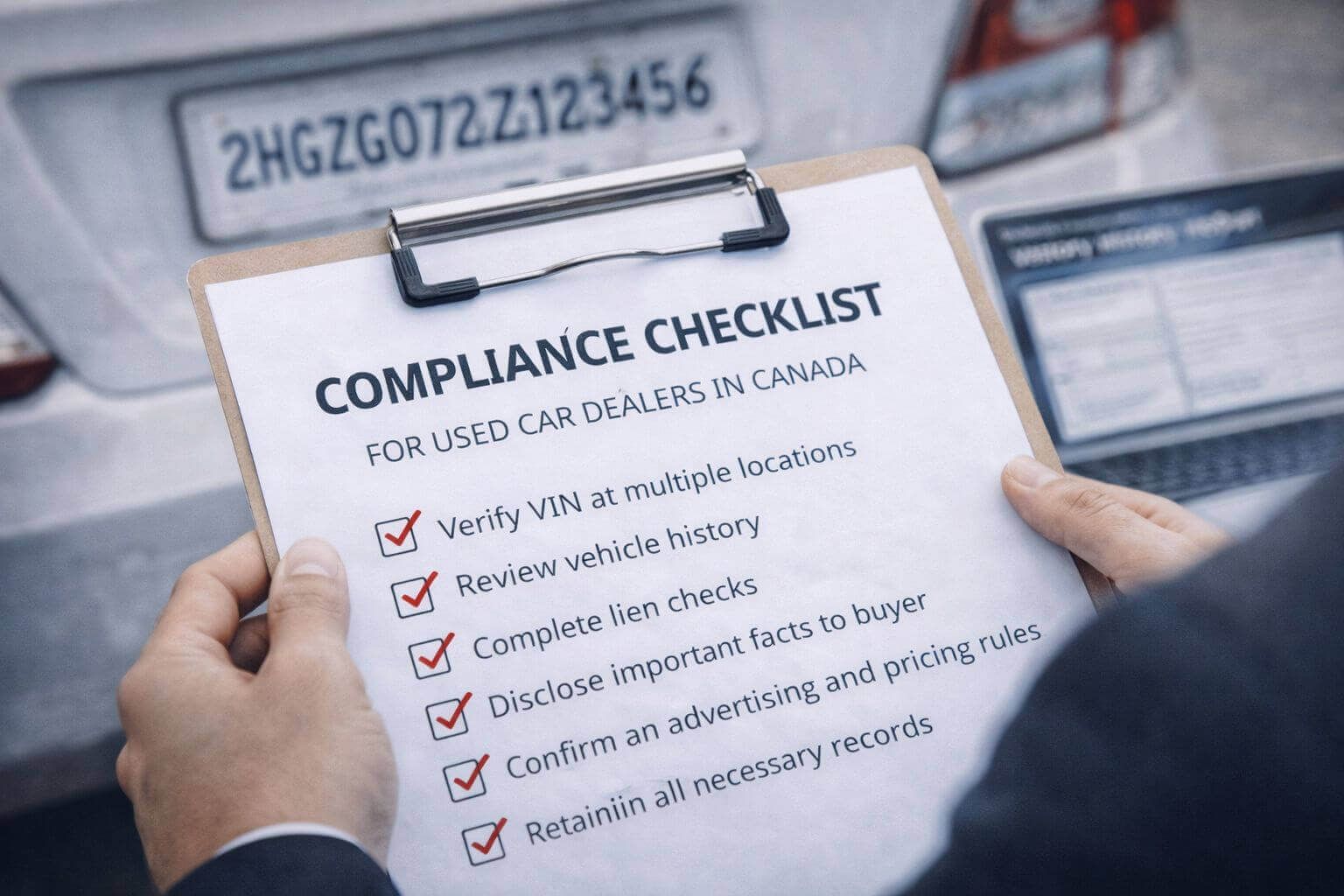
Quick Reference Checklist
- VIN verified at multiple locations and decoded.
- History reviewed for accidents, prior use, brands, and out-of-province status.
- Lien searches completed in all relevant registries; discharges obtained.
- Required disclosures drafted, reviewed with buyer, and signed.
- Advertising and pricing compliant with provincial rules.
- Records complete and securely stored.
Final Thought
Compliance is not just about avoiding fines. It is about building a dealership culture that treats transparency as a selling feature. Make disclosures prominent, verify VINs rigorously, and never deliver without a clean lien file. Your customers, your reputation, and your bottom line will thank you.