Insurance Before Registration: What Used Car Buyers Should Arrange Before Pickup
Before picking up a used car in Canada, arrange insurance, confirm registration requirements, prepare the bill of sale and ownership documents, and understand whether you can legally drive the vehicle home. Do not assume you can use the seller’s plates, rely on the seller’s insurance, or “sort it out after pickup.” In most cases, you need proof of insurance and proper registration or temporary permission before the vehicle can be driven on public roads.
The exact process depends on your province, whether you are buying from a dealer or private seller, whether the vehicle is already plated, whether you are transferring existing plates, and whether the car is being bought from another province. The safest approach is to speak with your insurer or broker before pickup, confirm the process with your provincial registration authority, and make sure the vehicle, insurance, and registration documents all line up.
If you are still planning the ownership transfer, review the basics of Canadian vehicle registration and arrange auto insurance in Canada before the handoff date.
Why insurance should be arranged before pickup
The moment you pick up a used vehicle, you need to know whether you are legally allowed to drive it. Insurance is not a detail to handle later. It affects registration, plates, temporary permits, financing, test drives after purchase, and your risk if something happens on the way home.
A buyer who drives without proper insurance or registration may face fines, vehicle impoundment, denied claims, personal liability, or problems completing the ownership transfer. Even a short drive home can become expensive if there is a collision, police stop, theft, weather damage, or mechanical failure.
Before pickup, you should know:
- Whether the vehicle is insured in your name
- Whether you have proof of insurance
- Whether the vehicle can be registered immediately
- Whether you need a temporary permit
- Whether plates stay with the seller
- Whether you can transfer your existing plates
- Whether the vehicle must pass inspection first
- Whether the insurer has the correct VIN
- Whether coverage starts before the pickup time
- Whether the vehicle can be driven or should be towed
A good used car pickup should feel organized before you arrive.
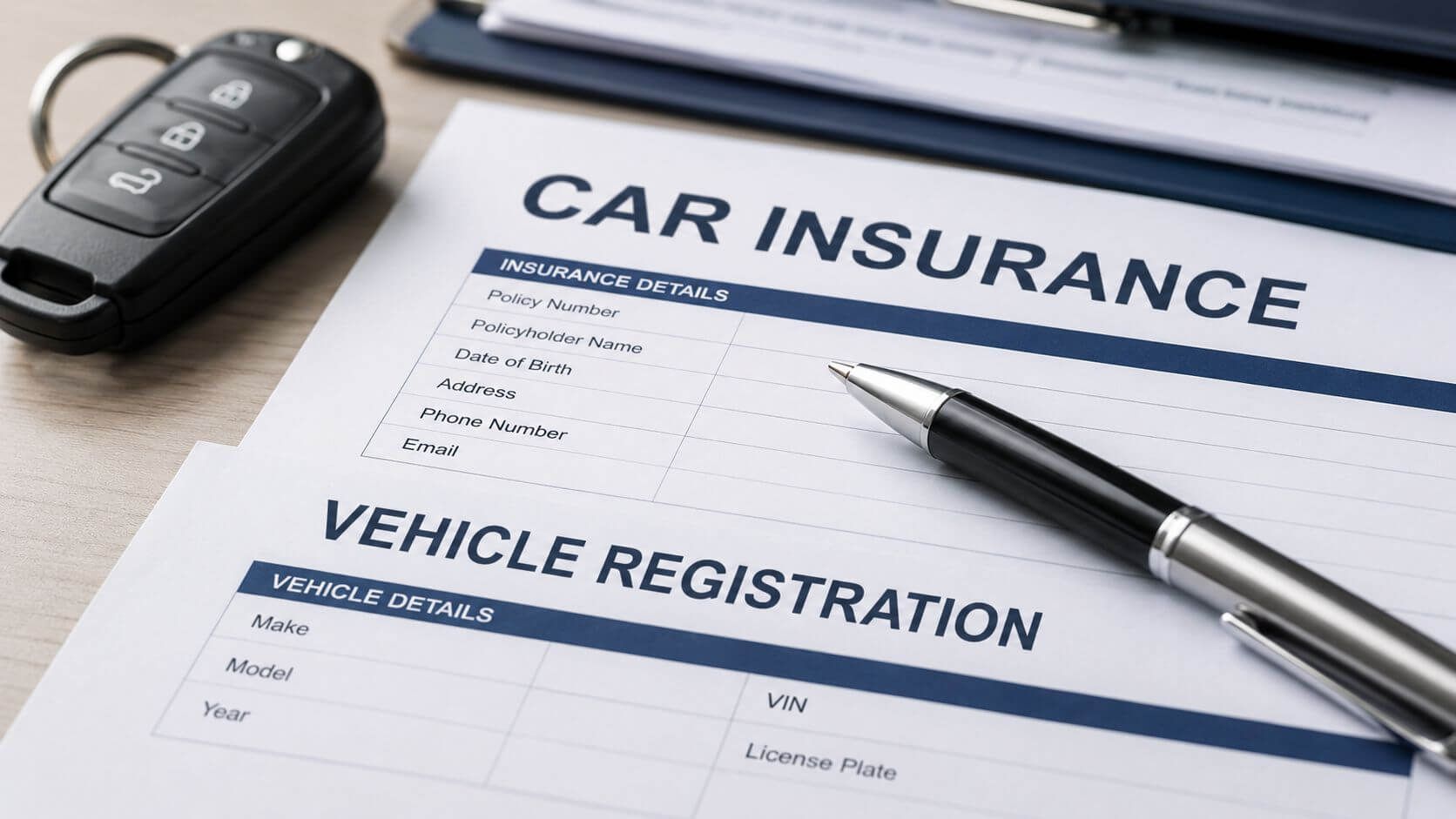
Insurance and registration are connected
Insurance and registration usually work together. Registration identifies the legal owner or registrant and connects the vehicle to plates. Insurance provides required liability coverage and optional protection for damage, theft, collision, or other losses.
In Ontario, the government says that before driving on Ontario roads, a vehicle needs proper insurance, a permit showing legal ownership, and licence plates with valid status where applicable. Ontario also states that you need insurance before registering as the owner and that the vehicle must be insured for at least $200,000 in third-party liability.
In British Columbia, ICBC says the buyer and seller must complete and sign the Transfer/Tax Form, then take the completed form and the seller’s signed vehicle registration to an Autoplan broker. Once the vehicle is registered in the buyer’s name, the buyer can get licence plates and insurance.
In Alberta, the province advises buyers who purchase from a private seller to get insurance and register the vehicle at a registry agent as soon as possible after buying.
In Québec, SAAQ says vehicles must be registered to be authorized for use on Québec roads. SAAQ also states that a buyer must have civil liability insurance from a private insurer with minimum coverage of $50,000.
The details vary by province, but the practical rule is consistent: do not drive until insurance and registration requirements are clear.
Buying from a dealer vs. private seller
The pickup process is usually easier when buying from a licensed dealer. A dealer may help with registration, licensing, temporary permits, financing paperwork, and insurance coordination. Some dealers have an insurance broker on site or direct you to a nearby broker.
A private sale requires more planning. The seller may only provide the signed ownership document, bill of sale, and keys. You may need to arrange insurance, transfer registration, obtain plates, pay tax, and complete the ownership transfer yourself.
Dealer purchase
Before pickup from a dealer, confirm:
- Whether the dealer will register the vehicle for you
- Whether you need to provide proof of insurance before delivery
- Whether plates are included or transferred
- Whether temporary registration is being issued
- Whether financing requires collision and comprehensive coverage
- Whether the vehicle has passed required safety inspection
- Whether the pickup date matches the insurance start date
Private sale
Before pickup from a private seller, confirm:
- Whether the seller’s plates stay with the seller
- Whether you need a temporary permit
- Whether your existing plates can be transferred
- Whether you need to visit a registry office, ServiceOntario, Autoplan broker, or SAAQ outlet before driving
- Whether the seller will meet you at the registration office
- Whether you have proof of insurance in your name
- Whether you have the signed ownership document and bill of sale
In a private sale, do not assume the seller knows your registration and insurance requirements. That is the buyer’s responsibility.
What information your insurer will need
Contact your insurance provider before pickup. Give them enough information to quote and activate coverage correctly.
Prepare:
- VIN
- Year, make, model, and trim
- Purchase date
- Pickup date and time
- Purchase price
- Seller type: dealer or private seller
- Current odometer reading
- Vehicle use: personal, commute, business, rideshare, delivery, commercial
- Address where the vehicle will be kept
- Driver information
- Financing or lienholder details, if applicable
- Existing policy number, if transferring or replacing a vehicle
- Safety or inspection status, if relevant
- Modifications, if any
- Title status, if known
- Whether the vehicle is from another province
Do not guess on the VIN. Insurance should be attached to the correct vehicle. A single wrong character can create problems.
Coverage to consider before pickup
Minimum required coverage is not always enough for a used car purchase. You should understand both legal requirements and practical protection.
Third-party liability
This is the core required coverage in most situations. It protects against claims if you injure someone or damage someone else’s property while driving.
Collision coverage
Collision coverage helps pay for damage to your own vehicle from a crash, subject to your policy terms and deductible. If you are financing the vehicle, the lender may require it.
Comprehensive coverage
Comprehensive coverage may protect against risks such as theft, fire, vandalism, falling objects, hail, or certain non-collision events, depending on the policy.
Specified perils or all perils
Some insurers offer different packages for non-collision risks. Ask what is included and excluded.
Loss of use or rental coverage
This may help with transportation costs if the vehicle is being repaired after an insured loss.
Roadside assistance
Used cars can have unknown issues. Roadside assistance may be useful if the vehicle breaks down shortly after purchase.
Coverage for modifications or accessories
If the vehicle has aftermarket wheels, stereo equipment, performance parts, or other modifications, disclose them. Do not assume aftermarket parts are automatically covered at full value.
Do not assume your existing policy automatically covers the new car
Some buyers believe their current insurance automatically covers any newly purchased vehicle for a short period. This can be risky. Rules, policy wording, limits, conditions, and timelines vary by insurer and province.
Before relying on any automatic coverage, ask your insurer directly:
- Does my existing policy cover a newly purchased replacement vehicle?
- Does coverage apply before I notify you?
- How long does temporary coverage last?
- Does it apply to an additional vehicle or only a replacement vehicle?
- Does it include collision and comprehensive coverage?
- Does it apply to private sales?
- Does it apply to out-of-province pickup?
- Do I need written proof before registration?
- Can you email or issue a liability card before pickup?
If the answer is unclear, do not drive until coverage is confirmed.
Proof of insurance: what to have ready
Many registration offices and brokers require proof of insurance before completing registration or issuing plates. You should have proof available before pickup.
Depending on the province and insurer, proof may include:
- Digital insurance card
- Paper liability insurance card
- Binder letter
- Policy confirmation
- Broker confirmation
- Temporary insurance document
- Dealer insurance confirmation
- ICBC Autoplan policy documents in B.C.
Ontario states that drivers must carry the “pink slip,” or liability insurance card, for the particular vehicle being driven. Even where digital proof is accepted, it is smart to keep a backup copy.
Plates: who keeps them?
Plate rules vary by province. In many private sales, the seller removes their plates and keeps them. The buyer must arrange their own plates, transfer existing plates, or obtain temporary registration or permit before driving.
Do not drive using the seller’s plates unless the provincial process clearly allows it and the insurance situation is valid. In many cases, the seller’s insurance does not protect you as the buyer after ownership changes.
Before pickup, ask:
- Do plates stay with the seller?
- Can I transfer my existing plates?
- Do I need new plates?
- Can I get plates before pickup?
- Do I need a temporary permit?
- Does the registration office require proof of insurance first?
- Does the vehicle need a safety inspection before plates can be issued?
Plate confusion can delay pickup or leave you unable to drive legally.
Temporary permits and transit permits
A temporary permit may be needed if the vehicle cannot be fully registered before pickup but must be driven for inspection, repair, transfer, or transport. Rules vary by province.
You may need a temporary permit if:
- The vehicle is bought privately and plates are not available
- You are taking the car for a safety inspection
- The car is from another province
- You are moving it to a repair facility
- You are transporting it to your home province
- Full registration cannot be completed immediately
- The vehicle is unplated or registration has expired
A temporary permit is not a substitute for insurance unless the provincial system includes or requires coverage as part of the permit. Always ask whether separate insurance is needed.
Safety inspection and insurance timing
Insurance does not mean the vehicle is roadworthy. A vehicle may be insured but still not eligible for plates or road use until it meets safety or inspection requirements.
Ontario says a Safety Standards Certificate confirms the vehicle met minimum safety standards on the date issued and that a buyer can buy and register a vehicle without one, but cannot put plates on it without one where required. If the car is sold “as-is,” unfit, or without a current safety certificate, you may need to tow it or get a temporary permit to take it for inspection.
Before pickup, confirm:
- Does the vehicle have a valid safety certificate?
- Is the certificate still valid?
- Does your province require an inspection?
- Can plates be issued before inspection?
- Can a temporary permit be used?
- Should the vehicle be towed instead?
- Who pays for inspection repairs if it fails?
Insurance, inspection, and registration should be planned together.
Out-of-province purchases need extra planning
Buying from another province adds another layer. You may need temporary insurance, an in-transit permit from the selling province, destination-province registration, out-of-province inspection, tax payment, and proof that the vehicle can be registered where you live.
ICBC advises B.C. residents bringing a vehicle home from another province to arrange temporary insurance called a Binder for Owner’s Interim Certificate of Insurance and an in-transit permit from the province where the vehicle is purchased.
Before buying from another province, ask:
- Can I legally drive the vehicle home?
- Which province issues the transit permit?
- Does my home province require temporary insurance?
- Will my insurer cover the vehicle outside the province?
- Is an out-of-province inspection required after arrival?
- Can the vehicle be registered immediately?
- Are taxes due at registration?
- Should I hire a transport company instead?
Do not travel to pick up a car without a drive-home plan.
Financing and lender requirements
If you are financing the used car, your lender may require specific insurance coverage before delivery. This often includes collision and comprehensive coverage with the lender listed as lienholder or loss payee.
Before pickup, ask the lender or dealer:
- What coverage is required?
- What deductible limits are allowed?
- Does the lender need proof of insurance before funding?
- Should the lienholder be listed on the policy?
- Is gap coverage required or optional?
- Can I take delivery before insurance proof is confirmed?
A financing delay can stop delivery even if you have already agreed on price.
Private sale pickup workflow
A safe private sale pickup should happen in a controlled order.
- Confirm VIN and seller identity.
- Review the bill of sale and ownership documents.
- Arrange insurance using the correct VIN.
- Confirm registration or temporary permit requirements.
- Confirm whether plates are available or transferable.
- Meet the seller in a safe location.
- Complete payment only after documents match.
- Sign the bill of sale and transfer paperwork.
- Register the vehicle or complete the transfer.
- Attach legal plates only after allowed.
- Carry proof of insurance before driving.
- Keep copies of all documents.
The safest option is often to meet at the registration office, ServiceOntario centre, Autoplan broker, SAAQ outlet, or registry agent so the transfer can be completed immediately.
Dealer pickup workflow
For a dealer purchase, ask for the delivery checklist before pickup.
Confirm:
- Insurance proof has been sent to the dealer
- Registration is complete or temporary registration is ready
- Plates are installed or transferred
- Financing has funded
- Warranty documents are ready
- Bill of sale is complete
- Vehicle inspection or safety certificate is complete
- Spare keys, manuals, and accessories are included
- The VIN on insurance matches the vehicle
- The vehicle is clean, fueled or charged, and ready
Before leaving the lot, check that the insurance documents and registration documents match the vehicle you are driving.
What if you are towing the vehicle?
If the vehicle cannot be legally driven, towing may be safer than trying to make registration work on the same day. But towing does not eliminate all insurance concerns.
Ask your insurer:
- Is the vehicle covered while being towed?
- Does comprehensive coverage apply before registration?
- Does the tow company carry cargo or liability coverage?
- When does my policy start?
- Is the vehicle covered while parked at home before registration?
- Is theft or vandalism covered before plates are issued?
If the vehicle is valuable, damaged, unfit, or bought from another province, written confirmation is better than assumptions.
What not to do before pickup
Avoid these mistakes:
- Do not drive without confirmed insurance.
- Do not assume the seller’s insurance covers you.
- Do not use the seller’s plates without verifying legality.
- Do not rely on a verbal promise from an insurer.
- Do not wait until pickup day to arrange insurance.
- Do not give the insurer an incomplete VIN.
- Do not ignore inspection requirements.
- Do not assume dealer paperwork is complete.
- Do not drive an “as-is” vehicle if it is not roadworthy.
- Do not cross provinces without transit and insurance planning.
- Do not pay before confirming the vehicle can be registered.
Most pickup problems are avoidable with one phone call to the insurer and one check with the registration authority.
Questions to ask your insurer
Before pickup, ask:
- Can this vehicle be insured starting on the pickup date and time?
- What coverage is legally required?
- What coverage do you recommend for the drive home?
- Is the VIN entered correctly?
- Can you issue proof of insurance today?
- Does coverage apply before registration is completed?
- Does coverage apply if I use a temporary permit?
- Does coverage apply if I drive from another province?
- Are there restrictions because of age, title status, modifications, salvage history, or commercial use?
- Is collision or comprehensive required by my lender?
- What deductible applies?
- Do I need to list a lienholder?
- Am I covered if the vehicle is towed instead of driven?
- What documents should I bring to the registration office?
Get the answers in writing when possible.
Questions to ask the seller or dealer
Ask:
- Will the vehicle have plates at pickup?
- Do the plates stay with the seller?
- Is the vehicle currently registered?
- Is there a valid safety or inspection certificate?
- Are there any liens?
- Is the bill of sale ready?
- Is the ownership document signed correctly?
- Can we complete registration together?
- Has the dealer received my insurance proof?
- Is temporary registration needed?
- Can I legally drive it away today?
- Are there any conditions that would prevent registration?
If the seller cannot answer basic registration questions, verify independently before you pay.
Documents to bring on pickup day
Bring:
- Driver’s licence
- Proof of insurance
- Bill of sale
- Payment proof
- Financing documents, if applicable
- Signed ownership or registration document
- Safety certificate, if required
- Vehicle history report
- Lien release, if applicable
- Temporary permit, if required
- Existing plate documents, if transferring plates
- Contact information for your insurer or broker
- Registration office appointment confirmation, if applicable
Keep digital and paper copies where possible.
Pickup-day checklist
Before driving away, confirm:
- VIN on the vehicle matches the insurance.
- VIN on the bill of sale matches the ownership documents.
- Insurance coverage is active.
- Proof of insurance is available.
- Registration or temporary permit is valid.
- Plates are legal for the vehicle.
- Safety or inspection requirements are satisfied.
- Seller’s plates are removed if required.
- Payment and ownership transfer are complete.
- Keys, documents, and receipts are in hand.
- You know where you are driving next: home, registry office, inspection shop, or repair facility.
If something does not match, pause before driving.
Final thoughts
Used car insurance before registration in Canada is not something to leave until pickup day. Buyers should arrange coverage early, confirm provincial registration rules, understand plate and permit requirements, and avoid driving until everything is valid.
A used vehicle may be bought, insured, registered, plated, inspected, and picked up in different steps depending on the province and transaction type. The safest purchase is one where the insurer, registration authority, seller, and buyer all agree on the same plan before the keys are handed over.
Before pickup, confirm the VIN, arrange insurance, prepare the documents, check inspection requirements, and know whether you need full registration or a temporary permit. A smooth handoff starts before you arrive.