Buying a Used Car After Airbag Deployment: Safety, Repairs, and Resale Risk
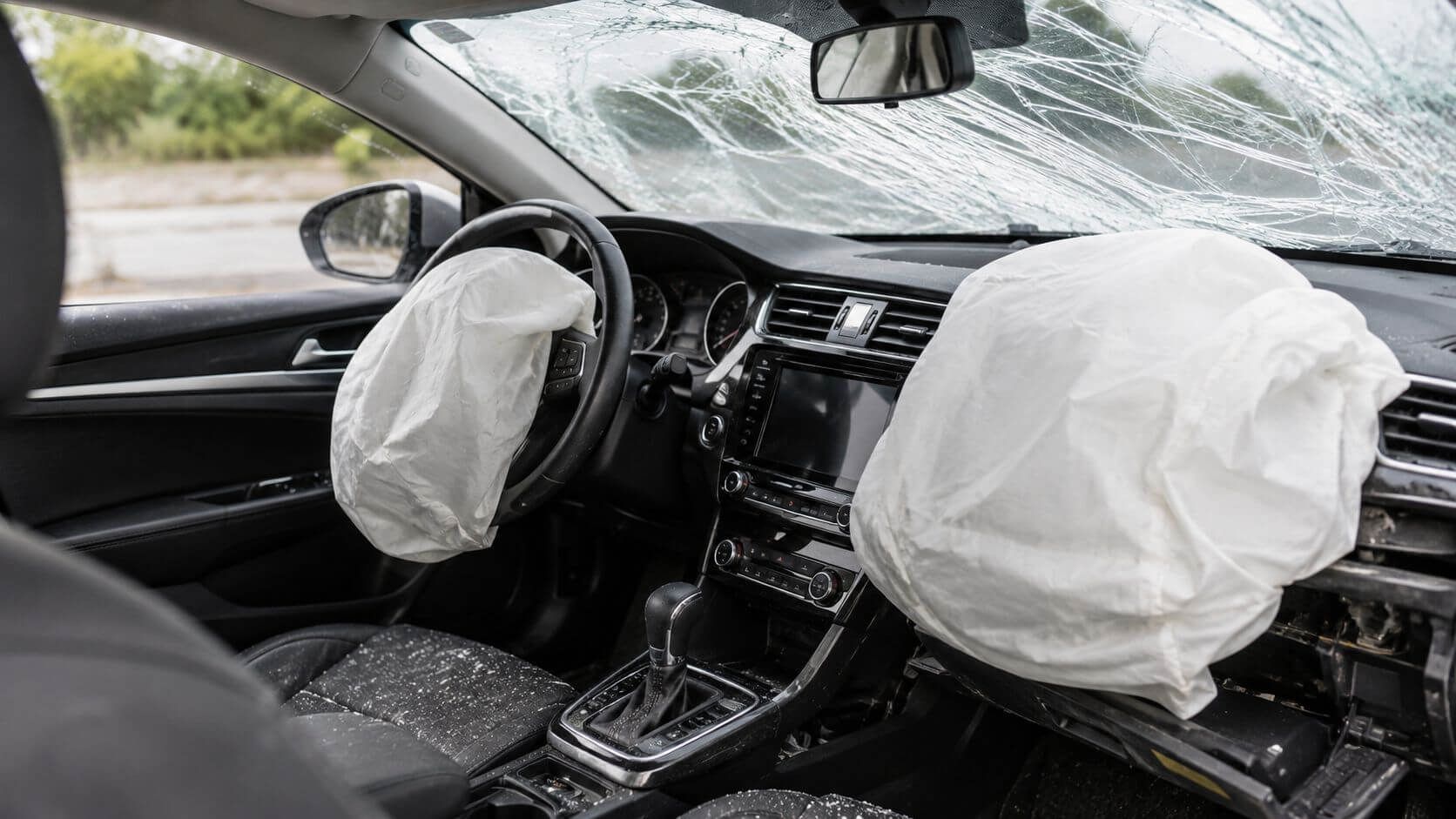
Buying a used car after airbag deployment is possible, but it should never be treated like a normal accident-free purchase. If an airbag deployed, the vehicle was involved in a crash or event serious enough to trigger part of the supplemental restraint system. That does not automatically mean the car is unsafe today, but it does mean the buyer needs proof that the vehicle was repaired correctly.
The most important question is not simply, “Did the airbags deploy?” It is: “Were the airbags, sensors, control modules, seat belts, pretensioners, wiring, crash structure, and related safety systems repaired or replaced according to proper procedures?”
A used car with prior airbag deployment can be acceptable if the damage was professionally repaired, the title status is clear, the warning lights are off for the right reason, and an independent inspection confirms the safety systems work as intended. But if the seller cannot provide repair records, the airbag light is on, the title history is unclear, or the repairs look cheap, the risk is too high.
Before paying, review the available vehicle accident report Canada records and arrange a thorough vehicle inspection with a qualified technician.
What airbag deployment tells you about a used car
Airbag deployment usually means the vehicle experienced a crash force or impact condition that triggered the restraint system. Depending on the vehicle and crash, the deployed components may include the driver airbag, passenger airbag, side airbags, curtain airbags, knee airbags, seat belt pretensioners, or other restraint-related components.
Airbags are part of a larger safety system. They work with seat belts, sensors, crash modules, occupant detection systems, and vehicle structure. Transport Canada explains that air bags are effective safety devices and that seat belts and air bags together help reduce serious head and chest injuries. But that protection depends on the system being intact and functioning properly.
That is why past deployment matters. Once an airbag deploys, it cannot simply be pushed back into place. The deployed components must be replaced, and the rest of the restraint system must be inspected and repaired as needed.
Airbag deployment does not always mean the car was totaled
A deployed airbag often suggests a significant accident, but it does not automatically mean the vehicle was written off or declared a total loss. Whether a vehicle is totaled depends on repair cost, vehicle value, insurance assessment, structural damage, title branding rules, and province-specific processes.
For example, a newer vehicle may have airbag deployment and still be repaired because its market value is high enough to justify the work. An older vehicle with similar damage may be written off because the repair cost exceeds its value.
Buyers should not assume either way. Check the history and ask for documentation.
Look for:
- Accident records
- Insurance claim history
- Total loss records
- Salvage or rebuilt branding
- Structural damage
- Repair estimates
- Airbag and restraint-system repair invoices
- Inspection certificates
- Photos before and after repair
A car can look clean after repairs, but the history should explain what happened.
Why airbag repair quality matters
Airbag-related repairs must be done correctly because they affect occupant safety in a future crash. Poor repairs can leave the vehicle with missing airbags, disabled warning lights, unrepaired sensors, faulty seat belts, damaged wiring, or modules that were not properly replaced or reset.
A bad repair may not be obvious during a short test drive. The vehicle may start, drive, and look normal. But if the restraint system is incomplete or improperly repaired, it may fail when it matters most.
Be careful with any seller who says:
- “The airbags were replaced, but I lost the receipts.”
- “The airbag light is only a sensor.”
- “The airbags are not necessary.”
- “It passed inspection, so everything is fine.”
- “The crash was minor, but the airbags deployed.”
- “My mechanic cleared the code.”
- “The steering wheel was replaced, so it is fixed.”
A cleared warning light is not the same as a properly repaired safety system.
Components that may need repair after deployment
Airbag deployment can involve more than the airbag itself. Depending on the crash and vehicle design, several related parts may need inspection, replacement, calibration, or programming.
Airbag modules
Any deployed airbag module must be replaced. This may include driver, passenger, side, curtain, seat, or knee airbags. Replacement should match the correct vehicle specification.
Seat belt pretensioners
In many crashes, seat belt pretensioners deploy along with airbags. Pretensioners tighten the seat belt during a collision. Once deployed, they usually require replacement.
Airbag control module
The control module may store crash data and may need replacement, reset, or manufacturer-approved service depending on the vehicle. Improper module handling can create safety issues.
Crash sensors
Front, side, or impact sensors may need replacement if damaged or triggered. These sensors help the vehicle determine when to deploy restraint systems.
Occupant classification system
The passenger seat may use sensors to determine occupant weight or position. Damage or poor repair can affect whether the passenger airbag works correctly.
Steering wheel and dashboard parts
Driver airbag deployment may damage the steering wheel assembly. Passenger airbag deployment may damage dashboard panels. Cosmetic repair alone is not enough.
Wiring and connectors
Airbag wiring, clocksprings, connectors, and harnesses must be inspected. Cutting, splicing, bypassing, or poor wiring repairs are serious red flags.
Interior trim and headliner
Curtain airbag deployment can damage headliners, pillar trim, clips, and interior panels. Incorrect trim repair can interfere with future deployment.
Structural components
A crash that deploys airbags may also damage frame rails, pillars, bumper reinforcement, crash boxes, doors, suspension mounts, or other structure. Safety-system repair is only part of the issue.
Check for airbag warning lights
When you start the vehicle, the airbag or SRS warning light should usually illuminate briefly as part of the system check, then turn off. If the airbag light stays on, flashes, never turns on, or behaves unusually, do not ignore it.
Warning-light concerns include:
- Airbag light remains on
- Airbag light never illuminates at startup
- Warning light was recently cleared
- Dashboard has missing warning indicators
- Seller says the light is “normal”
- Diagnostic codes are present
- Seat belt or occupant sensor warnings appear
An airbag light that never comes on can be just as suspicious as one that stays on. It may suggest bulb tampering, cluster manipulation, or electronic masking.
Have the vehicle scanned by a qualified technician using appropriate diagnostic equipment.
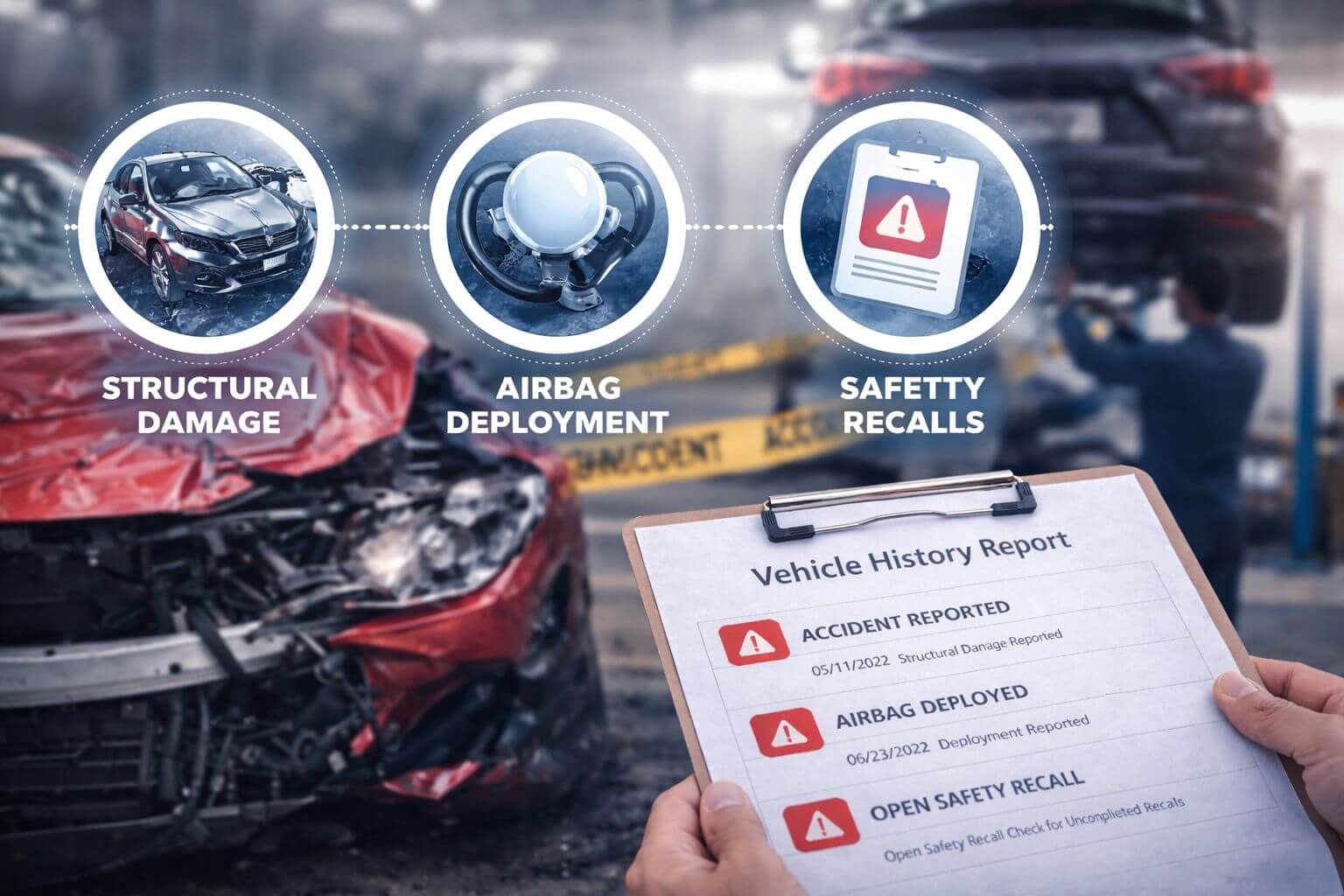
Review the accident history carefully
Airbag deployment should be reviewed together with the accident timeline. A report may show the date of damage, estimated severity, title branding, registration events, and other records. But not every repair detail will always appear in a report, so buyers should combine history with inspection.
When reviewing accident records, look for:
- Date of accident
- Damage location
- Severity indicators
- Insurance claim records
- Auction records
- Salvage or rebuilt status
- Odometer at time of accident
- Province or jurisdiction changes after the crash
- Repair or inspection records
- Later ownership transfers
If the vehicle was sold shortly after the crash, moved between provinces, or repaired without documents, inspect more carefully.
Airbag deployment and title branding
A vehicle with airbag deployment may have a clean title, salvage title, rebuilt status, or another brand depending on the damage and how it was handled. Title branding rules can vary across provinces and situations.
A clean title does not always mean there was no major repair. A rebuilt title does not always mean the car is unsafe today. The important question is whether the title status, accident history, repair quality, and current condition all make sense together.
Be cautious if:
- The seller says there was no accident, but the report shows airbag deployment.
- The vehicle has a rebuilt brand but no repair documents.
- The title was branded in one province and later registered elsewhere.
- The seller advertises the vehicle as “clean” despite major accident records.
- The price does not reflect the history.
Title status should be part of your negotiation and risk decision.
Airbag deployment and resale value
A used car with prior airbag deployment will usually be harder to resell than a comparable vehicle without deployment history. Even if repairs were completed properly, many buyers are cautious about safety-system repairs and major accidents.
Resale impact depends on:
- Vehicle age
- Make and model
- Severity of damage
- Quality of repair
- Title status
- Documentation
- Inspection results
- Market demand
- Price discount
- Whether airbags, seat belts, and modules were replaced properly
If you buy the car, assume future buyers will ask the same questions you are asking now. Keep all documents, invoices, inspection reports, and history records.
Insurance and financing concerns
Before buying a vehicle with airbag deployment history, ask your insurer whether the vehicle can be insured and whether the history affects coverage. This is especially important if the vehicle has salvage, rebuilt, or structural damage history.
Ask your insurer:
- Can this vehicle be insured?
- Does prior airbag deployment affect coverage?
- Does title branding affect coverage?
- Is a safety inspection required?
- Is comprehensive or collision coverage available?
- Will the premium be affected?
- Are repair records needed?
If you plan to finance the vehicle, ask the lender whether accident history or title branding affects approval or valuation. Some lenders may be cautious with branded or heavily damaged vehicles.
Warranty concerns after airbag deployment
Airbag deployment and accident repair can affect warranty coverage. A manufacturer may deny warranty coverage for a failed part if the failure is connected to collision damage, improper repair, non-OEM components, modifications, or salvage branding.
Before buying, check:
- Factory warranty status
- Extended warranty terms
- Whether accident damage affects coverage
- Whether restraint-system repairs used proper parts
- Whether the vehicle has a salvage or rebuilt brand
- Whether warranty claims were previously denied
- Whether safety recalls are open
Transport Canada’s recall resources also matter because airbag systems can be the subject of safety recalls. For example, Transport Canada’s recall database includes airbag-related recalls where inflators could be defective and create injury risks. Buyers should check for open recalls and confirm completed recall repairs before purchase.
Questions to ask the seller
Ask direct questions and request written answers where possible:
- Which airbags deployed?
- What caused the deployment?
- Was the vehicle declared a total loss?
- Does the vehicle have a salvage or rebuilt brand?
- Who repaired the vehicle?
- Were the airbags replaced with correct parts?
- Were seat belt pretensioners replaced?
- Was the airbag control module replaced, reset, or serviced?
- Were crash sensors replaced?
- Are repair invoices available?
- Are inspection records available?
- Are there any current airbag or SRS warning lights?
- Were diagnostic codes scanned after repair?
- Are there open recalls?
- Can I have the vehicle inspected by my own mechanic?
A seller who cannot answer these questions may not know enough about the repair to justify your trust.
Documents to request before buying
Ask for:
- Vehicle history report
- Accident report or insurance estimate
- Repair invoices
- Parts invoices
- Body shop repair order
- Airbag replacement documentation
- Seat belt or pretensioner replacement documentation
- Diagnostic scan results
- Alignment report
- Structural repair documentation, if applicable
- Safety inspection certificate, where applicable
- Rebuilt inspection documents, if applicable
- Recall completion records
- Photos before repair, if available
Photos before repair are especially useful. They help you understand whether the damage was limited or severe.
Inspection checklist for a car with prior airbag deployment
A normal visual inspection is not enough. Ask a qualified technician or collision repair specialist to inspect the vehicle.
The inspection should include:
- Airbag/SRS diagnostic scan
- Warning-light function check
- Seat belt and pretensioner inspection
- Steering wheel and dashboard inspection
- Passenger occupant sensor check
- Airbag module verification
- Crash sensor inspection
- Wiring and connector inspection
- Body panel alignment
- Frame and structural inspection
- Evidence of poor repairs
- Paint and bodywork quality
- Suspension and alignment check
- Windshield and glass inspection
- Interior trim and headliner inspection
- Undercarriage inspection
- Test drive
A proper inspection is especially important if the vehicle has curtain airbag deployment, front-end damage, side impact damage, or rebuilt status.
Signs of poor airbag repair
Be careful if you notice:
- Airbag warning light stays on
- Airbag light never turns on
- Dashboard cover looks uneven
- Steering wheel centre pad looks mismatched
- Seat belts do not retract properly
- Seat belt buckles look replaced or damaged
- Interior trim is loose
- Headliner does not fit properly
- Pillar trim is cracked or poorly installed
- Electrical problems are present
- Seller refuses diagnostic scan
- Repair receipts are missing
- Parts appear used, mismatched, or undocumented
Poor cosmetic repair can hide deeper safety-system problems.
Should you buy a used car after airbag deployment?
A used car after airbag deployment may be worth considering if the price is right and the documentation is strong. It is usually not a good choice for buyers who want the lowest possible risk, plan to resell soon, or cannot afford surprise repairs.
It may make sense when:
- The accident history is fully disclosed.
- The damage was not structural or was properly repaired.
- Airbags and related components were replaced correctly.
- Repair invoices are complete.
- The vehicle passes a qualified inspection.
- Insurance is confirmed.
- Title status is clear.
- The price reflects the accident history.
- You are comfortable with resale impact.
It is usually not worth the risk when:
- The seller hides or minimizes the deployment.
- Repair records are missing.
- The airbag light is on or suspicious.
- Title branding is unclear.
- Structural damage is suspected.
- The vehicle was repaired cheaply for resale.
- Insurance is difficult.
- The price is too close to a clean-history vehicle.
How much discount should you expect?
There is no single discount that applies to every vehicle. A minor crash with documented repairs may have a smaller impact than a severe crash with structural damage and rebuilt branding. But buyers should expect a meaningful price difference compared with a similar clean-history vehicle.
When negotiating, consider:
- Repair quality
- Title status
- Severity of crash
- Airbag components replaced
- Inspection findings
- Warranty impact
- Insurance cost
- Resale difficulty
- Market value of clean-history examples
Do not pay clean-title, accident-free pricing for a vehicle with airbag deployment history.
Buyer checklist before paying
Before buying a used car with airbag deployment history, confirm:
- Accident history has been reviewed.
- Airbag deployment is fully disclosed.
- Which airbags deployed is known.
- Repair invoices are available.
- Airbags were replaced correctly.
- Seat belts and pretensioners were inspected or replaced.
- Airbag control module and sensors were handled properly.
- SRS warning light behaves normally.
- Diagnostic scan shows no unresolved SRS codes.
- Title branding is understood.
- Insurance availability is confirmed.
- Warranty impact is understood.
- Open recalls are checked.
- Independent inspection is complete.
- Price reflects the history and risk.
- Seller statements are written into the sale documents.
If any major item is unclear, pause the transaction.
Final thoughts
A used car with airbag deployment history is not automatically unsafe, but it requires a higher level of proof. Airbags are part of a larger safety system, and after deployment, the repair must go beyond cosmetic bodywork. The buyer needs evidence that airbags, seat belts, sensors, modules, wiring, and structure were repaired correctly.
Before paying, check the accident history, verify title status, ask for repair documents, scan the restraint system, confirm insurance, and have the vehicle inspected by a qualified technician.
A properly repaired car with transparent records may be worth considering at the right price. A car with missing repair records, warning lights, vague seller answers, or suspicious title history is one to avoid.