How To Spot Phony Airbags When Buying A Used Car
How To Spot Phony Airbags When Buying A Used Car
A used car can be a smart buy—if its safety systems are intact. Airbags are the last line of defense in a crash, yet counterfeit, missing, or improperly repaired airbags show up in the market more often than most shoppers realize. Some sellers even disable warning lights to hide defects.
The good news: you do not need to be a technician to spot many red flags. With a careful walkaround, a simple dashboard check, smart use of vehicle history tools, and a professional inspection when needed, you can dramatically lower your risk. This guide explains how fake or missing airbags end up in used cars, the specific signs to look for, and the steps to take if something seems off.
Why Fake or Tampered Airbags Are a Problem
- Life-saving performance: Genuine airbags deploy within milliseconds using sensor data and calibrated modules. Counterfeit or missing units will not protect occupants as designed.
- Hidden crash damage: Fraudulent airbags often appear after a vehicle has been in a significant collision. If the airbag was deployed, other structural issues may also be concealed.
- Legal and financial risk: Selling cars with tampered airbags is illegal in many regions. If you buy one unknowingly, you could face repair costs, insurance complications, or a loss in resale value.
How Counterfeit or Missing Airbags End Up in Cars
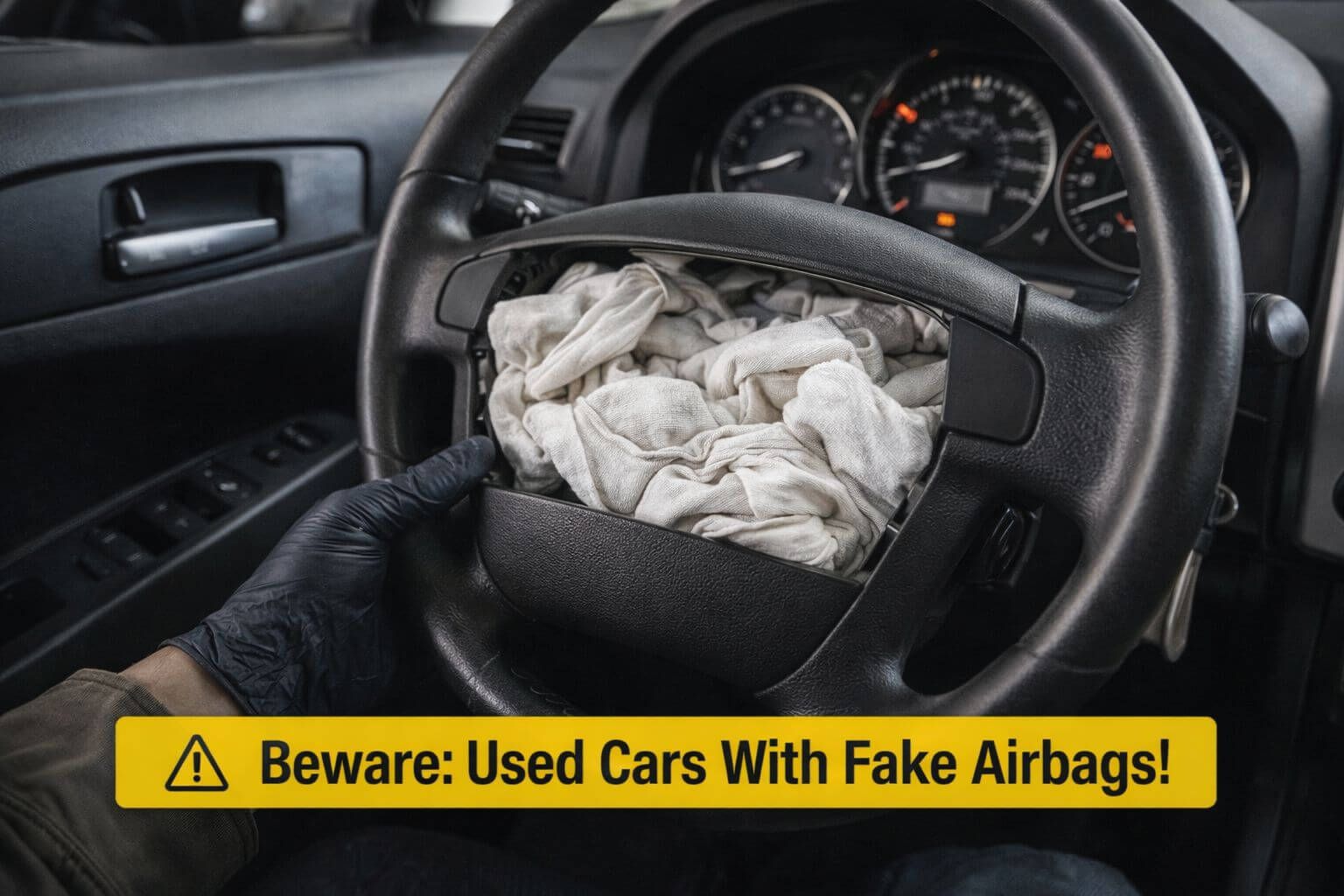
- Improper crash repairs: After a deployment, some cut corners by installing a dummy airbag cover or a counterfeit module instead of repairing properly.
- Salvage and rebuilt titles: Repaired vehicles can be safe when restored correctly, but rushed or unregulated rebuilds sometimes skip OEM parts.
- Parts theft and gray markets: Cheap counterfeit components or harvested parts with unknown histories may be used to save costs.
Quick Safety Steps Before You Even Visit
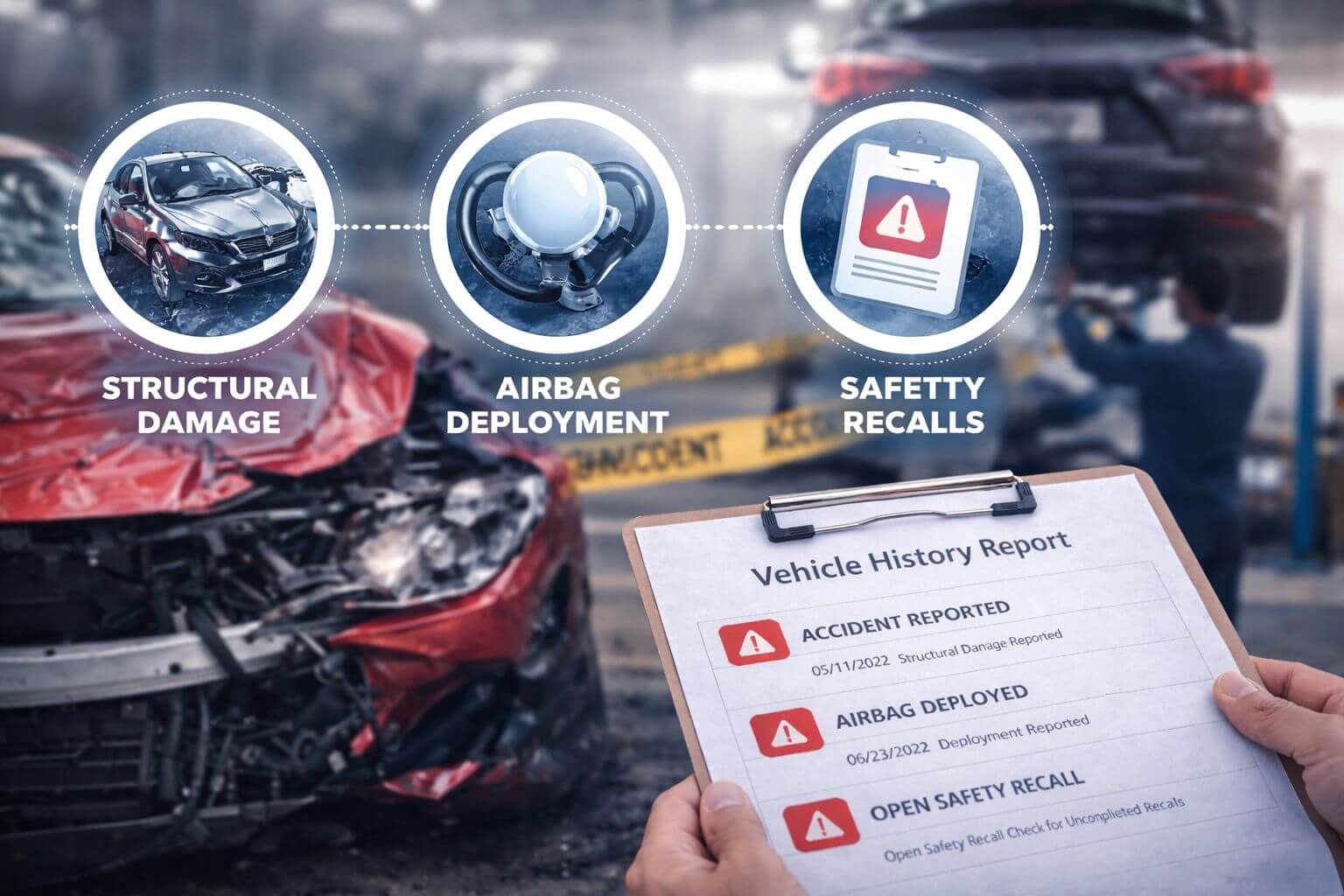
- Run the VIN: Use reputable vehicle history services to check for prior accidents, airbag deployments, title brands (salvage, rebuilt), and odometer inconsistencies.
- Check recalls: Enter the VIN on the NHTSA or your country’s safety agency site to confirm airbag recall status and completion.
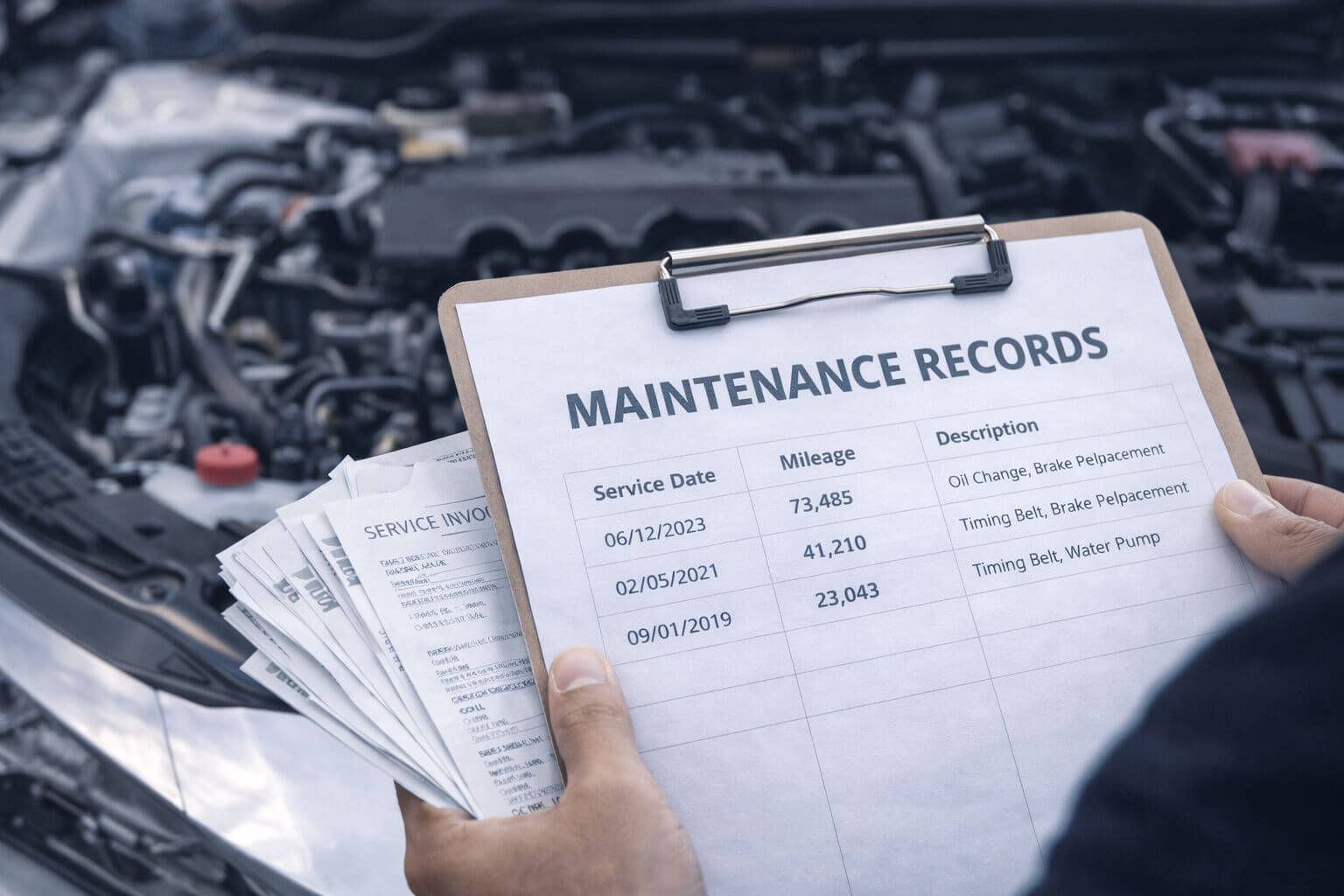
- Ask for documentation: Request recent photos of the dash and steering wheel, airbag service invoices, and any collision repair records.
- Compare the listing to reality: Look for mismatches between photos and the car you see in person.
Visual Signs Around Airbag Areas
Steering Wheel and Driver Airbag
- Cover alignment and texture: The airbag cover should sit flush, with uniform gaps. Mismatched grain, color, or sheen suggests replacement with a different part.
- Logo and stitching quality: Blurry logos, off-center emblems, or uneven stitching can hint at counterfeit components.
- Pry or tool marks: Scratches around the cover edges, column trim, or mounting points indicate prior removal.
- Horn pad feel: An overly stiff or spongy horn pad can signal a non-original cover or internal tampering.
Passenger-Side Dashboard
- Seam integrity: The passive airbag door is built into the dash. Look for uneven seams, cuts, or bulges that do not match the factory finish.
- Panel warping or discoloration: Heat damage or repainting may hide previous deployment cuts.
- Mismatched trim fasteners: New or missing clips and screws in an otherwise aged interior can be a sign of recent disassembly.
Side, Curtain, and Seat Airbags
- A-pillar and headliner fit: Loose, wavy, or re-clipped A-pillars and sagging headliners suggest prior access to airbag areas.
- Seat tags and stitching: Most seats with airbags have an SRS tag and a specific seam pattern designed to split on deployment. Look for missing tags, non-matching stitching, or reupholstered panels on only one seat.
- Door panels: Fresh pry marks or new clips near side airbags can indicate removal or replacement.
Electronic Clues: The Airbag (SRS) Warning Light
The Supplemental Restraint System (SRS) light is your first electronic checkpoint.
- Normal behavior: On key-on, the SRS light illuminates for a few seconds as a self-test, then turns off. That brief bulb check is expected.
- Red flags:
- The SRS light never turns on at key-on. This could mean a disabled bulb or tampered cluster.
- The SRS light stays on while driving. The system has stored a fault.
- The light flickers intermittently. Loose or incorrect connections may be present.
- Scan for codes: Ask the seller to allow an OBD-II scan with a tool that can read SRS modules. A professional shop or mobile inspection service can provide a printed health report. Clearing codes without addressing faults will not fix hardware problems and may not hide permanent issues.
On the Test Drive
- All lights work as expected: Observe the sequence of all warning lights at startup. Pay attention to the SRS light behavior again after restarting.
- Horn and steering controls: Confirm consistent operation. Intermittent horn function can point to issues in the clock spring, which also carries airbag circuits.
- No rattles behind trim: Unusual noises from the dash or pillars may indicate disturbed components.
Paperwork and Pricing Red Flags
- Title brands: Salvage, rebuilt, flood, or airbag notation requires extra scrutiny. Not all rebuilt cars are unsafe, but you must verify quality repairs.
- Incomplete or vague repair invoices: Look for OEM part numbers, airbag module references, and calibration steps. Generic descriptions can mask corner-cutting.
- Unusually low price: If the deal seems too good to be true compared to market averages, consider why.
- Gaps in service history: Missing months around the time of an accident can hide airbag work.
Get a Pro Involved
A reputable pre-purchase inspection is one of the best safeguards.
- Choose the right shop: Seek technicians experienced with your make and equipped to scan SRS modules.
- What to request:
- Full SRS scan and printed fault report
- Visual inspection of steering wheel, dash, pillars, seats, and wiring connectors
- Verification of clock spring integrity and crash sensor mounting
- Check for non-OEM airbags or mismatched control modules
- Estimate for remediation: If issues are found, get a written repair estimate before negotiating or walking away.
What To Do If You Suspect a Fake Airbag
- Do not ignore it: Airbag integrity is non-negotiable. If something feels off, pause the purchase.
- Ask direct questions: Request proof of proper airbag replacement after any recorded crash, including parts invoices and calibration notes.
- Walk away if answers are vague: There are plenty of cars; do not settle for uncertainty.
- Report bad actors: If you encounter suspected fraud, report the listing to the platform and notify consumer protection or transport safety authorities in your region.
After You Buy: Verify Safety
Even after a purchase, it is wise to confirm airbag health—especially if you lacked time for a full inspection.
- Schedule a post-purchase scan: Have a qualified shop scan the SRS and verify that all components are correct for the VIN and model year.
- Check open recalls again: Recalls can appear later; keep tabs on them using the VIN.
- Keep documentation: Save inspection reports and repair invoices for your records and future resale.
Quick Checklist You Can Save
- Run VIN history and recall check
- Inspect steering wheel cover fit and texture
- Examine passenger dash seams for cuts or bulges
- Check SRS tags and stitching on seats
- Watch the SRS light: on at startup, off afterward
- Test horn and steering wheel controls
- Review repair invoices for OEM parts and calibrations
- Get a professional SRS scan and written report
Buying used should never mean compromising on safety. With a careful eye, the right questions, and help from a qualified technician, you can avoid phony airbags and choose a car you can trust.