Buying a Used Car: The Relevant Documents
If you’re on a mission to buy a used car, preparation is your biggest advantage. Before you negotiate, put down a deposit, or sign anything, make sure you understand the documents that protect you—legally, financially, and practically.
The checklist below covers what you should request and verify before buying, upon purchase, and after payment so you can confirm the vehicle is legitimate, transferable, and accurately represented.
Documents That You Should Check Before Buying
Before any commitment, inspect the vehicle in daylight if possible and ask the seller or dealer to provide the following documents before you agree to purchase.
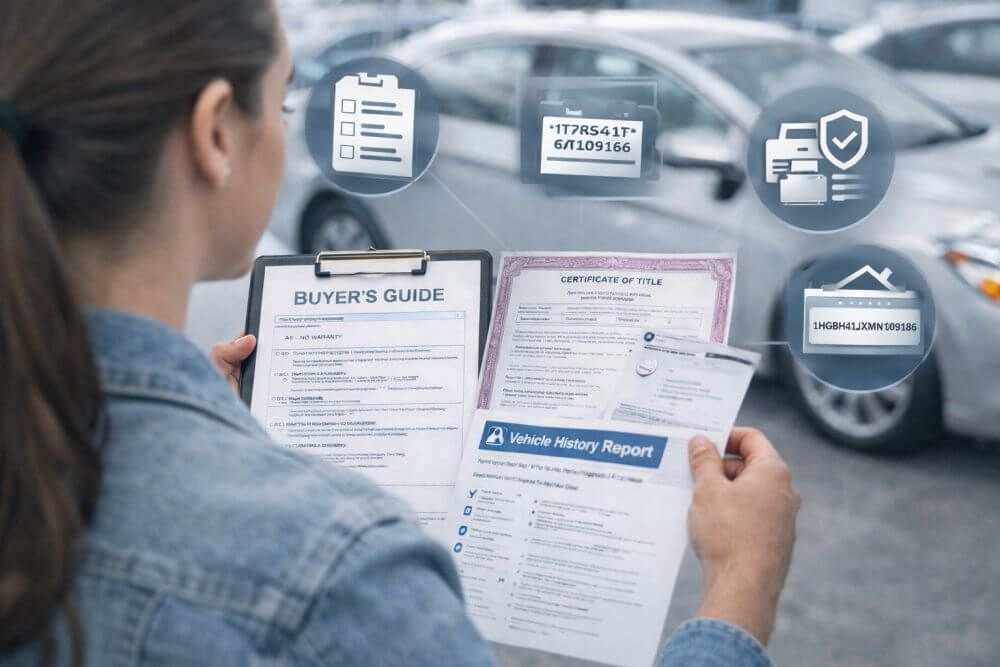
1) Buyer’s Guide (Disclosure Sheet)
A Buyer’s Guide (or equivalent disclosure document) should clearly state:
- Whether the vehicle is sold with a warranty or as-is
- Known mechanical or safety issues disclosed by the seller/dealer
- What repairs (if any) are covered and under what conditions
Why it matters: It sets expectations and becomes a reference point if disputes arise after the sale.
Tip: Keep a copy of the Buyer’s Guide even after the purchase.
2) Vehicle Information (VIN + Core Details)
Request the Vehicle Identification Number (VIN) and confirm it matches the VIN on the vehicle itself (locations vary by model). Ask for the car’s:
- Make
- Model
- Model year
Why it matters: A matching VIN helps validate that the vehicle is the one being sold and reduces the risk of misrepresentation.
Do this next: Use the VIN to obtain a vehicle history report from a trusted source such as a VinAudit vehicle history report. This can help identify red flags like theft records, severe damage, salvage branding, or other inconsistencies.
3) Seller or Dealer Information
Make sure the seller’s identity and contact details are clear and verifiable. For a dealer, confirm:
- Business name
- Address
- Phone/email contact
Why it matters: If something goes wrong, you need clear information for follow-up, complaints, or legal remedies.
Red flag: A seller who avoids sharing identity details or refuses to meet in person is a serious warning sign.
4) Warranty Information (If Any)
If the vehicle includes a warranty, request the warranty paperwork and confirm:
- Whether the warranty is Full or Limited
- What components are covered
- Coverage period (time/mileage)
- Any deductibles, exclusions, or required service conditions
- Whether the manufacturer warranty still applies (if relevant)
Why it matters: Vague warranty claims are common. Written warranty terms prevent misunderstandings and unexpected repair costs.
Documents That You Should Check Upon Purchase
Once you’re ready to finalize the purchase, ensure the seller provides the documents below to support the transaction and enable title transfer.
1) Bill of Sale
A Bill of Sale records the transaction and typically includes:
- Date of sale
- Buyer and seller/dealer information
- Purchase price
- Vehicle details (VIN, make/model/year)
- Odometer reading (or odometer disclosure)
Why it matters: It proves the sale occurred and supports registration/tax processing.
Important: A bill of sale alone does not establish ownership—ownership comes from a proper title transfer.
2) Car Title (Most Important Document)
The title is the key document required for ownership transfer. Confirm:
- The title is present and available at closing
- The name on the title matches the seller (or dealer documentation supports assignment)
- The title is properly signed where required
- There are no unexplained brands (e.g., salvage, rebuilt, flood) unless fully disclosed and acceptable to you
Why it matters: Without a clear title, the vehicle may be difficult—or impossible—to register in your name.
3) Lien Release / Financing Clearance (If Applicable)
If the car was previously financed, the seller must prove the lien is fully satisfied using one of the following:
- A lien release document
- A letter from the financing institution confirming payoff
- Other official lien clearance paperwork required in your jurisdiction
Why it matters: An unresolved lien can block title transfer or create legal complications.
Documents That You Should Get After Payment
After you’ve paid, your focus shifts to registration and legal transfer. The Department of Motor Vehicles (DMV) (or equivalent authority) commonly requires:
1) Vehicle Inspection Certificate (If Required)
Some jurisdictions require an inspection to confirm roadworthiness and basic safety compliance. These certificates may have limited validity windows (often 30–90+ days depending on location).
Why it matters: You may not be able to register the car without it.
2) Proof of Insurance
Most places require insurance coverage before registration. Ensure you have valid proof of insurance that matches:
- The vehicle
- The registered owner
- Coverage requirements in your state/province
Why it matters: Registration may be denied without insurance, and driving without coverage can carry serious penalties.
3) Temporary Registration (If Needed)
If immediate permanent registration isn’t possible, you may qualify for a temporary permit, often valid for a short period (e.g., 30 days). This can allow you to:
- Drive legally while completing registration steps
- Transport the vehicle
- Make required repairs if applicable
Why it matters: It bridges the gap between purchase and full registration.
Final Note: Documentation Is Negotiation Power
Knowing what documents to ask for—and insisting on them calmly and confidently—does two things:
- Protects you from fraud and paperwork traps
- Signals to the seller that you’re informed and prepared
A legitimate deal can withstand scrutiny. If a seller pressures you to skip documents, “trust the process,” or pay before verification, that’s often your cue to slow down—or walk away.