 CA
 US

Vehicle Identification Number (VIN): What It Is and How to Read It
A Vehicle Identification Number (VIN) is a unique code assigned to a vehicle by its manufacturer. It identifies the vehicle and provides information about its manufacturer, vehicle attributes, model year, assembly plant, and production sequence.
Most modern passenger vehicles use a standardized 17-character VIN. Understanding how this number works can help you identify a vehicle, verify its details, and research its history before buying or selling a used car.
What Is a Vehicle Identification Number?
A Vehicle Identification Number, commonly called a VIN, is an alphanumeric identifier assigned to an individual vehicle during manufacturing. It functions as the vehicle’s primary identification reference across manufacturing, registration, insurance, recalls, ownership documentation, and vehicle history records.
For most modern passenger vehicles, the VIN consists of 17 characters made up of numbers and letters. Each position has an assigned purpose, although the specific information represented by some characters depends on the manufacturer.
Important: The 17-character format is standard for most modern vehicles manufactured for markets following these VIN requirements. Older vehicles and certain specialized vehicles may use different identification formats.
How Is a 17-Character VIN Structured?
A standard VIN is divided into three main sections: the World Manufacturer Identifier (WMI), Vehicle Descriptor Section (VDS), and Vehicle Identifier Section (VIS). Individual positions within these sections provide additional information about the vehicle.
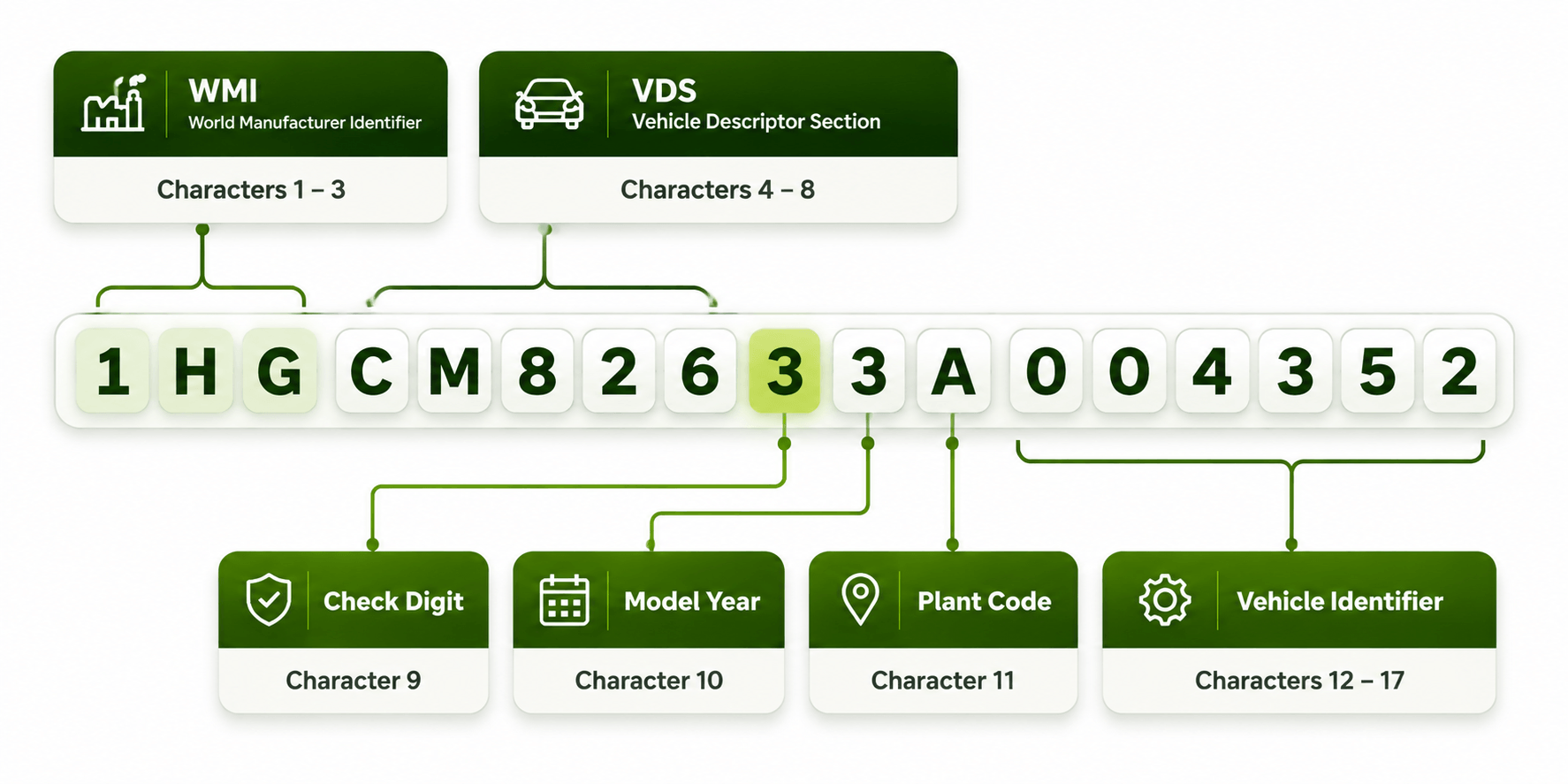
The Six Main VIN Sections
World Manufacturer Identifier (WMI)
The first three characters identify the vehicle manufacturer and prescribed vehicle class under the applicable VIN standard. The assigned code is used to distinguish manufacturers.
Vehicle Descriptor Section (VDS)
The next five characters contain manufacturer-defined information about the vehicle. Depending on the manufacturer, these may describe its model, body type, engine, restraint system, or other vehicle attributes.
Check Digit
The ninth character is a calculated value used to help validate the VIN. It is part of the North American VIN identification requirements.
Model Year
The tenth character represents the vehicle’s model year. Because some year codes repeat in a cycle, the character should be interpreted together with the vehicle’s other identifying information.
Assembly Plant
The eleventh character identifies the manufacturing or assembly plant assigned by the manufacturer.
Vehicle Identifier Section (VIS)
The final six characters form part of the vehicle’s individual production identifier. These characters generally represent a manufacturer-assigned production sequence or vehicle identification code.
VIN decoding is manufacturer-dependent. The same character does not necessarily represent the same engine, body style, or vehicle attribute across different manufacturers. Certain low-volume manufacturer VINs also follow special identification provisions.
Where Can You Find a VIN?
A vehicle’s VIN is commonly displayed in more than one place on the vehicle. It may also appear on official documents associated with the vehicle.
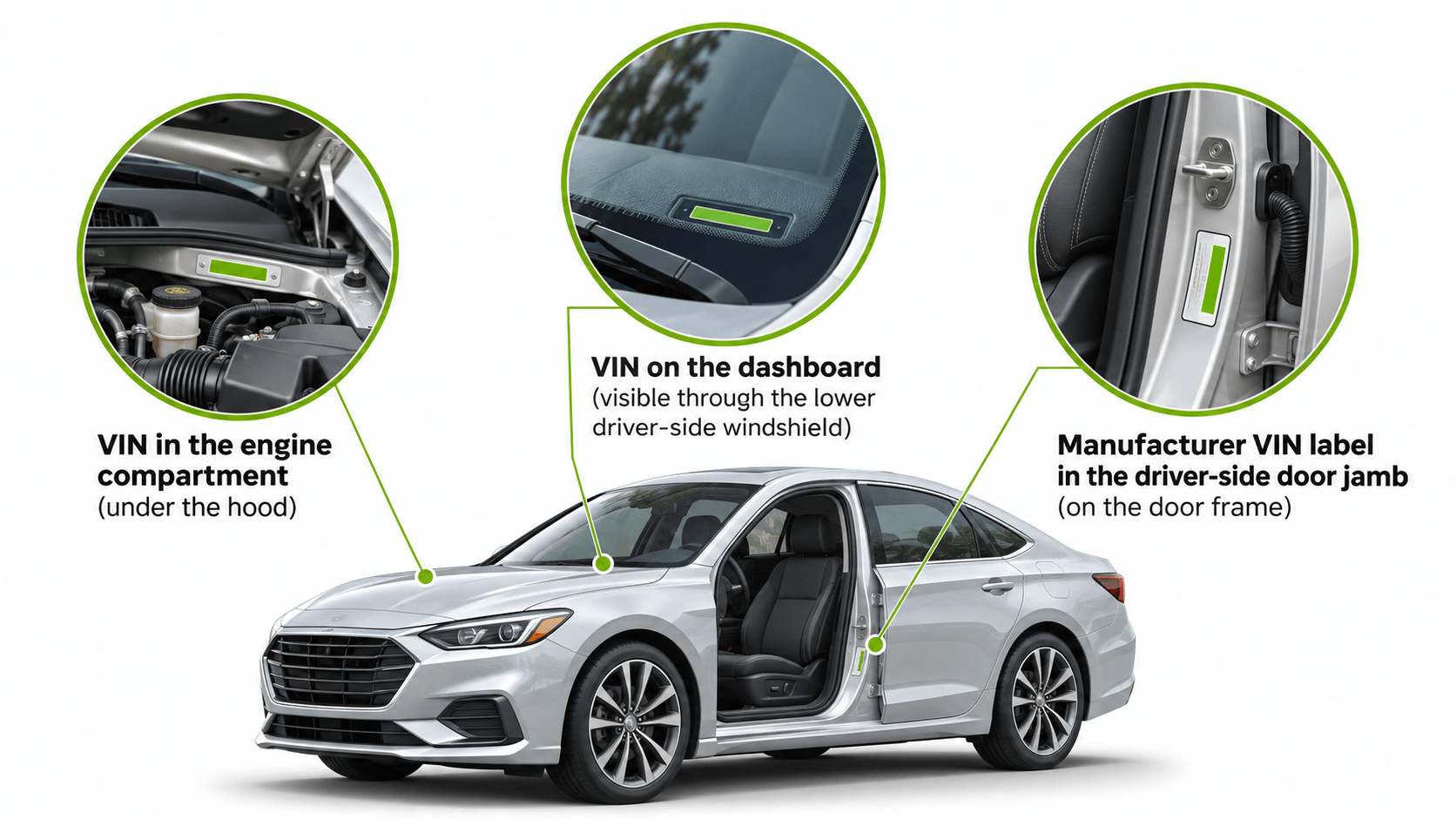
Common Locations on the Vehicle
- Driver’s side dashboard: Look through the windshield at the lower corner of the dashboard, near the driver’s side.
- Driver’s side door jamb: Check the manufacturer’s identification label or plate around the driver’s door frame.
- Engine compartment: Some vehicles have an additional VIN marking or identification plate in the engine bay or on a structural component.
Documents That May Display the VIN
You can also find the VIN on documents associated with the vehicle, including:
- Vehicle registration documents.
- Vehicle ownership or title documents, where applicable.
- Insurance policy documents.
- Manufacturer documentation and purchase paperwork.
If you are checking a used vehicle, compare the VIN displayed on the vehicle with the number recorded on its registration and ownership documents. The identifiers should match.
How Do You Read or Decode a VIN?
Reading a VIN manually requires understanding the assigned character positions and the manufacturer’s coding system. While some positions have standardized purposes, other characters require manufacturer-specific decoding information.
A VIN decoder can interpret the available information and return vehicle details such as the manufacturer, make, model year, vehicle type, engine information, and other specifications when supported by the available data.
Find the 17-character identifier on the vehicle or its documents.
Check that all characters are entered in the correct order.
Compare the returned vehicle details with the actual vehicle.
Decode Your VIN with VinAudit
Use our VIN Decoder to identify available vehicle specifications and information associated with your VIN.
A decoded VIN identifies vehicle information. It does not independently establish the vehicle’s accident history, ownership status, current condition, or authenticity of its identification markings.
Why Is VIN Verification Important?
Verifying a VIN is an important step when purchasing a used vehicle, registering a vehicle, or reviewing its documentation. It helps confirm that the vehicle being examined corresponds with the information recorded in its documents and reports.
What Should You Check?
- Compare identification numbers: Check that the VIN on the dashboard, door label, and available documents agree.
- Review the identification markings: Look for signs of alteration, damage, unusual fasteners, mismatched labels, or evidence that an identification plate may have been replaced.
- Confirm the decoded vehicle details: Compare the VIN decoder results with the vehicle’s make, model, year, body type, and other available specifications.
- Research the vehicle’s history: Review available accident, title brand, theft, odometer, and other vehicle history records.
If the VIN markings appear altered, the numbers do not match, or the vehicle details differ from the documents, do not proceed with the purchase until the discrepancy has been properly investigated. A qualified inspection or the appropriate provincial vehicle authority may be necessary.
Research a Vehicle Before You Buy
Review available vehicle history records associated with a VIN before making a purchase decision.
VIN vs. License Plate: What’s the Difference?
A VIN and a license plate number both help identify a vehicle, but they serve different purposes.
Vehicle Identification Number
Assigned by the vehicle manufacturer, the VIN identifies the vehicle itself. It generally remains associated with that vehicle throughout its life.
License Plate Number
Issued by a vehicle registration authority, a license plate identifies a vehicle for registration and road-use purposes. It can change when the vehicle is re-registered or issued a replacement plate.
A VIN is generally the preferred identifier for vehicle history research because it refers to the specific vehicle rather than its current registration plate.
Frequently Asked Questions About VINs
Is every VIN 17 characters long?
What letters are not used in a VIN?
Can two vehicles have the same VIN?
Can I find a vehicle’s year from its VIN?
Does a VIN reveal a vehicle’s accident history?
Can I decode a VIN for free?
Is a VIN the same as a vehicle registration number?
What should I do if the VIN on the vehicle does not match its documents?
Know the Vehicle Before You Buy
Understanding a VIN is the first step in researching a vehicle. Decode its identifying information and review available vehicle history records to make a more informed buying decision.