How to Check Vehicle Recalls by VIN in Canada
How to Check Vehicle Recalls by VIN in Canada
When buying a used car in Canada, many buyers focus on accident history and liens but overlook vehicle recalls. Recalls are issued for safety-related defects that can affect braking, airbags, steering, fuel systems, and other critical components.
This guide explains how to check vehicle recalls by VIN in Canada, what recall information means for buyers, and why recall checks should be part of every pre-purchase review.
What Is a Vehicle Recall?
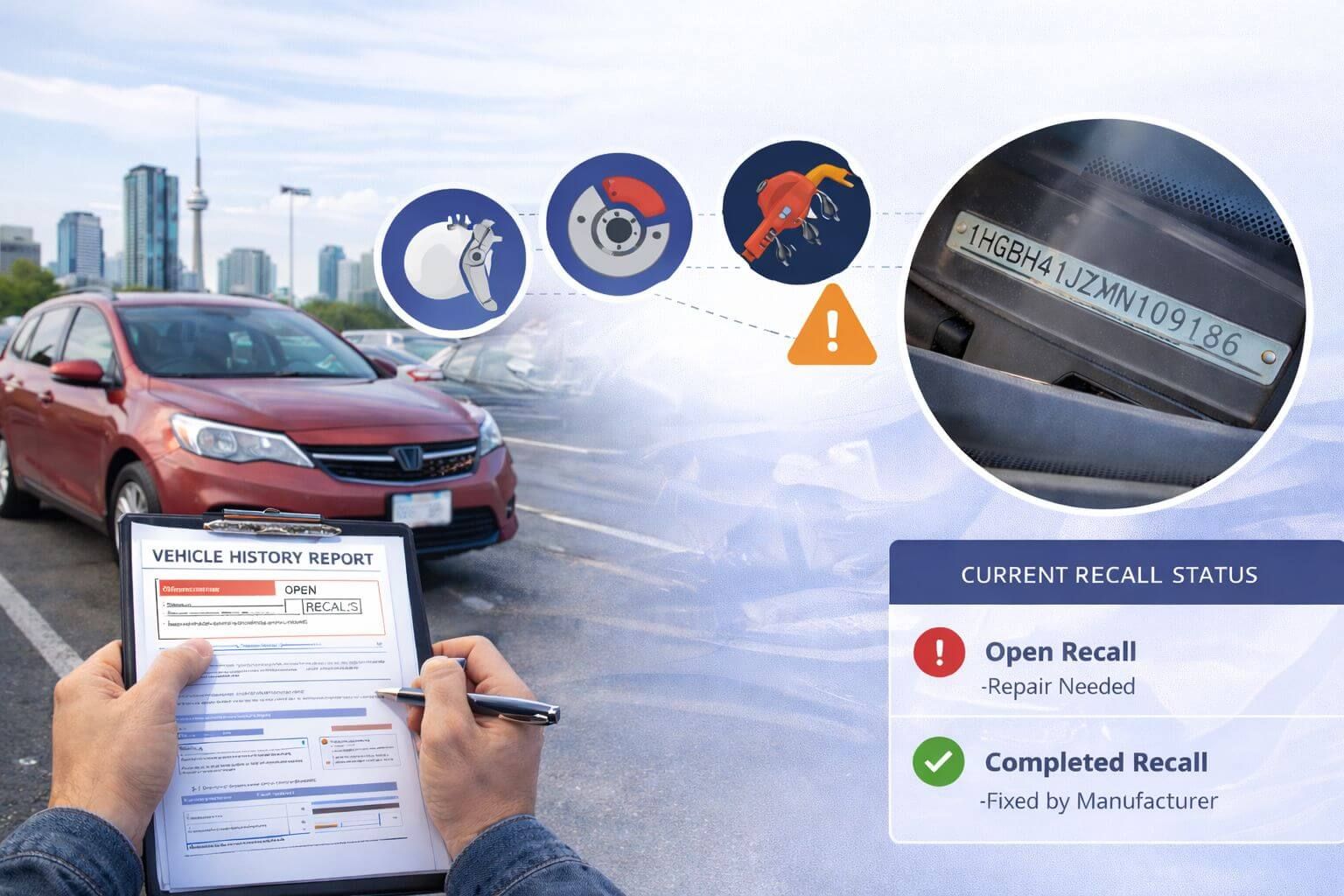
A vehicle recall is issued when a manufacturer identifies a defect that affects safety or regulatory compliance. Recalls may be triggered by:
- Defective airbags or seatbelts
- Brake or steering failures
- Fuel system leaks
- Electrical or software-related issues
Recalls are tied to specific VIN ranges, not just makes or models.
Why Recall Checks Matter Before Buying
An unresolved recall can:
- Pose a serious safety risk
- Prevent registration or inspection approval
- Delay insurance coverage
- Require repairs after purchase
Many buyers assume recalls are always fixed by previous owners, but this is not always true.
How Recall Data Works in Canada
In Canada, recall information may come from:
- Manufacturer safety notices
- Transport Canada databases
- Industry-linked data sources
Because recalls apply to specific VIN ranges, checking by VIN is the most accurate approach.
Why Checking by Make and Model Is Not Enough
Two vehicles of the same year and model may have different recall status. Differences may occur due to:
- Production plant variations
- Manufacturing date differences
- Component supplier changes
Only a VIN-based check confirms whether a specific vehicle is affected.
Step-by-Step: Checking Recalls Using a VIN
- Locate and verify the VIN on the vehicle
- Confirm the VIN matches registration documents
- Review recall-related indicators in a vehicle history report
- Ask the seller for proof of completed recall repairs, if applicable
Recall checks should be completed before finalizing the purchase.
Open Recalls vs Completed Recalls
| Recall Status | What It Means |
|---|---|
| Open recall | Repair not yet completed |
| Completed recall | Manufacturer repair performed |
| No recall listed | Vehicle not affected or already resolved |
Understanding recall status helps buyers assess urgency and risk.
Recall Checks and Other Pre-Purchase Risks
| Risk Area | Why It Matters |
|---|---|
| Accident history | Structural and safety damage |
| Lien checks | Financial ownership risk |
| Stolen vehicle checks | Legal ownership risk |
| Recall checks | Manufacturer safety defects |
Recall checks complement other VIN-based verifications.
Common Misconceptions About Vehicle Recalls
- “All recalls are minor” — false
- “Dealers fix all recalls before resale” — not guaranteed
- “Older cars don’t have recalls” — incorrect
Understanding these misconceptions helps buyers avoid unnecessary risk.
Knowing how to check vehicle recalls by VIN in Canada helps buyers identify safety issues that may not be visible during inspection. Because recalls apply to specific VIN ranges, VIN-based verification is essential.
Before buying any used vehicle, always verify the VIN, review recall-related indicators in a vehicle history report, and confirm repair completion when necessary. Recall checks add an important layer of protection to your buying decision.