SUV vs Sedan Pricing Trends: Which Holds Value Better in Canada?
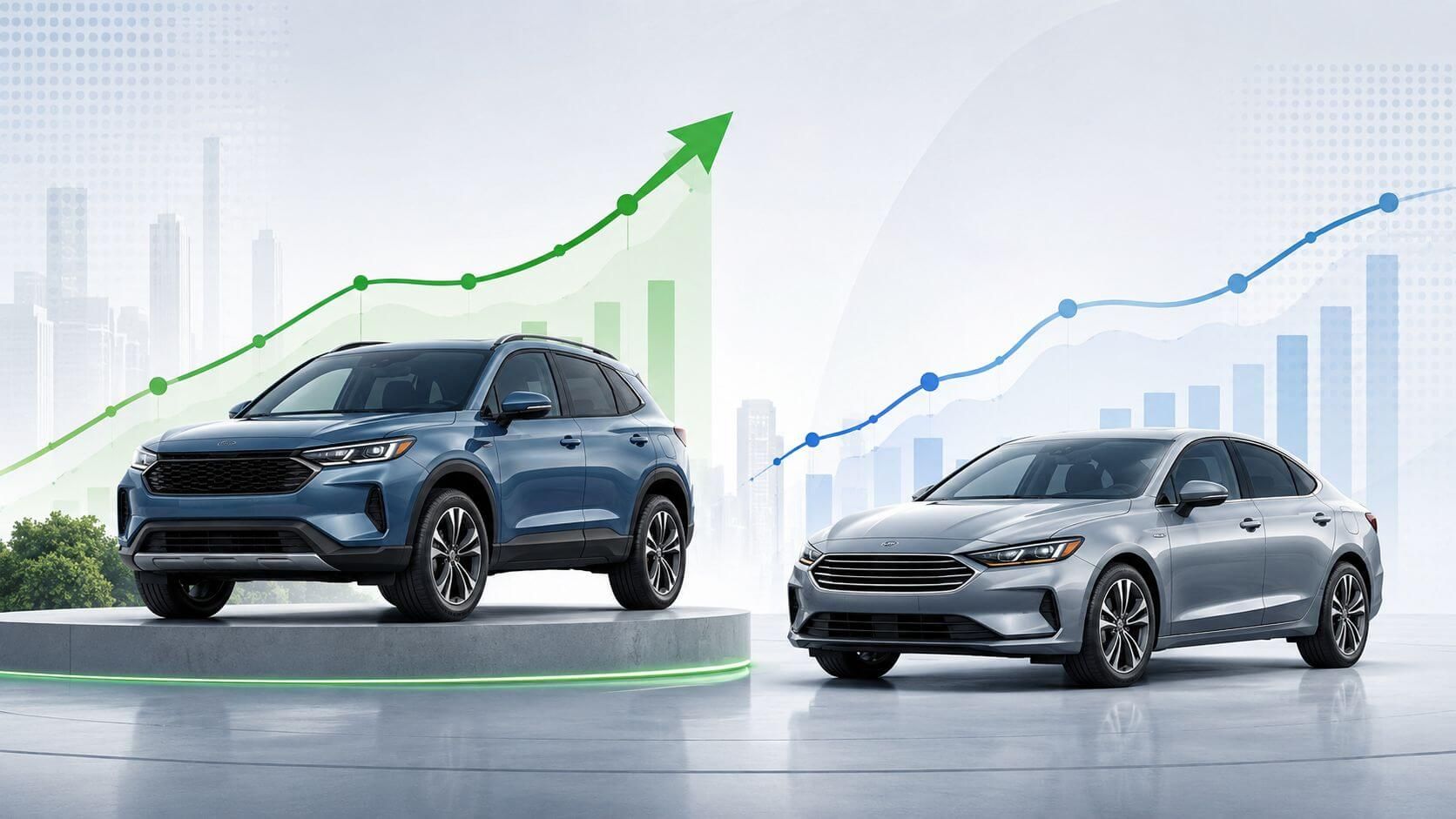
12/17/2025SUVs generally hold value better than sedans in Canada because buyer demand is stronger, utility is broader, and all-weather confidence matters in many regions. Compact and midsize SUVs, especially fuel-efficient or hybrid models, tend to attract more used-market demand than comparable sedans.
That does not mean sedans are a poor choice. A fuel-efficient sedan can still be the smarter buy if you drive mostly in the city, want lower operating costs, need easier parking, or want more vehicle for the money. The better question is not simply “SUV or sedan?” It is: which vehicle has the stronger total value based on price, depreciation, fuel cost, insurance, mileage, condition, and resale demand?
Before buying or selling, compare local prices using a market value tool, then weigh the expected fuel, insurance, tire, maintenance, and depreciation costs with a broader ownership cost tool.
Why SUVs usually hold value better in Canada
SUVs have a structural demand advantage in the Canadian market. Buyers like the higher seating position, flexible cargo space, available all-wheel drive, family practicality, and winter-friendly image. That demand supports stronger resale value, especially for compact and midsize crossovers.
Statistics Canada reported that in 2025, trucks, a category that includes minivans, SUVs, light and heavy trucks, vans, and buses, accounted for 88.0% of total new motor vehicle sales in Canada. That new-vehicle preference eventually flows into the used market because it shapes what buyers expect, what dealers stock, and what families search for.
SUV demand is strongest when the vehicle offers:
- All-wheel drive or strong winter capability
- Good fuel economy for its size
- Practical cargo space
- Popular safety features
- A mainstream brand with broad service support
- A clean vehicle history
- Reasonable mileage
- Strong reliability reputation
For most Canadian households, a compact or midsize SUV is easier to justify than a sedan because it can serve more use cases: commuting, family trips, winter driving, cargo hauling, and weekend travel.
Where sedans still compete well
Sedans have lost some market share, but they still have real value advantages. In many cases, buyers can purchase a newer, lower-mileage, or better-equipped sedan for the same budget as an older SUV.
Sedans can be the better financial choice when they offer:
- Lower purchase price
- Better fuel economy
- Lower tire replacement costs
- Easier parking in dense cities
- Lower centre of gravity and comfortable handling
- Lower insurance costs in some cases
- Less demand-driven price inflation
- Strong commuter value
A sedan may depreciate faster on paper, but that can benefit a used-car buyer. If the first owner already absorbed much of the depreciation, the second owner may get strong value for less money.
This is especially true for reliable compact and midsize sedans with good service records, moderate mileage, and strong fuel economy.
SUV vs sedan depreciation: what usually happens
Depreciation is the loss of vehicle value over time. It is one of the biggest costs of vehicle ownership, even though buyers do not always feel it until they sell or trade in the vehicle.
In general, Canadian depreciation patterns look like this:
- Year 1: The largest drop, as the vehicle moves from new to used.
- Years 2 to 3: Depreciation continues, but demand remains strong for desirable models.
- Years 4 to 5: Values settle into a more stable used-vehicle price band.
- After year 5: Condition, mileage, maintenance, history, and reliability matter more than new-vehicle pricing.
SUVs often retain value better during the 3-to-5-year window because more buyers are looking for them. Sedans usually face softer demand, so sellers may need to price more competitively.
However, depreciation is not only about body style. A clean, well-maintained sedan can outperform a neglected SUV. A hybrid sedan can hold value better than a large, thirsty SUV when fuel prices are high. A mainstream SUV can hold value better than a luxury SUV because ownership costs are lower.
Fuel prices can narrow the SUV advantage
Fuel cost is one of the biggest variables in SUV vs sedan pricing. When fuel prices rise and stay elevated, buyers pay more attention to efficiency. That can strengthen demand for compact sedans, hybrids, plug-in hybrids, and smaller crossovers.
Natural Resources Canada explains that fuel consumption ratings help buyers compare models and that a lower L/100 km rating means better fuel consumption. Buyers can use NRCan’s fuel consumption ratings guidance when comparing vehicle types.
Fuel prices affect resale trends in practical ways:
- Efficient sedans become more attractive to commuters.
- Hybrid sedans and hybrid SUVs gain value support.
- Large non-hybrid SUVs become more sensitive to operating costs.
- Compact SUVs usually remain resilient because they balance utility and efficiency.
- Buyers driving 20,000+ km per year care more about fuel cost than occasional drivers.
Fuel prices do not erase the SUV resale advantage, but they can narrow it. In some urban markets, an efficient sedan or hybrid can be the better value choice.
Hybrid SUVs and hybrid sedans are both strong resale plays
Hybrid vehicles sit in an interesting position. They can reduce fuel costs without asking buyers to fully change their driving habits. For used buyers who are not ready for a full EV, a hybrid SUV or sedan can feel like a safer middle ground.
Hybrid SUVs are especially attractive because they combine the utility buyers want with better fuel economy. Hybrid sedans are attractive because they can be very efficient, practical, and affordable to operate.
Hybrid resale strength often depends on:
- Battery warranty status
- Service records
- Mileage
- Brand reputation
- Fuel prices
- Local demand
- Vehicle age
- Condition
- Availability of comparable listings
A hybrid SUV may retain value better overall because of stronger body-style demand. A hybrid sedan may be the smarter cost-of-ownership choice for high-mileage drivers.
Large SUVs are more vulnerable to fuel and insurance pressure
Not all SUVs hold value equally. Compact and midsize SUVs usually have broader demand than large, non-hybrid SUVs. Full-size SUVs can still be valuable, especially in markets where towing, space, and winter capability matter, but they are more exposed to higher ownership costs.
Large SUVs may face pressure from:
- Higher fuel consumption
- More expensive tires
- Higher insurance costs
- Higher repair costs
- Higher purchase price
- More expensive brakes and suspension parts
- Lower demand from budget-conscious buyers
- Financing sensitivity when interest rates are high
A full-size SUV can still hold value well if it is popular, clean, well-equipped, and useful for towing or family needs. But buyers should calculate the real cost before assuming the SUV badge automatically means better resale.
Luxury SUVs and luxury sedans depreciate differently
Luxury vehicles follow their own depreciation pattern. Both luxury SUVs and luxury sedans can lose value quickly in absolute dollars because they start with higher MSRPs and often carry higher repair, maintenance, insurance, and depreciation costs.
Luxury SUVs may retain demand better than luxury sedans because buyers still want the body style, but ownership costs can reduce the buyer pool as the vehicle ages.
Common reasons luxury vehicles depreciate faster include:
- Expensive parts and labour
- More complex electronics
- Higher insurance
- Higher tire and brake costs
- Strong new-model competition
- Warranty expiration concerns
- Expensive option packages that lose value quickly
For buyers, a used luxury sedan can sometimes offer excellent comfort for the money. For sellers, a luxury SUV may attract more interest than a luxury sedan, but condition and documentation are critical.
Regional demand matters across Canada
Vehicle values are local. A body style that sells quickly in one province may move more slowly in another.
Ontario
SUV demand is strong in suburban and family markets, but sedans remain practical for commuters in the Greater Toronto Area and other urban centres. Buyers often compare payment, insurance, parking, and fuel cost closely.
Quebec
Compact vehicles, efficient sedans, hybrids, and smaller SUVs can perform well because of urban density, fuel sensitivity, winter tire rules, and strong commuter needs.
British Columbia
In Metro Vancouver and Victoria, compact sedans, hybrids, EVs, and smaller SUVs can attract strong interest. In interior and northern areas, AWD SUVs and crossovers often have stronger practical appeal.
Alberta, Saskatchewan, and Manitoba
SUVs, trucks, and AWD vehicles often benefit from space, winter conditions, longer driving distances, and utility needs. Sedans can still sell well when they offer reliability and low operating costs.
Atlantic Canada and northern regions
Weather, road conditions, and practicality support SUV demand, but affordability still matters. A reliable sedan with good winter tires, service records, and low fuel cost can remain attractive.
Regional demand is one reason sellers should compare local listings, not just national averages.
Mileage and condition can matter more than body style
SUVs may have stronger demand, but a high-mileage SUV with poor maintenance may not hold value better than a clean sedan. Buyers should not treat body style as a shortcut for value.
Value depends heavily on:
- Mileage
- Accident history
- Service records
- Rust condition
- Tire condition
- Brake condition
- Interior wear
- Number of owners
- Title status
- Open recalls
- Trim and options
- Local demand
- Fuel economy
Before buying, use a car buyer checklist and arrange a vehicle inspection when the price, history, or condition raises questions.
A clean sedan can be a better buy than a rough SUV. A well-maintained SUV can be a better resale asset than a neglected sedan. Condition still wins.
How vehicle history affects SUV and sedan resale
Vehicle history affects both SUVs and sedans. A vehicle with accident records, odometer inconsistencies, title branding, theft recovery, flood damage, or poor maintenance may lose value regardless of body style.
SUVs can sometimes hide wear because buyers focus on utility, ride height, and cargo space. Sedans can sometimes be overlooked despite cleaner histories because demand is softer. Either way, history should be part of the price discussion.
Buyers should check for:
- Accident records
- Odometer readings
- Title or branding issues
- Lien concerns
- Theft records
- Recall status
- Service and maintenance records
- Prior rental, taxi, fleet, or commercial use
- Rust or weather-related wear
For sellers, documentation matters. A clean history report, service receipts, winter tire records, and inspection documents can support a stronger asking price.
Which holds value better right now?
In current Canadian market conditions, compact and midsize SUVs generally hold value better than comparable sedans. The reason is simple: more buyers want them, more households can use them, and many Canadians see AWD and cargo flexibility as worth paying for.
But sedans remain competitive in specific situations.
Choose an SUV if you need:
- More cargo space
- Easier child-seat access
- AWD availability
- Winter confidence
- Higher seating position
- Family flexibility
- Stronger mainstream resale demand
Choose a sedan if you prioritize:
- Lower purchase price
- Better fuel economy
- Easier city parking
- Lower operating costs
- Better value for the same budget
- Commuter efficiency
- Lower total ownership cost
The best resale choice is usually not the biggest vehicle. It is the vehicle with the strongest mix of demand, efficiency, reliability, condition, and price.
Buyer advice: how to compare an SUV and a sedan
When comparing an SUV and sedan, avoid judging only by sticker price. Compare the full ownership picture.
1. Compare local market value
Look at similar vehicles with the same year, trim, mileage, condition, and region. SUVs may command higher prices, but the premium should still make sense.
2. Compare fuel cost
If you drive a lot, even a small fuel economy difference can matter. Use L/100 km ratings and your annual kilometres to estimate the real cost difference.
3. Compare insurance
SUVs and sedans can differ in insurance cost depending on model, trim, repair cost, theft risk, safety features, and location.
4. Compare tire and brake costs
SUV tires are often more expensive. Larger wheels and AWD systems can increase replacement costs.
5. Compare depreciation
A sedan may cost less upfront but lose a higher percentage of value. An SUV may cost more upfront but retain a stronger resale price.
6. Compare vehicle history
A clean, well-maintained sedan can be better value than a higher-demand SUV with damage, high mileage, or weak service records.
7. Compare how you actually drive
A rural family with winter roads may benefit from an AWD SUV. A downtown commuter may get better value from a sedan or hybrid.
Seller advice: how to position an SUV or sedan
If you are selling an SUV, emphasize the features buyers value most:
- AWD or 4WD
- Winter tires
- Cargo space
- Family-friendly features
- Safety technology
- Maintenance records
- Fuel economy for its class
- Clean vehicle history
- Towing capability, if applicable
If you are selling a sedan, lead with cost advantages:
- Fuel efficiency
- Lower mileage
- Clean condition
- Lower asking price than comparable SUVs
- Strong maintenance history
- Comfortable commuting
- Easy parking
- Winter tire set
- Reliability reputation
For both body styles, photos and documentation matter. Clean the vehicle, fix obvious warning lights, provide service records, and price according to local comparables.
Common mistakes when comparing SUV vs sedan value
Avoid these mistakes:
- Assuming every SUV holds value well.
- Assuming every sedan is a bargain.
- Ignoring fuel cost.
- Comparing a base sedan with a fully equipped SUV.
- Ignoring mileage differences.
- Ignoring accident history.
- Forgetting tire, brake, and insurance costs.
- Overpaying for AWD you do not need.
- Buying a large SUV for resale value without checking operating costs.
- Selling a sedan without highlighting fuel economy and affordability.
Body style matters, but it is only one part of the value equation.
Practical comparison checklist
Before choosing between an SUV and sedan, compare:
- Asking price
- Market value
- Mileage
- Trim level
- Fuel economy
- Insurance estimate
- Tire cost
- Maintenance history
- Accident history
- Title status
- Rust condition
- Warranty status
- Local demand
- Expected resale value
- Total ownership cost
The better vehicle is the one that fits your use case and financial reality.
Final thoughts
In Canada, SUVs usually hold value better than sedans because buyer demand is stronger and utility matters. Compact and midsize SUVs are especially resilient because they offer the mix many buyers want: space, winter confidence, and everyday practicality.
Sedans should not be dismissed. A fuel-efficient sedan can be the smarter financial decision for city drivers, commuters, students, first-time buyers, and anyone trying to reduce total ownership cost. During periods of high fuel prices or tighter household budgets, efficient sedans and hybrids can become especially attractive.
For most buyers, the best choice is not simply SUV or sedan. It is the vehicle that gives you the right balance of purchase price, fuel cost, insurance, maintenance, condition, history, and resale demand.
If you want broad resale appeal, choose a fuel-efficient compact or midsize SUV. If you want lower total ownership cost, compare efficient sedans and hybrids carefully. Either way, use local market data, inspect the vehicle, check the history, and calculate the real cost before deciding.