
Lien Check API: Automating Financing Risk Checks for Automotive Platforms
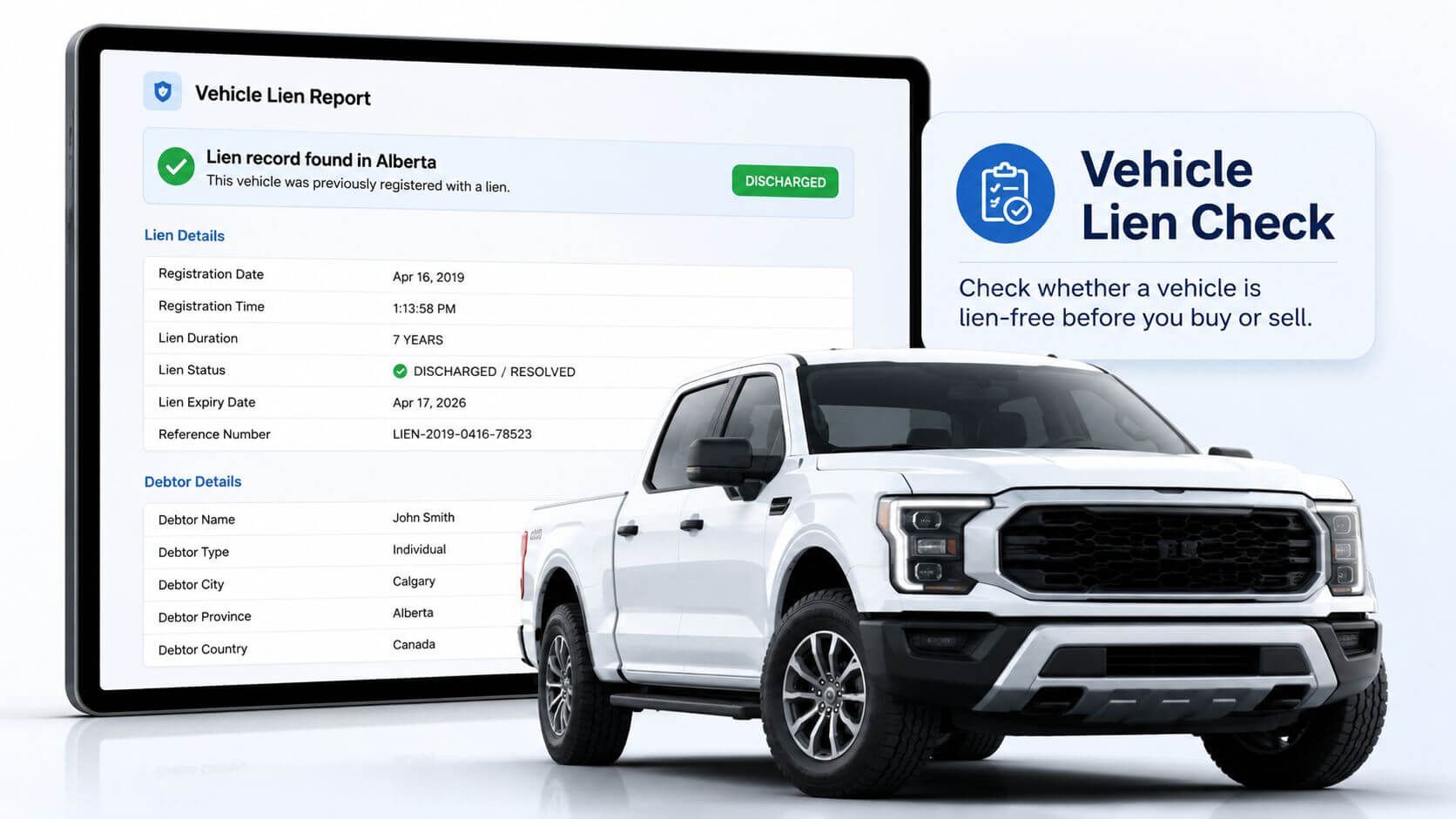
A lien check API helps automotive platforms automate one of the most important risk checks in a used vehicle transaction: whether a vehicle may have an outstanding security interest, loan, lease, repair lien, storage lien, or other registered financial claim attached to it.
For dealers, lenders, marketplaces, auctions, fintech platforms, and vehicle data companies, lien checks are not just a buyer-protection feature. They are a workflow control. A vehicle with an unresolved lien can create financing risk, title-transfer delays, customer complaints, repurchase exposure, underwriting problems, and operational friction. Instead of relying on manual provincial registry lookups, a lien check API can help teams trigger lien searches, normalize results, flag risky matches, route cases for review, and keep an audit trail.
For teams building vehicle-data workflows, VinAudit’s Data Products page gives a broader view of available automotive data solutions, while the Lien Check API is designed for businesses that need lien intelligence inside dealer, lender, marketplace, or platform systems.
Why lien checks matter in Canadian vehicle transactions
A lien is a registered financial interest in personal property. In automotive transactions, that personal property is often a vehicle used as collateral for a loan, lease, repair bill, storage charge, or other obligation. If the obligation is not cleared before sale or transfer, the buyer or downstream business may face serious problems.
For automotive platforms, lien risk can affect:
- Private-sale marketplaces
- Dealer trade-ins
- Vehicle acquisition workflows
- Loan origination
- Refinance decisions
- Digital retailing
- Auctions and wholesale transactions
- Fleet remarketing
- Vehicle-history products
- Consumer protection tools
- Fraud and risk scoring
A lien check does not replace legal review or seller verification, but it gives platforms a structured way to identify financing risk before the transaction moves too far.
What a lien check API does
A lien check API lets a platform request lien-related data programmatically instead of sending staff to conduct manual searches one by one. The API can be integrated into an existing workflow, such as a listing form, appraisal tool, financing application, dealer dashboard, or checkout process.
A typical lien check API workflow may involve:
- A user enters a VIN or vehicle details.
- The platform submits the request through the API.
- The API checks relevant lien data sources or registry-linked data.
- The response returns lien-related results.
- The platform applies business rules.
- A clean result moves forward automatically.
- A possible match is routed for review.
- The platform logs the result for audit and compliance.
The goal is not only to show whether a lien may exist. The larger goal is to make lien risk actionable inside the business process.
Why lien checks are complex in Canada
Canada does not have one single national PPSA lien registry for all vehicle liens. Lien and security-interest searches are generally handled through provincial or territorial systems. In common automotive language, teams may refer to PPSA or PPSR checks, but the exact registry name, search method, terminology, fee structure, and result format can vary by province.
For example, Ontario’s official PPSR guidance explains that the Personal Property Security Registration system can be used to search whether a lien has been filed against personal property such as cars. Alberta’s Personal Property Registry guidance advises users to perform a personal property search before purchasing property to check whether liens are registered. British Columbia’s Personal Property Registry records charges such as liens, security interests, and encumbrances against personal property.
For a platform operating nationally, this creates operational challenges:
- Different provincial registry systems
- Different search types
- Different terminology
- Different result formats
- Possible exact and inexact matches
- Serial number matching issues
- Province-specific rules
- Manual review needs
- Discharge timing delays
- Documentation differences
A lien check API can help abstract some of that complexity and provide a more consistent workflow for engineering, operations, and risk teams.
Use case 1: Marketplace listing verification
Automotive marketplaces need trust. If a private seller lists a vehicle with an unresolved lien, the buyer may later face ownership, financing, or legal problems. A lien check API can help marketplaces flag risky listings before they go live or before a buyer submits a deposit.
A marketplace can use lien data to:
- Screen private-sale listings
- Flag possible financing interests
- Warn sellers to provide payoff documents
- Educate buyers before payment
- Reduce complaint risk
- Improve listing quality
- Create trust signals
- Route high-risk listings for manual review
A marketplace does not need to block every possible lien result automatically. Some matches may require confirmation. But the API can help prevent a platform from treating every vehicle as equally low risk.
Use case 2: Dealer trade-in and acquisition workflows
Dealers need to know whether a trade-in is clear before finalizing a deal. If a customer trades a vehicle with an active loan, the dealer may need a payoff amount, lender instructions, discharge confirmation, and documentation before resale.
A lien check API can support trade-in workflows by helping dealers:
- Identify possible liens early
- Confirm whether payoff is needed
- Route vehicles to finance staff
- Prevent premature resale
- Support acquisition approvals
- Document risk review
- Avoid title-transfer delays
- Improve customer communication
For dealer groups, automation is especially useful. A centralized workflow can ensure lien checks happen consistently across locations rather than depending on each salesperson or manager to remember the step.
Use case 3: Auto lending and refinancing
Lenders care about liens because the vehicle is often the collateral behind the loan. A lien check API can support underwriting by helping lenders understand whether another party may already have a registered interest in the vehicle.
In lending workflows, lien checks can support:
- Loan origination
- Refinancing
- Collateral verification
- Dealer-submitted application review
- Fraud detection
- Lien perfection checks
- Portfolio risk monitoring
- Exceptions handling
- Audit trails
For example, if a borrower applies to refinance a vehicle, the lender may need to confirm existing security interests and understand whether the refinance process will clear the previous loan. A lien check API can help automate the first layer of that review.
Use case 4: Digital retailing and checkout
Online car-buying platforms often try to move users from vehicle discovery to checkout with minimal friction. But lien risk is one of the areas where speed must be balanced with verification.
A lien check API can be embedded into digital retailing flows to:
- Check vehicles before checkout
- Flag lien risk before deposit
- Trigger seller-document requests
- Prevent financing approval on risky vehicles
- Display internal review status
- Reduce last-minute deal cancellation
- Support remote purchases
- Improve buyer confidence
This is especially useful for platforms that handle private-seller inventory, consignment vehicles, or dealer-to-consumer transactions where documentation varies.
Use case 5: Auctions and wholesale platforms
Wholesale buyers need to move quickly, but unresolved liens can create expensive downstream problems. A lien check API can help auctions, wholesale marketplaces, and dealer-to-dealer platforms screen vehicles before sale or before title transfer.
Auction and wholesale workflows can use lien checks to:
- Validate vehicle intake
- Flag possible encumbrances
- Support title review
- Protect buyers
- Reduce arbitration claims
- Improve sale disclosures
- Route vehicles into hold status
- Document clearance before release
In high-volume environments, API-based checks are especially valuable because manual lien searches can slow down throughput.
Use case 6: Fleet remarketing
Fleet operators often sell vehicles in batches. A lien check API can help ensure vehicles are clear before remarketing, auction listing, or dealer sale.
Fleet teams can use lien checks to:
- Confirm clear status before disposal
- Identify financing records needing discharge
- Support batch review
- Reduce sale delays
- Improve buyer confidence
- Document internal controls
- Coordinate with lenders or lessors
- Improve remarketing readiness
For large fleets, the benefit is not only risk reduction. It is operational efficiency. A batch API workflow can help teams avoid manual lookup bottlenecks.
Use case 7: Vehicle history and data products
Vehicle history providers and automotive data platforms can use lien data as part of a broader risk profile. A lien check does not tell the whole vehicle story, but it is one of the most important financial-risk indicators.
A vehicle history product may combine lien data with:
- Accident records
- Title branding
- Odometer readings
- Theft records
- Registration history
- Recall data
- Market value
- Vehicle specifications
- Ownership-cost data
The goal is to help buyers, dealers, and platforms understand whether the vehicle has legal, financial, or historical issues that should be investigated before payment or transfer.
Use case 8: Fraud and risk scoring
Lien checks can also support fraud prevention. A vehicle with financing inconsistencies, mismatched seller information, unusual title movement, or possible active lien records may deserve closer review.
A platform can use lien data as part of a risk model that considers:
- Seller identity
- VIN validity
- Ownership documents
- Market price
- Vehicle history
- Lien search results
- Payment behaviour
- Listing patterns
- Province of registration
- Document completeness
A lien result alone is not proof of fraud. But combined with other signals, it can help platforms prioritize risk review.
What an API response may need to include
For a lien check API to be useful in production, the response should be structured enough for automated decision-making and clear enough for manual review.
Useful response fields may include:
- Search status
- Vehicle VIN submitted
- Jurisdiction searched
- Match status
- Exact or possible match indicator
- Registration or file reference, where available
- Secured party information, where available
- Debtor information, where available
- Registration date
- Expiry date
- Discharge status, if available
- Search timestamp
- Confidence or review flag
- Raw result reference
- Error or incomplete-search message
- Recommended next action
The best implementation depends on the business use case. A lender may need more audit detail. A marketplace may need cleaner user-facing status. A dealer tool may need workflow flags and notes.
Business rules for lien check automation
A lien check API becomes more powerful when paired with business rules. These rules decide what happens after the API returns a result.
Possible rules include:
- Clear result: allow workflow to continue.
- Possible match: route to manual review.
- Exact match: block checkout until documents are verified.
- Registry unavailable: pause transaction or retry.
- Jurisdiction unknown: request registration province.
- Missing VIN: require VIN before listing.
- Discharged lien: allow with documentation.
- Active lien: require payoff or release confirmation.
- Multiple matches: route to operations team.
- High-value vehicle: require enhanced review even with clean result.
These rules should be documented so teams know why a vehicle was approved, paused, or blocked.
Manual review still matters
A lien check API can reduce manual work, but it should not eliminate human review where risk is unclear. Some results may require interpretation, especially when there are possible matches, debtor-name issues, old registrations, discharged records, or jurisdiction mismatches.
Manual review may be needed when:
- The result is an inexact match.
- The seller name does not match records.
- The VIN has formatting issues.
- The vehicle moved between provinces.
- A lien appears discharged but documents are missing.
- The secured party must be contacted.
- The seller claims the loan was recently paid.
- Registry data is temporarily unavailable.
- The transaction value is high.
- The platform policy requires review.
Automation should make risk easier to see, not hide uncertainty.
Common edge cases
Automotive platforms should design for edge cases before going live.
Common lien-check edge cases include:
- VIN entered incorrectly
- VIN for imported vehicle
- Vehicle recently paid off
- Lien discharge not yet updated
- Multiple secured parties
- Lease records
- Repair or storage lien
- Out-of-province registration
- Seller name mismatch
- Corporate debtor names
- Registry downtime
- Inexact search results
- Duplicate records
- Old or expired registrations
- Vehicle rebuilt or re-VINed
A good API integration should define how each edge case is handled. Without clear rules, operations teams may make inconsistent decisions.
User experience for consumer-facing platforms
If lien checks are shown to consumers, the language should be clear and careful. Avoid making legal guarantees unless the platform is prepared to stand behind them. A better approach is to explain the status and next step.
Examples of user-facing statuses include:
- “No lien record found from this check.”
- “Possible lien record found — review required.”
- “Lien information requires confirmation before purchase.”
- “Seller should provide payoff or discharge documentation.”
- “Search could not be completed — try again or contact support.”
Consumer-facing language should avoid overpromising. A lien check is a due-diligence tool, not a universal guarantee of legal ownership.
Internal workflow design
For internal users, the API result should fit naturally into existing systems. A lien check is most useful when staff do not need to leave the platform to understand what to do next.
Good internal workflow design may include:
- Status badge
- Search timestamp
- Jurisdiction searched
- Match type
- Risk level
- Required next action
- Document upload field
- Review notes
- Approval or rejection button
- Audit log
- Retry option
- Escalation path
The goal is to turn lien data into a decision workflow.
KPIs for lien check API implementation
A B2B team should measure whether the API improves business outcomes.
Useful KPIs may include:
- Percentage of vehicles checked before listing
- Percentage of trade-ins checked before approval
- Average lien-check response time
- Manual review rate
- Exact match rate
- Possible match rate
- Registry error rate
- Deal delay reduction
- Complaint reduction
- Repurchase or arbitration reduction
- Financing exception reduction
- Staff time saved
- Conversion impact
- Audit completion rate
KPIs help prove whether the API is creating operational value, not just adding another data point.
Build vs. buy
Some automotive platforms consider building their own lien-check workflow directly against provincial registries. That can work for teams with legal, technical, operational, and compliance resources. But it can become complex when operating across multiple provinces and use cases.
Building internally may require:
- Provincial registry integrations
- Search-format normalization
- Error handling
- Payment handling
- Data parsing
- Result interpretation
- Audit logs
- Retry logic
- Manual review tools
- Compliance review
- Support documentation
- Ongoing maintenance
Using a third-party lien check API can reduce complexity and help teams launch faster, especially when lien data is one part of a broader automotive data stack.
What to ask before choosing a lien check API
Before selecting a provider, ask:
- Which Canadian provinces or territories are supported?
- What search inputs are required?
- Can the API search by VIN?
- How are exact and possible matches handled?
- What does the response schema include?
- Is raw registry output available if needed?
- How are errors and unavailable searches handled?
- Are batch searches supported?
- Are timestamps and audit logs included?
- What are the rate limits?
- What documentation is available?
- How is support handled?
- Can the API integrate with existing dealer, lender, or marketplace systems?
- How should consumer-facing results be worded?
- What compliance limitations should users understand?
A strong API provider should be able to answer both technical and operational questions.
Implementation checklist
Before launching a lien check API workflow, confirm:
- Target use case is defined.
- Search jurisdictions are identified.
- Required inputs are validated.
- VIN formatting rules are enforced.
- API response fields are mapped.
- Business rules are documented.
- Manual review process is assigned.
- User-facing language is approved.
- Audit logs are enabled.
- Error and retry logic are built.
- Document-upload workflow is available.
- Staff training is completed.
- KPIs are tracked.
- Legal and compliance review is completed where needed.
A lien check workflow should be treated as a risk-control system, not just a data lookup.
Final thoughts
A lien check API in Canada helps automotive platforms automate financing risk checks before vehicles are listed, financed, traded, purchased, or transferred. For dealers, lenders, marketplaces, auctions, fleet operators, and automotive software companies, lien data can reduce manual work, improve consistency, and help prevent avoidable transaction problems.
The best use of a lien check API is not a simple pass-or-fail result. It is a structured workflow: search the right jurisdiction, interpret the result, flag uncertainty, request documents when needed, route risky cases for review, and keep an audit trail.
For automotive platforms handling vehicles at scale, automated lien checks can become a practical layer of trust, risk management, and operational efficiency.